
New low emission coal technology will provide double power, reduce costs and help the environment
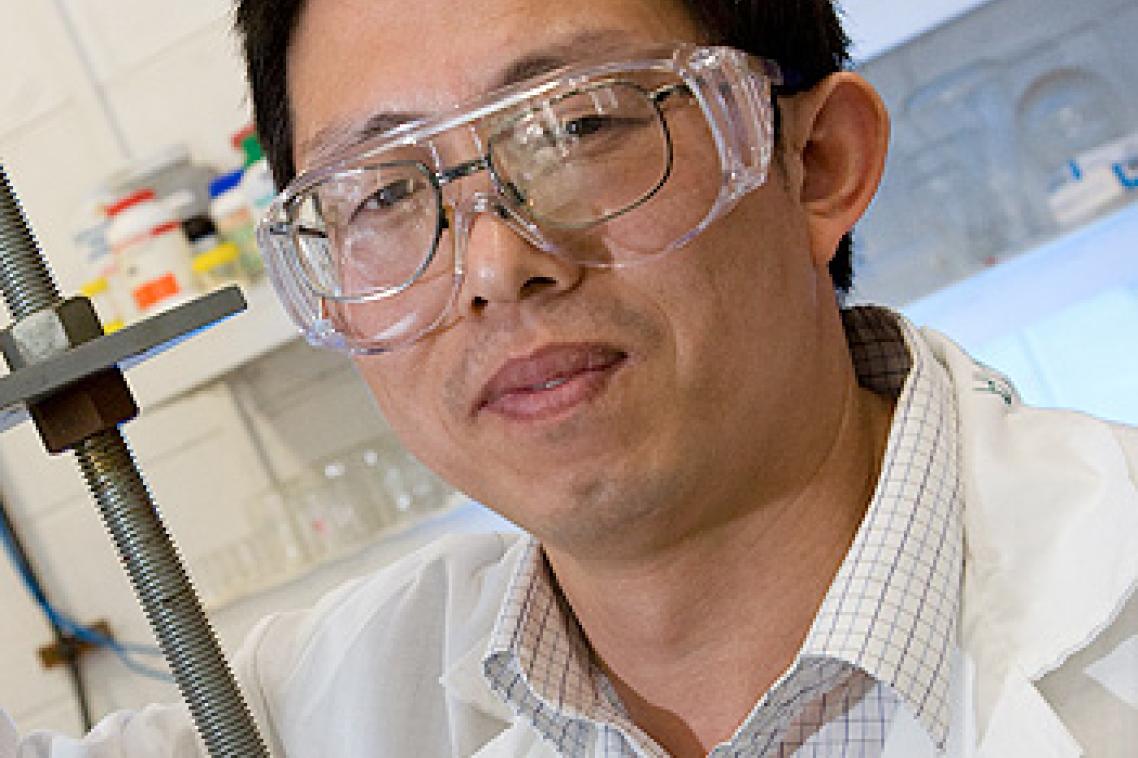
A University of Queensland researcher has successfully completed a lab-scale test on a new technology which has the potential to revolutionise the way the world views and uses coal.
Chemical engineer Professor John Zhu from the School of Chemical Engineering is working on Direct Carbon Fuel Cells (DCFC) which will create twice as much power from coal as current methods and minimise greenhouse gas emissions.
Professor Zhu said that when coal reacts with air in the DCFC, it generated highly energy-efficient electricity.
"The very high energy efficiency of the new technology will effectively halve the amount of coal required to create electricity," Professor Zhu said.
"When applied, it will provide industry with very significant cost and energy savings, which could then be passed on to the consumer.”
In addition to saving cost and energy, the DCFC will also provide clean power.
Professor Zhu expects the DCFC will enable the byproduct of coal-fired power – the harmful greenhouse gas carbon dioxide - to be trapped and stored easily and safely.
"One of the major challenges for coal-fired power is reducing its impact on the environment by developing ways to separate carbon dioxide from other gases produced in the power generation process, and ensuring it is not released into the atmosphere,” Professor Zhu said.
"The DCFC produces pure carbon dioxide as a byproduct, making it much easier to manage."
The next stage in development will involve consulting with the energy sector and securing industry and government funding to scale up the DCFC technology.
Executive Dean of UQ's Faculty of Engineering, Architecture and Information Technology, Professor Graham Schaffer said the new DCFC technology was one of a number of clean energy technologies being progressed by the University.
"UQ engineers are on the front lines in the battle to develop low emission coal technologies and deliver renewable energy sources such as hydrogen, geothermal and solar energy," he said.
"Partnerships with industry and government have enabled our researchers to make significant progress towards these new technologies, which are vital if we are to meet the challenges of clean energy and climate change."
With funding, the new DCFC technology is expected to be ready for implementation in about 10 years.
Media: Professor John Zhu (z.zhu@uq.edu.au or 7 3365 3528) or Kim Jensen at the Faculty of Engineering, Architecture and Information Technology (k.jensen@uq.edu.au or 07 3365 1107)
Related articles

The Paralympian paving the way for more champions in the pool
