
Dramatic collaboration blooms with The Flowering
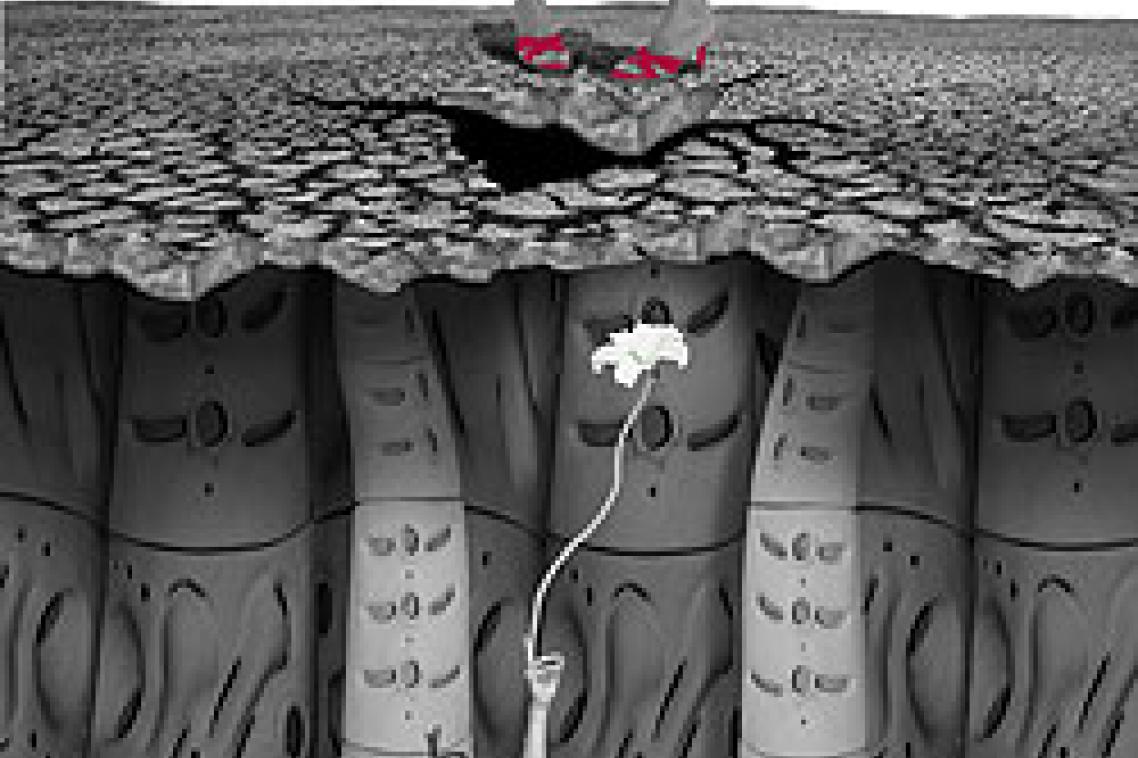
Visual art and theatre collide with colourful results in UQ Adjunct Professor Sue Rider’s latest production.
Professor Rider is directing The Flowering, a play by Donna Cameron which samples ancient Greek myths and features a unique ceramic “set” by artist Julie Shepherd.
The show marks a change of pace for Professor Rider, who has been directing and producing theatre for three decades, and last year staged the world premiere of a musical about Brisbane’s famous “Pink Twins”.
The Chair of Backbone Youth Arts and former Artistic Director of La Boite Theatre Company, Professor Rider appears on the cover of this year’s Brisbane White Pages for her work promoting the arts among diverse audiences.
The Flowering began life by chance in 2001 when the collaborators worked together on the Clay/Play project to raise funds for breast cancer research. The event saw female artists create short plays in just 24 hours, and the idea for future productions was born.
“Donna wrote a beautiful, quirky, moving script inspired by Julie’s porcelain pieces and I directed it. We loved the process, admired each other’s work and all wanted to develop further what we’d started in a very short time,” Professor Rider said.
“Donna then came up with the idea of The Flowering, which had its origins in the Greek myths of Persephone and Demeter and drew on her own experience of visiting India. I’m constantly seeking new ways to make meaning in theatre and the idea of combining a contemporary text based on ancient myth with a solo performer and pieces of porcelain opened up wonderful creative possibilities.”
True to its title, the play tells the story of a year in one woman’s life as she relates her development to her mother.
Professor Rider said the show explored the loss of innocence experienced in the transition to adulthood, and the resulting power shifts between people and their parents.
Using ceramics added another dimension to the work and grounded the drama, she said.
“When the show opens, there are pieces of porcelain scattered over a circular earth-coloured cloth. The pieces could be broken crockery, or plant pots, or bones. The scene could be a garden or a desert. Before a word is spoken we are forming impressions of what we see,” she said.
Professor Rider said the script’s strength was its blending of drama and comedy, a technique honed by some of the world’s most famous storytellers.
“Theatre dies from monotony or complacency, but it thrives on contrast and I love nothing better than to hear audiences give a big belly laugh followed by a gasp of horror or the silence of sadness.
“The best playwrights – take Shakespeare, Chekhov and Brecht – all mix comedy and tragedy. My job as a director is to make sure the rhythms are right, that the audience knows when to laugh and when to hold their breath. Often it’s a matter of pace. And it’s magic when the balance is right.”
Media: Cameron Pegg at UQ Communications (07 3365 2049, c.pegg@uq.edu.au)
Topics
Related articles

Ocean time travellers return with secrets of the Great Barrier Reef
