
Why Skippy is likely to stay off the menu
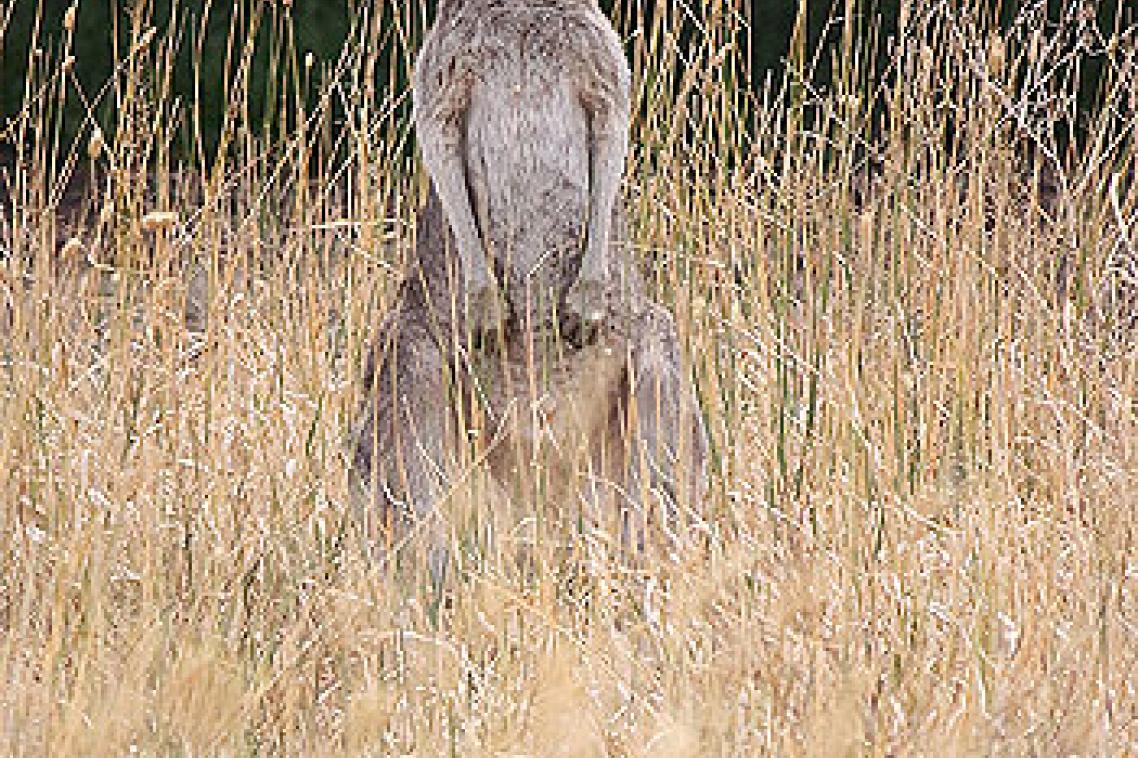
Farming kangaroos is an issue most Australians would rather hop away from, but an upcoming UQ seminar will explore why it might be time to revisit the debate.
On Friday, May 28 at 1pm, environmental anthropologist Adrian Peace will discuss why politicians should not shy away from the idea of introducing roo meat to the Australian diet, despite its unpopularity among farmers and consumers.
“It is increasingly obvious that we simply cannot maintain the levels of food consumption that we have come to take for granted,” Associate Professor Peace said.
“While this is incontrovertible, Australia’s political class simply turns a blind eye to the issue, but it should be absolutely at the centre of the climate change debate.”
Dr Peace said farmers generally did not see roos as a financial asset but rather a costly liability, and left roo killing to independent contractors who operated on a small scale.
“Most farmers consider the farming of roos to be financially prohibitive as well as an activity which does not fit with their present day agricultural activities,” he said.
“At the consumption end, consumers are not only put off by the label of pest and the possibility of disease, they have been the target of extremely effective advertising from Meat and Livestock Australia exhorting them to eat more conventional red meat.”
The presentation will take off from the proposal by economist Ross Garnaut in 2008: that beef and lamb production be phased out and replaced by roo meat.
“His target was 2020, wildly optimistic in the judgement of many,” Dr Peace said.
“Many in agriculture argued that Garnaut was simply an ivory tower academic, remote from the day-to-day operations of Australian agriculture.”
Dr Peace is a visiting academic, based at the University of Adelaide.
He said environmental disputes interested him as they brought to the surface ideas, interests and beliefs that otherwise would be left unsaid.
“In crisis situations, protagonists have to make clear the details of their respective positions and defend them from critique,” he said.
“It is an important anthropological maxim that actions speak louder than words.”
The presentation forms part of the School of Social Science Seminar Series.
It will be held from 1pm-2pm in the Steel Building on the St Lucia Campus.
To RSVP, please contact b.waugh1@uq.edu.au or 07 3365 3236.
Media: Dr Peace (O4O2 675 798, adrian.peace@adelaide.edu.au) or Penny Robinson at UQ Communications (07 3365 9723, penny.robinson@uq.edu.au)
Related articles

Transforming communities: 2026 UQ Alumni Award winners
