
Troublesome moth comes under the microscope
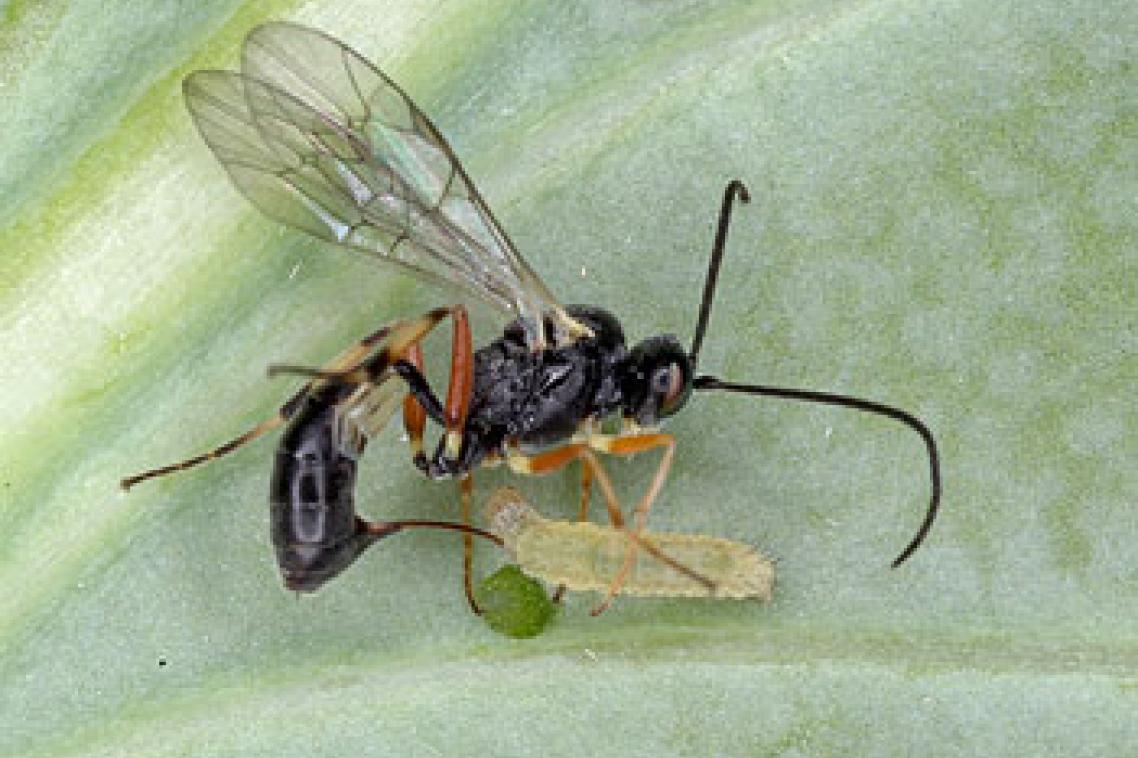
New UQ research may assist in controlling one of the world's most destructive crop pests.
The diamondback moth, Plutella xylostella has developed resistance to many chemical and biological pesticides, with the estimated cost of controlling the insect estimated at $1 billion per year.
In a new article published in the open access journal BMC Genomics, a UQ team led by Dr Sassan Asgari has identified the genes expressed when the diamondback moth is attacked by a parasitic wasp, which could have significant implications for controlling the pest.
Dr Asgari and colleagues from The School of Biological Sciences used transcriptome profiling to provide the first-ever comprehensive analysis of the impact of a parasitoid wasp on its host.
The data obtained in this study provides a basis for further research in this underexplored host-parasitoid interaction.
“Diadegma semiclausum, the parasitic wasp, attacks P. xylostella by injecting its eggs into the moth larvae,” Dr Asgari said.
"The wasps then manipulate the hosts’ physiology in favour of their developing larvae by introducing secretions that contain symbiotic viruses, such as polydnavirus. Polydnaviruses suppress the hosts' immune system and stall metabolism and development."
Research has so far concentrated mainly on individual genes of PDV, in order to explore their function following parasitization, but never before has such a comprehensive profiling study been conducted.
Dr Asgari and his team used an RNA deep sequencing technique called Illumina to identify the symbiotic PDV genes expressed in the host and compared their sequences with other reported viruses.
The genes identified here may be targets that allow for the control and manipulation of host-parasite interactions.
"This emphasizes the necessity for the continued development of innovative alternative control measures and resistance management strategies. Parasitoid regulatory molecules can be used to improve pest control strategies in sustainable agriculture," Dr Asgari said.
Media: Dr Sassan Asgari (07 336 52043, s.asgari@uq.edu.au) or Tracey Franchi (07 3365 4831, t.franchi@uq.edu.au)
Related articles

‘No, I want Mum!’ Does it feel like your child has a favourite parent?
