World-first global study links climate to severe habitat loss
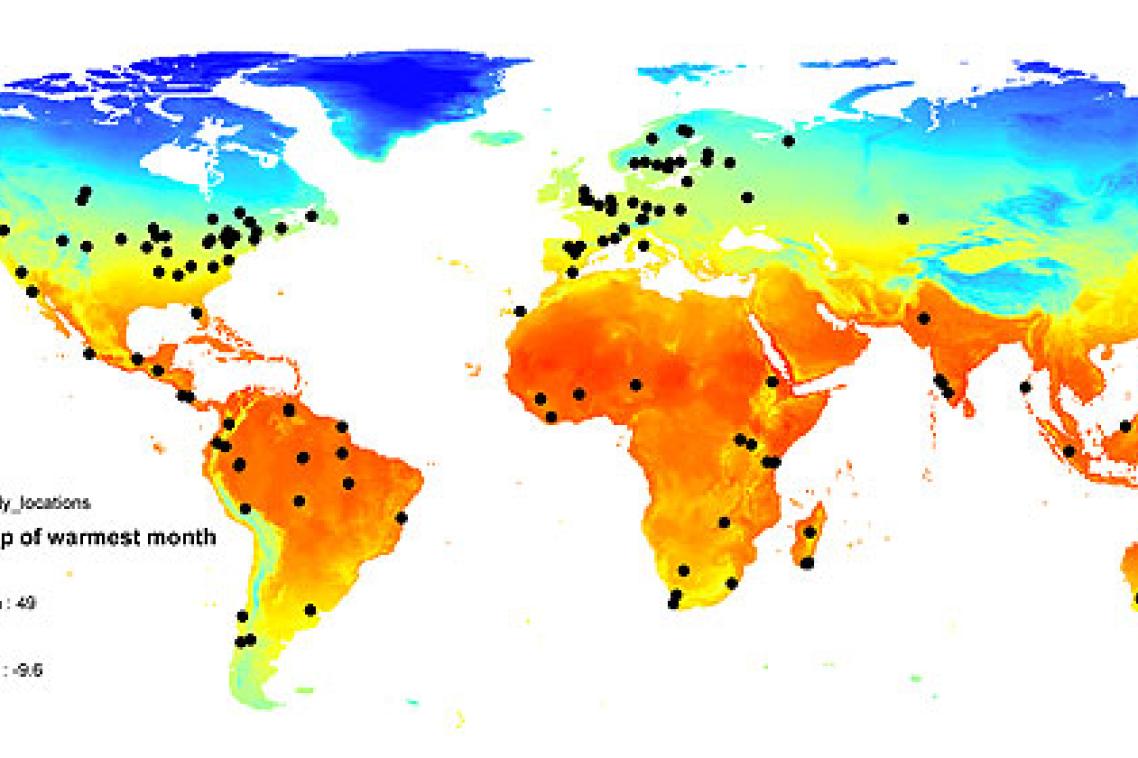
In a world first, University of Queensland and CSIRO scientists have measured the relationship between current climate, climate change and habitat loss on plants and animals on a global scale.
Their results, published recently in Global Change Biology indicate that areas with high temperatures and where average rainfall has decreased over time increase the chance of a species being negatively affected by habitat loss and fragmentation.
“Human population growth has caused significant habitat degradation across the globe, typically in support of agriculture and urban development,” lead researcher Chrystal Mantyka-Pringle from UQ's School of Geography, Planning and Environmental Management said.
“This alone has negatively impacted many species, but combined with rises in temperature and reduced rainfall as a result of a changing climate, there could be catastrophic results for some populations. Serious declines are already a reality for many species.”
The findings have important implications for the conservation of biodiversity under climate change.
“Conservation policy and management strategies that don’t take into account the combined effects of habitat loss and a changing climate may be inefficient and at worst ineffective,” Ms Mantyka-Pringle said.
The study suggests the negative effects of interactions between habitat loss and climate on higher order species, such as mammals, reptiles and amphibians are universal.
Ms Mantyka-Pringle said drastic measures may be needed to preserve the world’s wildlife for future generations.
“In areas where the effects of climate change and its interactions with habitat loss are expected to be severe, our current management approaches may be inadequate,” she said.
“In these cases more proactive management strategies such as moving species, engineering habitat, and even abandoning our efforts to save certain species in one area in favour of other areas may be more effective.”
The authors argue it is becoming increasingly apparent that ecosystems and species are not at risk from a single threat but rather a multitude of factors.
“Understanding the synergistic effects between climate change and other threatening processes has critical implications for our ability to support and incorporate climate change adaptation measures into policy development and management response," Ms Mantyka-Pringle said.
Media: Chrystal Mantyka-Pringle (0434 892 009, c.mantykapringle@uq.edu.au), co-author Dr Jonathan Rhodes (+61 7 3365 6838, j.rhodes@uq.edu.au) or co-author Dr Tara Martin (CSIRO) (61 7 3833 5727, Tara.Martin@csiro.au)
Related articles

Chance conversation inspires UQ alum to support future generations