
UQ researchers make breakthrough in stem cell research
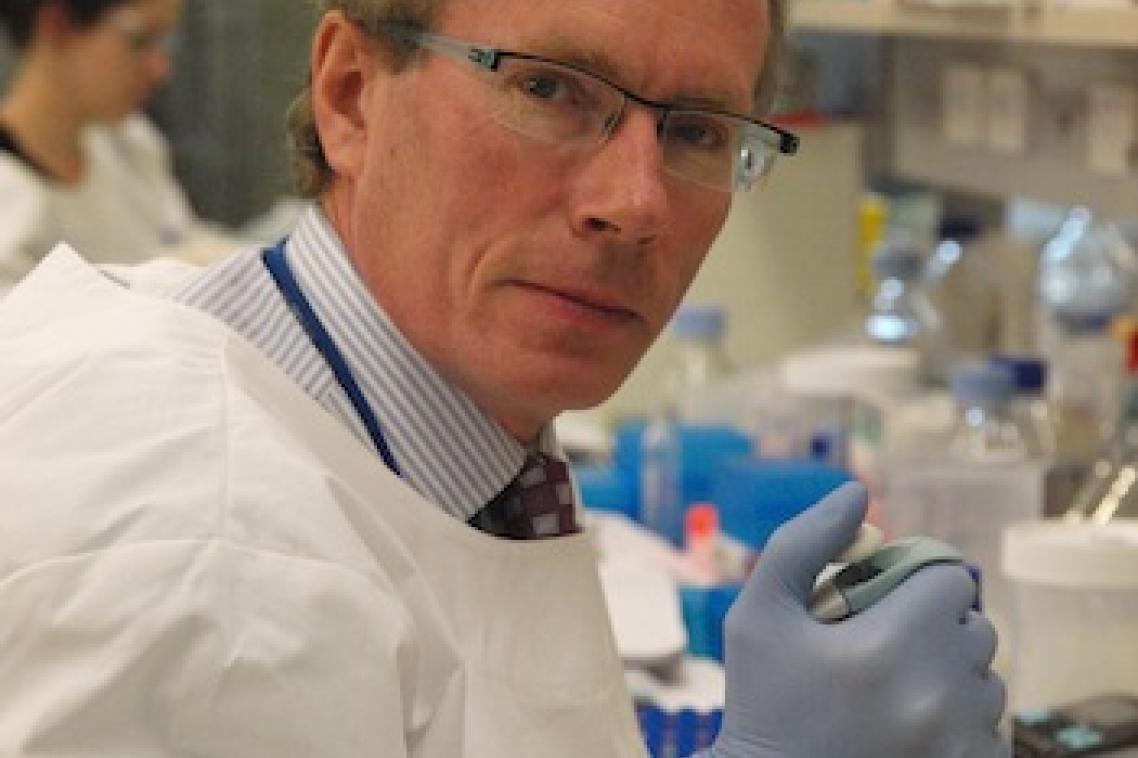
University of Queensland scientists have developed a world-first method for producing adult stem cells that will substantially impact patients who have a range of serious diseases.
The research is a collaborative effort involving UQ's Australian Institute for Bioengineering and Nanotechnology (AIBN) and is led by UQ Clinical Research Centre's (UQCCR) Professor Nicholas Fisk.
It revealed a new method to create mesenchymal stem cells (MSCs), which can be used to repair bone and potentially other organs.
“We used a small molecule to induce embryonic stem cells over a 10 day period, which is much faster than other studies reported in the literature,” Professor Fisk said.
“The technique also worked on their less contentious counterparts, induced pluripotent stem cells.
“To make the pluripotent mature stem cells useful in the clinic, they have to be told what type of cell they need to become (pre-differentiated), before being administered to an injured organ, or otherwise they could form tumours.
“Because only small numbers of MSCs exist in the bone marrow and harvesting bone marrow from a healthy donor is an invasive procedure, the ability to make our own MSCs in large number in the laboratory is an exciting step in the future widespread clinical use of MSCs.
“We were able to show these new forms of stem cells exhibited all the characteristics of bone marrow stem cells and we are currently examining their bone repair capability."
AIBN Associate Professor and Co-Investigator on the project, Ernst Wolvetang said the new protocol had overcome a significant barrier in the translation of stem cell-based therapy.
“We are very excited by this research, which has brought together stem cell researchers from two of the major UQ research hubs UQCCR and AIBN,” Associate Professor Wolvetang said.
The research is published in the February edition of the STEM CELLS Translational Medicine journal.
UniQuest, The University of Queensland’s main commercialisation company, invites parties interested in licensing the intellectual property relating to this discovery to contact UniQuest on 3365 4037 or lifesciences@uniquest.com.au.
Media Contact: Kirsten Rogan, Communications and Media, University of Queensland Faculty of Health Sciences, 07 3346 5308, 0412307594 or k.rogan@uq.edu.au
Topics
Related articles

Researchers transforming bioplastics into ‘superstructure’ medical hydrogels
