
IMB researcher recognised as one of Australia’s best
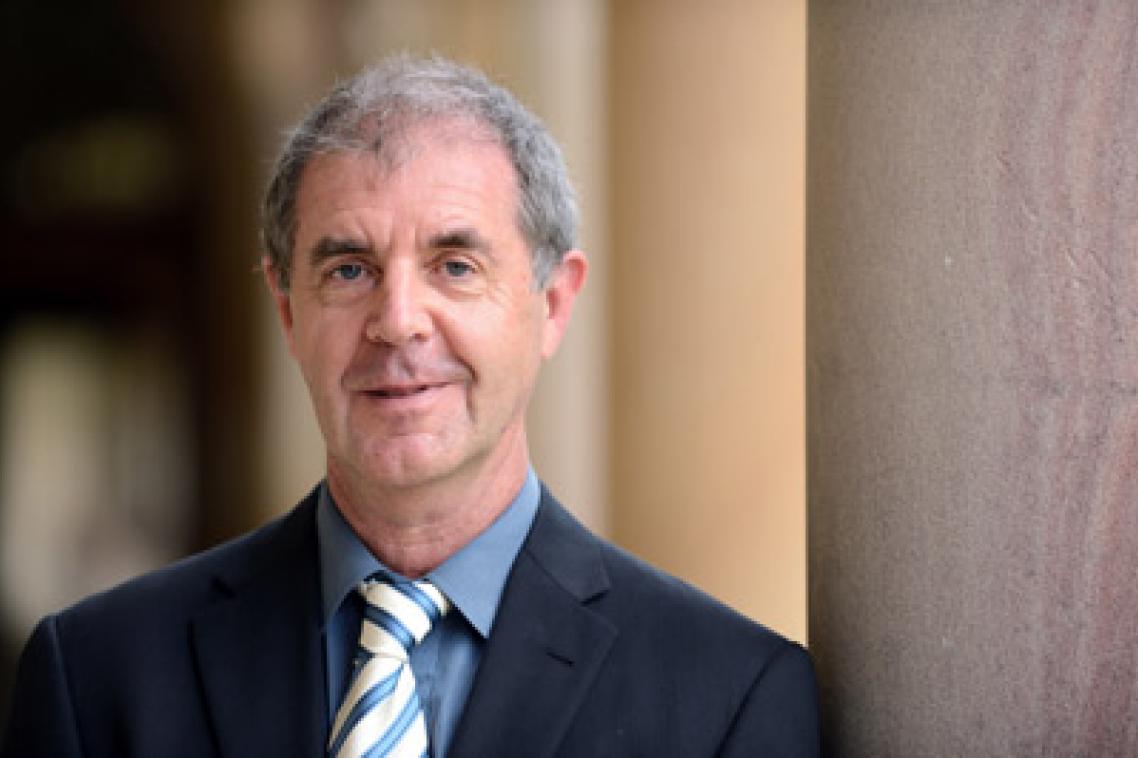
A scientist whose research into a new type of molecule may lead to improved treatments for pain and other diseases has been recognised for his outstanding contributions to science.
Professor David Craik from the IMB was today named a Fellow of the Australian Academy of Science (AAS), an honour reserved for researchers whose achievements are of international significance.
Professor David Craik discovered a new class of proteins known as cyclotides whose circular shape makes them ultra-stable and therefore an ideal base for therapeutic drugs.
“We discovered the cyclotides in plants and used them as a model for our protein engineering studies,” Professor Craik said.
“This involves modifying proteins by grafting onto them new biologically active mini-proteins known as peptides.”
One of these peptides comes from the venom of marine cone snails and has shown great promise in early trials in treating chronic pain with a lower dose and fewer side effects than existing therapies.
In 2011, Professor Craik was awarded the Ralph F. Hirschmann Award in Peptide Chemistry for his outstanding achievements in the chemistry, biochemistry and biophysics of peptides by the American Chemical Society, the world’s largest scientific society.
Professor Craik is the third IMB researcher to become an AAS Fellow, with Professor Rob Parton elected in 2009 and Professor Peter Koopman elected a Fellow in 2008 and to the AAS Council in 2012.
Media contact: Bronwyn Adams - 0418 575 247, 07 3346 2134 or b.adams@imb.uq.edu.au
Related articles

Researchers transforming bioplastics into ‘superstructure’ medical hydrogels
