
ARC backs UQ to lead food industry innovation
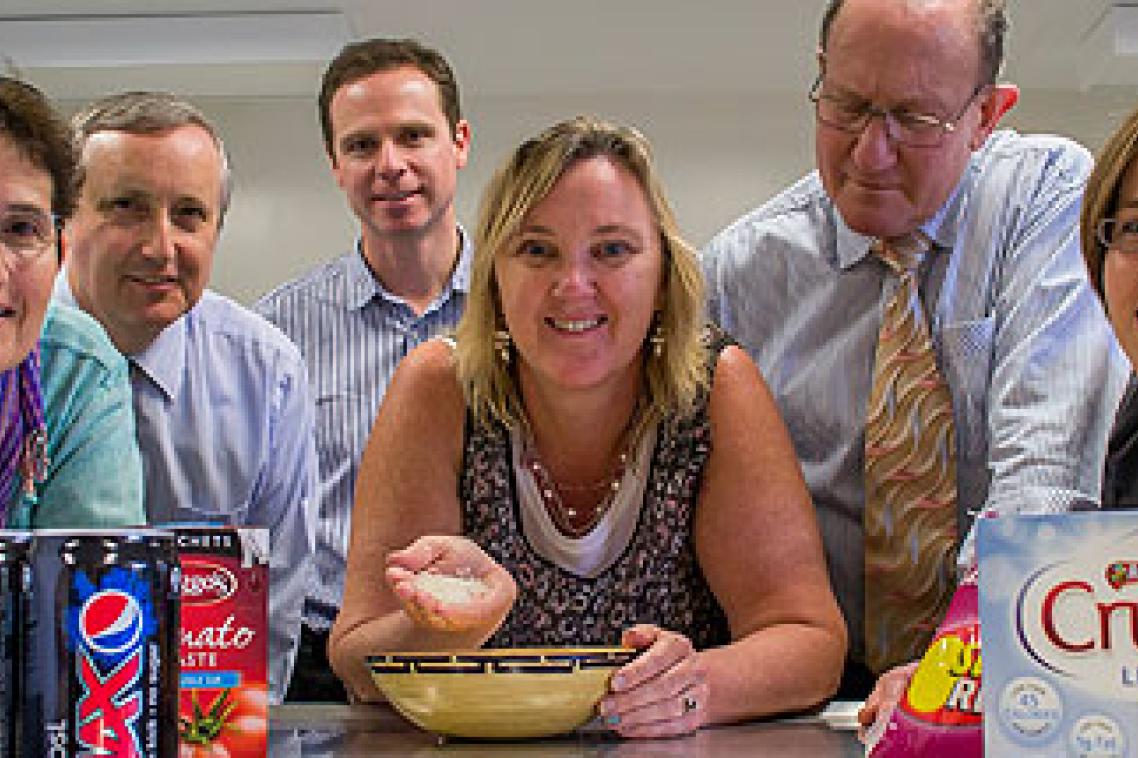
The Federal Government has selected The University of Queensland as one of four universities that will train future scientists to lead food industry transformation and innovation.
More than $9.3 million in Australian Research Council grants announced today under the Industrial Transformation Training Centres scheme will support new training opportunities for food scientists. UQ’s $2.695 million grant was the largest of the training centre grants awarded.
Additionally, under the ARC’s Industrial Transformation Research Hubs scheme, UQ scientists will collaborate on a new $5 million Dairy Innovation Hub led by The University of Melbourne.
This targeted investment from the Commonwealth, leveraged by university and industry support, is aimed to position Australia as a leader in meeting the “demand for safe, healthy and high-quality foods and retail-ready ingredients in the Asian century”.
Through the new training centres, the ARC seeks to foster and develop “a cohort of innovation scientists who will facilitate transformation of the Australian food industry, including manufacture, processing and value chain analysis”.
UQ’s President and Vice-Chancellor, Professor Peter Høj, said UQ had worked hard over decades to position itself as a research powerhouse in areas such as agriculture, land management, genetics and chemistry – all highly important disciplines in the food industry.
“As a leading global University in a state largely built on agriculture, UQ has since its earliest days been contributing to tangible outcomes in food production,” Professor Høj said.
“Now, it is clearer than ever that factors like the world’s growing population, rising living standards and uncertain climate are putting more pressure than ever on global agricultural production.
“Food security is one of the most pressing challenges of our time.”
Professor Høj said UQ’s work in these areas was gaining global recognition.
“Just a few weeks ago, the Bill and Melinda Gates Foundation granted $4 million to support UQ research into sorghum growing in low-rainfall regions,” he said. “That work is being done in partnership with the governments of Ethiopia and Queensland.”
Professor Melissa Fitzgerald from UQ’s School of Agriculture and Food Sciences will be Director of the new food scientist training centre, at UQ’s St Lucia campus in Brisbane.
“It is so exciting that Australia is reinvigorating research into food, and at a time when we are in a geographic position to meet the demands of the growing middle classes in the countries around us.
“It is also fantastic that the Government is financially backing the recent white paper, Australia in the Asian Century.”
Professor Fitzgerald joined UQ a year ago, after working at the International Rice Research Institute in the Philippines for the past eight years.
Her ARC submission, Agents of Change: Transforming the Food Industry for Australia, Asia and Beyond, was developed in collaboration with the Australian Food and Grocery Council.
“The new centre will further cement the UQ – AFGC partnership by delivering high quality, business-ready graduates heading for an industry career, rather than the traditional PhD-to-academia career path,” she said.
“Courses on commercialisation, intellectual property and business leadership will be built into their program.”
The University of Melbourne’s Dairy Industry Hub was awarded $5 million in yesterday’s announcement.
It will undertake “transformational research to underpin the development of the dairy industry in Australia”.
UQ researchers who will collaborate on that project are Professor Bhesh Bhandari, Dr Mark Turner, Dr Nidhi Bansal and Dr Sangeeta Prakash.
Contact: Office of the UQ President and Vice-Chancellor, ph +61 7 3365 1300; Professor Melissa Fitzgerald, ph +61 7 3346 8893, ph +61 (0)417 279760; Fiona Cameron, UQ Communications, ph +61 7 3346 7086.
Topics
Related articles

White wine drinkers help pinpoint what’s missing in no and low alcohol drinks
