
UQ scientists discover a hidden giant
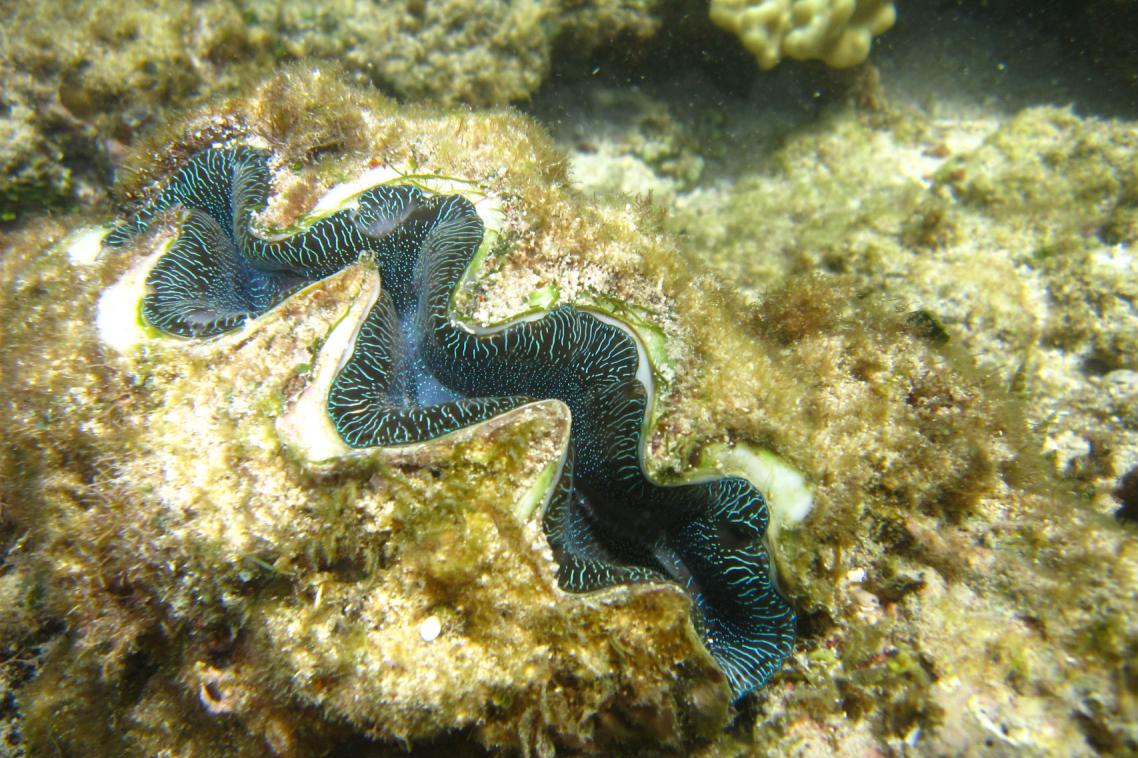
University of Queensland researchers have discovered a vivid new species of giant clam on reefs in the Solomon Islands and at Ningaloo in Western Australia.
UQ School of Biological Sciences postgraduate student Jude Keyse said the find was surprising.
“DNA sequences strongly suggest that a distinct and unnamed species of giant clam has been hiding literally in plain sight, looking almost the same as the relatively common Tridacna maxima,” Ms Keyse said.
“Giant clams can grow up to 230kg and are some of the most recognisable animals on coral reefs, coming in a spectrum of vibrant colours including blues, greens, browns and yellow hues.”
Charles Darwin University postgraduate student Mr Shane Penny, who co-authored the paper, said identifying a new species within a well-known group such as giant clams was a unique opportunity for a student.
“To correctly describe the new species now becomes critical as the effects of getting it wrong can be profound for fisheries, ecology and conservation," he said.
Giant clams are beloved by divers and snorkelers but also prized as a source of meat and shells.
Overconsumption by humans has depleted giant clams populations in many areas and most giant clam species are on the International Union for Conservation of Nature (IUCN ) Red List of Threatened Species.
Ms Keyse said the discovery of a new species had implications for management of giant clams.
“What we thought was one breeding group has turned out to be two, making each species even less abundant than previously thought,” she said.
These results have been described today in the open access journal PLoS One, http://dx.plos.org/10.1371/journal.pone.0080858.
Media: Jude Keyse, School of Biological Sciences, +61 7 3365 7235, j.keyse@uq.edu.au.
Related articles

Turning up the heat on chickpea yield
