
Til’ death do us part – in the plant world
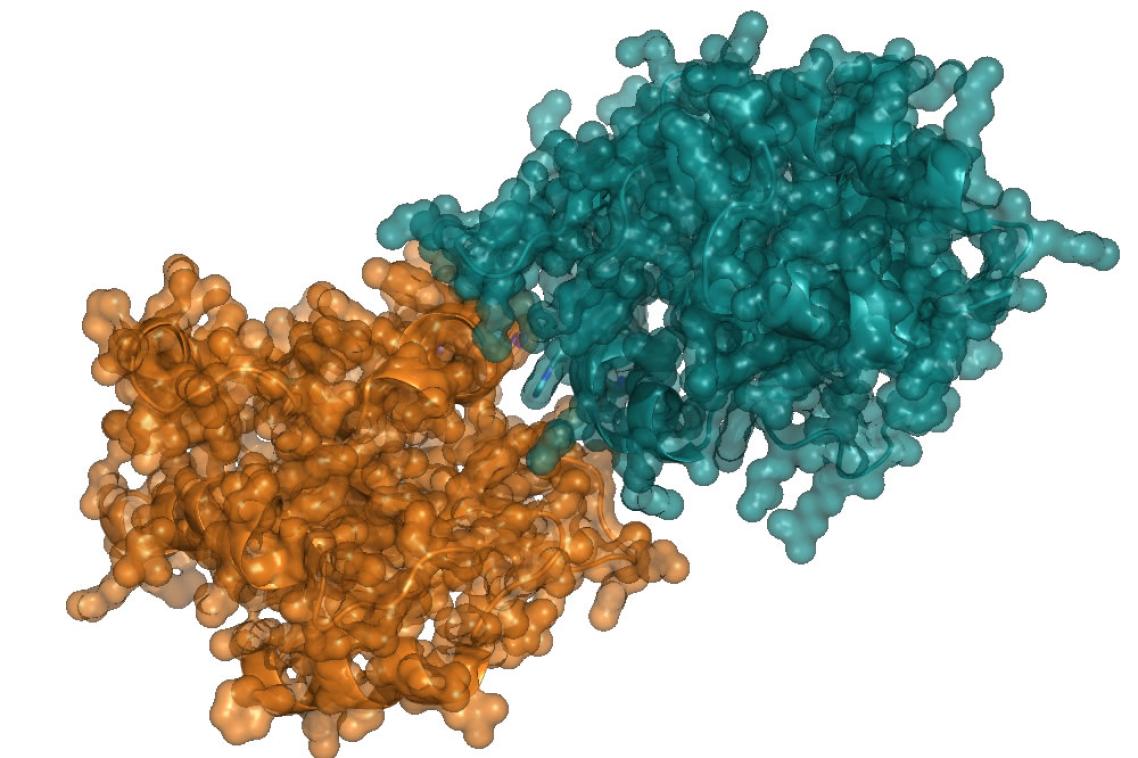
A landmark study from The University of Queensland has described the ultimate act of sacrifice and survival, in the plant world.
The research sheds light on how the plant immune system provides resistance against common plant diseases and has been published in Science.
Co-first author Dr Simon Williams from UQ’s School of Chemistry and Molecular Biosciences said the international team’s unique findings describe how a pair of plant proteins fights back.
“When these proteins are disturbed by an infection, the infected cell dies allowing for the immunity of the entire plant,” Dr Williams said.
“In this remarkable process the entire plant becomes immune at the expense of few noble cells. We detail how plant protein immune receptors regulate each other and coordinate a response when threatened by infection.”
Research leader Professor Bostjan Kobe said that while many plant resistance genes have been identified in the past two decades, scientists have limited knowledge of how they work.
“It is vitally important that we understand how plant immune systems function because pre-harvest plant diseases account for up to 15 per cent of crop loss every year,” Professor Kobe said.
“This is a significant economic and environmental challenge for a world already under pressure to produce more food, fibre and biofuels.”
The study could also fuel future research in human health, as there is significant overlap between the mechanisms that plants and humans use to detect and respond to disease.
“To help our understanding of the plant interactions we used x-ray crystallography techniques to determine protein structures at near-atomic resolution at the Australian Synchrotron,” said Professor Kobe.
“We are particularly pleased as 2014 is the International Year of Crystallography and this project is a great example of how crystallography can contribute to diverse fields, including plant immunity.”
Professor Kobe is the President of the Society of Crystallographers in Australia and New Zealand.
Other key collaborators included Dr Jonathan Jones from Sainsbury Laboratories in the United Kingdom, Dr Kee Hoon Sohn from New Zealand’s Massey University, and Dr Peter Dodds and Dr Maud Bernoux from the CSIRO.
Read about the research in Science.
Media: Dr Simon Williams, 0438 852 389, s.williams@uq.edu.au
Professor Bostjan Kobe, 0407 009 170, b.kobe@uq.edu.au
Dr Williams and Professor Kobe will be at a conference from April 22 to 25. Messages can be left for them at the venue reception on 07 5544 0644 or through conference organiser Sally Brown on 0407 178 200 if they can’t be reached on their mobile numbers.
Topics
Related articles

White wine drinkers help pinpoint what’s missing in no and low alcohol drinks
