
Secret life of cells revealed with new technique
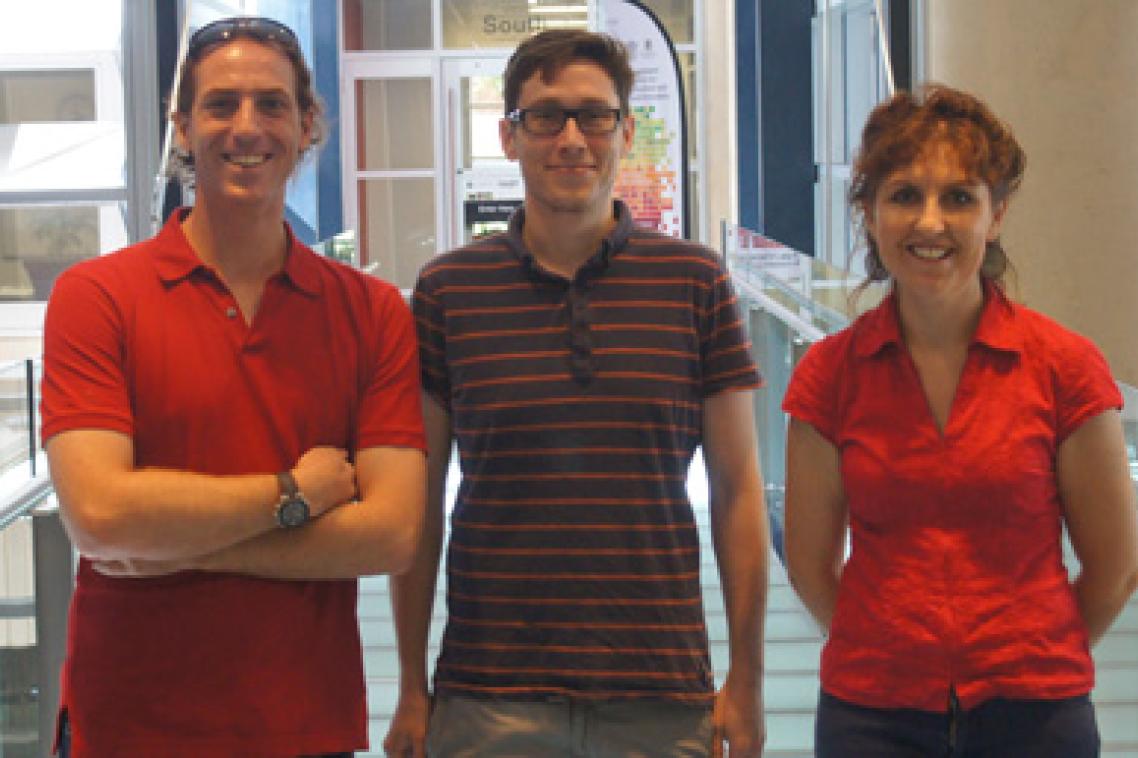
A new technique that allows researchers to conduct experiments more rapidly and accurately is giving insights into the workings of proteins important in heart and muscle diseases.
The technique, developed by researchers at The University of Queensland’s Institute for Molecular Bioscience (IMB), enables researchers to examine individual proteins and directly observe how they interact with other proteins in a cell.
Proteins are involved in most critical processes in the body, and the ability to study their interactions is a cornerstone of health and medical research.
UQ’s Dr Yann Gambin led the collaborative study between the laboratories of IMB researchers Professor Rob Parton, Professor Kirill Alexandrov and Dr Brett Collins.
Dr Gambin said the new method was a huge leap forward that would advance research by speeding up the preparation of proteins for experiments, allowing scientists to process 100 proteins a day instead of a few each year.
“Replicating the behaviour of complex proteins in the human body using a different organism can be a very frustrating process,” Dr Gambin said.
“Now we can analyse proteins directly in cell extracts, without any purification steps that may perturb biological processes.
“The new method allows us to dramatically accelerate the discovery process, which will translate into rapid advancement of our understanding of the inner workings of cells in health and disease.”
The researchers used the technique to examine cavins, proteins that sit in pockets on the cell surface, an area studied in-depth by IMB’s Professor Rob Parton.
Faulty cavins have been associated with heart disease and muscular dystrophy but until now nothing was really known about how cavins interacted.
“By looking at cavins at single-molecule resolution, we have discovered how cavins associate into large complexes, with unexpected selectivity as certain types of cavins will bind together, but others won’t,” Dr Gambin said.
“Given the role of these proteins in human diseases, an improved understanding of how the cavin complexes form and break down may assist in developing treatments for diseases caused by faulty cavins.”
Dr Gambin said the technique was already being used in research projects focusing on cancer, inflammation and infectious disease across the Institute for Molecular Bioscience and was likely to be adopted by researchers around the world after being published internationally in the new open-access scientific journal eLife.
eLife is a joint initiative of the Howard Hughes Medical Institute, the Max Planck Society and the Wellcome Trust, and is edited by 2013 Nobel Prize winner Randy Schekman,
The research was funded by the Australian Research Council and the National Health and Medical Research Council.
The Institute for Molecular Bioscience (IMB) is a research institute of The University of Queensland that aims to improve quality of life by advancing medical genomics, drug discovery and biotechnology.
To make a tax-deductible donation to IMB research, visit www.imb.uq.edu.au/donate or call +61 (07) 3346 2134.
Media contact: IMB Communications Manager Bronwyn Adams, 0418 575 247, 07 3346 2134, b.adams@imb.uq.edu.au.
Topics
Related articles

Archaeology’s assumptions about ancient diets challenged by new research
