
Hunters can help more in managing pests: study
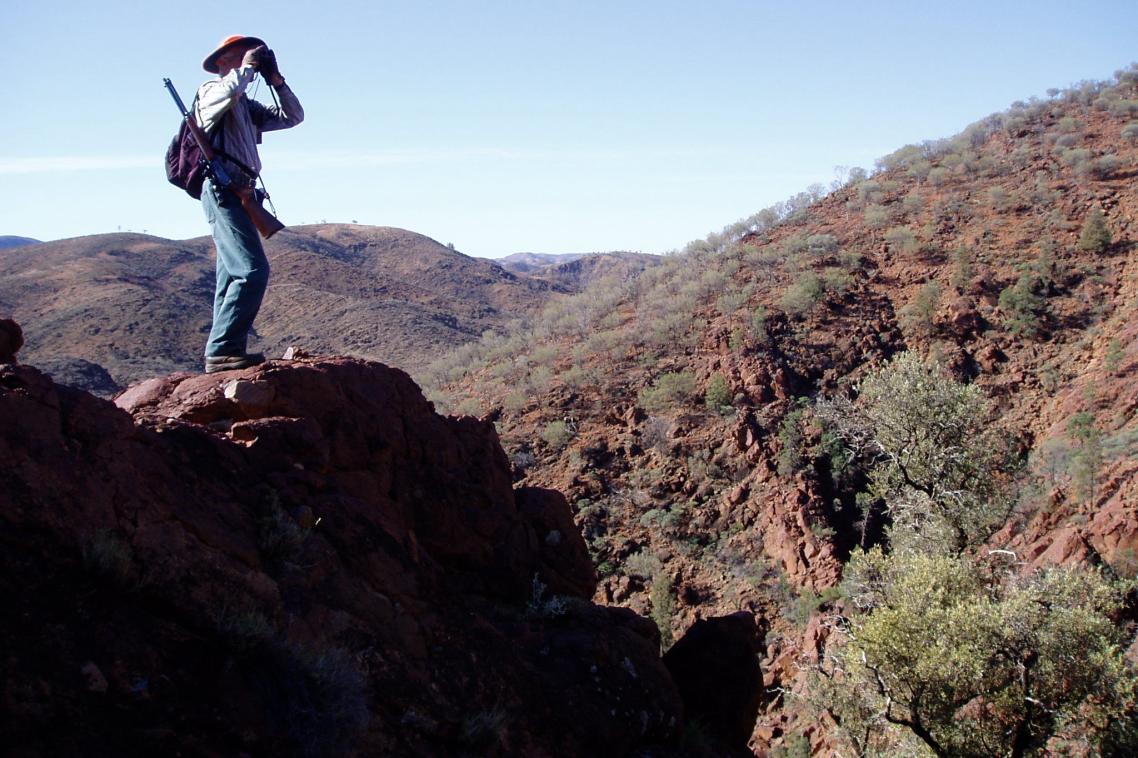
Recreational hunters are under-utilised as a resource for wildlife management, according to a study from The University of Queensland.
The study’s lead author, Associate Professor Peter Murray from UQ’s School of Agriculture and Food Sciences, said a survey indicated that most hunters would be willing to assist landholders to control pest species that compete with native fauna for habitat.
“Wildlife management in Australia could benefit from greater engagement between wildlife managers and the recreational hunting community,” he said.
“The potential exists for this large and active community to become a valuable resource for wildlife managers as many are already hunting feral pests.”
The report estimates there are between 200,000 and 300,000 recreational hunters in Australia, and the survey carried out by Dr Murray’s team showed that more than 99 per cent of respondents indicated they would be willing to participate in pest-control activities if they had the opportunity to do so.
"If the public understands there are pest animals eating native animals and destroying native habitat throughout Australia, it makes a lot of sense for hunters to be allowed to assist in the management of those populations at no cost to the government," Dr Murray said.
The research was undertaken as part of the broader UQ Wild deer management in Australia project and involved thousands of survey respondents from recreational hunting associations from all states.
Dr Murray says that in other OECD countries such as the United States, recreational hunters are widely engaged with wildlife managers, and hunting taxes contribute to the majority of conservation funding in that country.
More than two-thirds of the survey participants supported the idea of paying a levy on hunting merchandise to contribute toward wildlife conservation beyond the killing of feral animals.
Of those that supported the idea, 60 per cent supported a 5 per cent levy and 30 per cent supported a 10 per cent levy.
“Should such a levy be introduced in Australia, it could generate significant funding for conservation in this country,” Dr Murray says.
The report, Expenditure and Motivation of Australian Recreational Hunters, was the first to survey and identify an estimate of the numbers of recreational hunters in Australia, what they spend on hunting annually and the effect they have on wildlife and pest management nationally. It is available at publish.csiro.au.
Contact: Associate Professor Peter Murray, peter.murray@uq.edu.au, ph +61 7 5460 1256, +61 (0) 414877843.
Related articles

Turning up the heat on chickpea yield
