
Coral death imminent on Great Barrier Reef
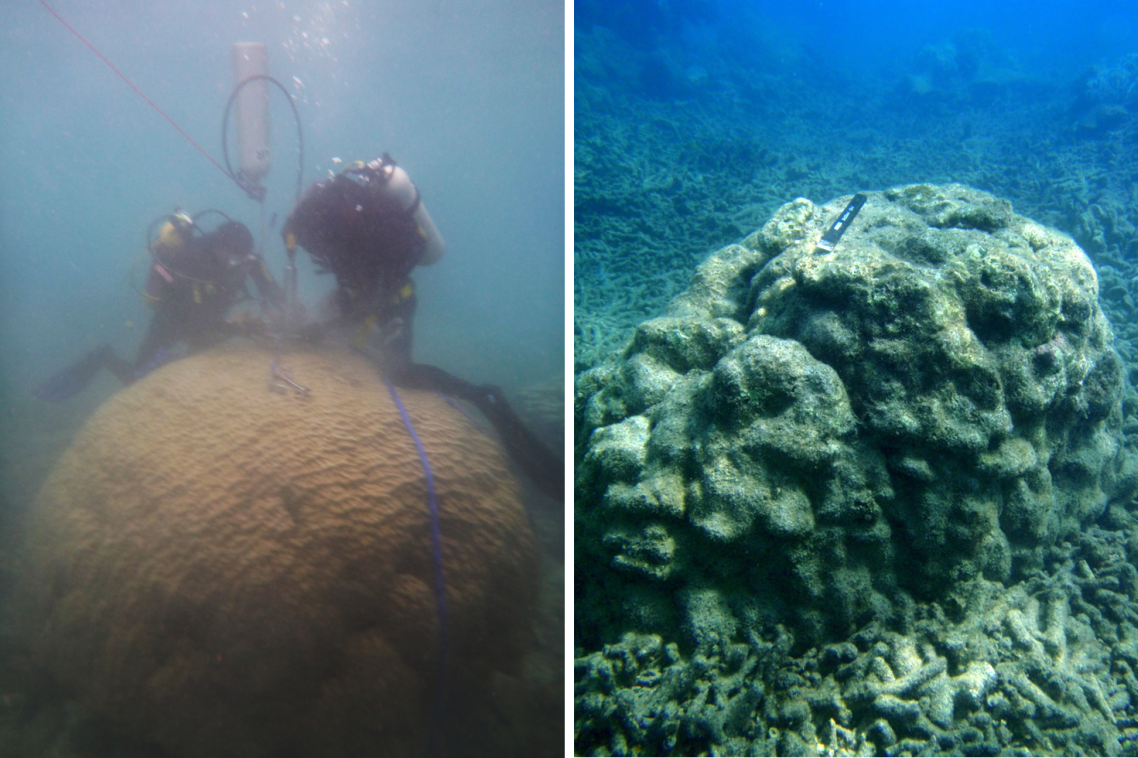
The Great Barrier Reef is at greater risk than ever from severe weather events, and University of Queensland researchers predict an increase in coral death this summer.
The prediction is based on research into the history of coral death on the reef and the results from that research will help reef managers across the globe reconstruct the history of their reefs and improve management practices.
The research team from UQ’s School of Earth Sciences Radiogenic Isotope Facility, studied massive Porites coral colonies, or 'bommies', considered more resistant to environmental disturbances than other groups of coral.
Lead researcher Dr Tara Clark said understanding deaths in this hardy group of corals provided insight into the seriousness of the decline of Great Barrier Reef coral communities.
“We found that there has been a significant correlation between the timing of deaths in the Porites colonies and unusually high sea-surface temperatures in the past 150 years, as well as an increased frequency of deaths in the past thirty years” Dr Clark said.
“Porites can live for several centuries and grow to several metres in diameter, providing important habitat for reef fishes and serving as valuable recorders of past environmental change.
“The increase in coral death in recent decades poses serious concern for the well-being of the Great Barrier Reef.”
The researchers used a modified uranium-series dating method tailored for very young corals to pinpoint the timing of coral death so they could determine the likely causes of death.
They matched the timing of a large number of Porites deaths to environmental factors, including the global bleaching event of 1997/1998, and two of the largest Burdekin River floods in the past 60 years.
This finding suggests that the inshore Great Barrier Reef may be declining.
Project leader Professor Jian-xin Zhao said that the increase in Porites deaths in recent decades could be due to several factors.
“The 1997/1998 bleaching followed a strong El Niño event on top of a decline in water quality and a long-term global warming trend, which seems to have pushed the most robust corals past their tolerance limit,” he said.
“Considering that a similar El Niño event is predicted to occur this coming summer, we have grave concerns for the reef.”
Previous research by Professor Zhao has shown a similar increase in Porites deaths in the South China Sea, suggesting it is a global phenomenon.
“Our research will provide valuable knowledge on historical changes in coral communities, which can then be used to assess the current state of the Great Barrier Reef and the effects of existing management strategies,” Professor Zhao said.
The paper, Discerning the timing and cause of historical mortality events in modern Porites from the Great Barrier Reef, is available online.
The research was funded by the Marine and Tropical Science Research Facility, the National Environmental Research Program, the Australian Research Council and the Great Barrier Reef Marine Park Authority.
Media: Dr Tara Clark, +61 7 3346 9755, t.clark1@uq.edu.au; Professor Jian-xin Zhao, +61 7 3346 9754, j.zhao@uq.edu.au
Related articles

What makes a winning environmental campaign? We studied six decades of activism to find out
