
Computer models help cerebral palsy patients step out
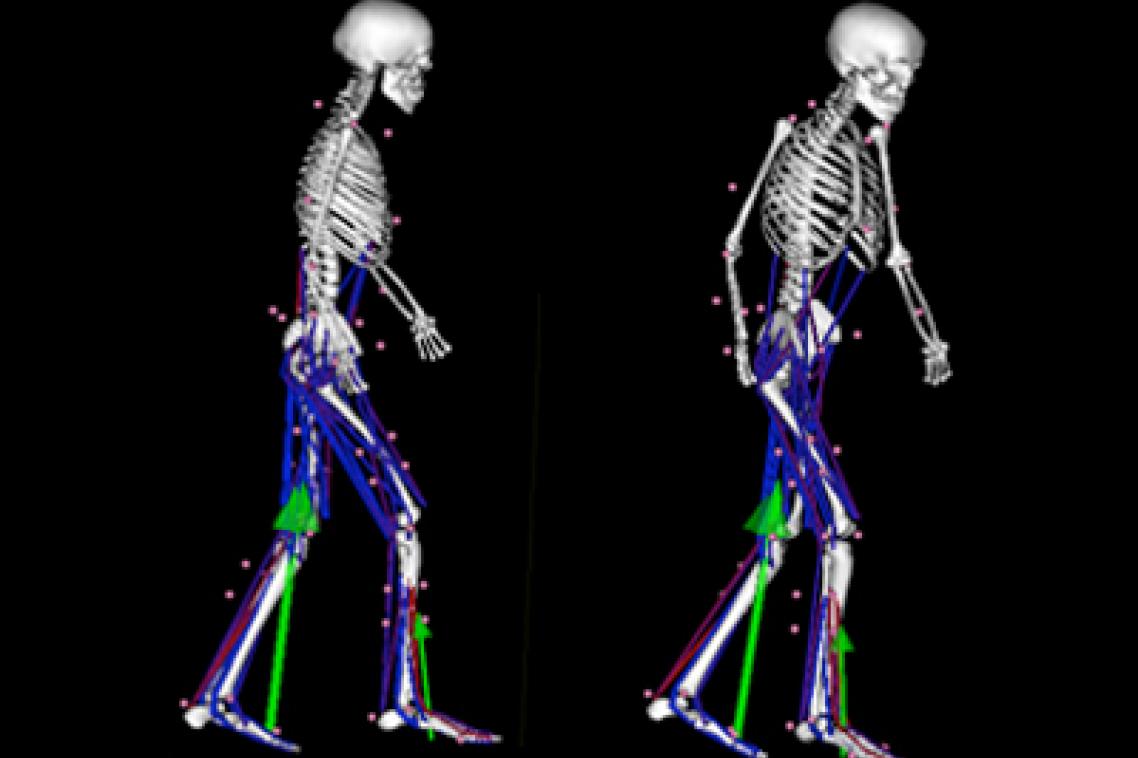
University of Queensland researchers are using computer modelling to predict the most effective way to help cerebral palsy patients walk and move more easily.
Dr Glen Lichtwark from the Centre for Sensorimotor Performance at UQ’s School of Human Movement Studies is simulating and predicting how surgery, strength training and other treatments could improve patients’ muscle function.
“The project will examine the effectiveness of medical interventions on muscle development and function,” Dr Lichtwark said.
“Cerebral palsy affects parts of the brain that control movement, therefore affecting a person’s posture and muscle coordination.
“Patients often need medical treatment and surgery to maintain mobility and manage muscle weakness, spasticity, joint stiffness and reduced muscle control.
“What we really want to know is how a specific treatment might impact an individual, so treatments can be tailored to that individual to maximise treatment success.”
About 34,000 people are living with cerebral palsy in Australia and this is expected to rise to more than 47,000 by 2050.
Dr Lichtwark said previously it had been difficult to establish the impact surgery had on walking, or to determine which treatments would address specific impairments.
“Our researchers have begun developing models to examine the impact of muscle tightening and weakness on walking and movement,” he said.
“The computer modelling allows us to make ‘virtual’ changes, including lengthening muscles or increasing strength, and to identify if particular treatments will improve the patient’s ability to move more freely.
“We will explore how cerebral palsy affects muscle function and physical activity from childhood through to adulthood. Currently, this is not well understood.”
The research team is seeking volunteers over the age of 18 with cerebral palsy for a study to examine how muscle strength and stiffness deteriorates over time, and the impact this has on physical activity and function.
The UQ study is funded by the Cerebral Palsy International Research Foundation, Cerebral Palsy Alliance and Queensland Health.
Dr Lichtwark is collaborating with researchers from the Queensland Cerebral Palsy and Rehabilitation Research Centre at UQ’s School of Medicine.
Dr Lichtwark, an expert in muscle function in people with cerebral palsy, is available for media interviews in conjunction with World Cerebral Palsy Day, Wednesday, 1 October.
Contact: Dr Glen Lichtwark, ph +61 7 3365 3401, g.lichtwark@uq.edu.au; Helen Burdon, +61 7 3365 7436, 0412 744 437, h.burdon@uq.edu.au or Caroline Day, +61 7 3365 6989, caroline.day@uq.edu.au
Related articles

UQ Medical Program to expand from major funding boost
