
Fruit and veggies pave the road to happiness
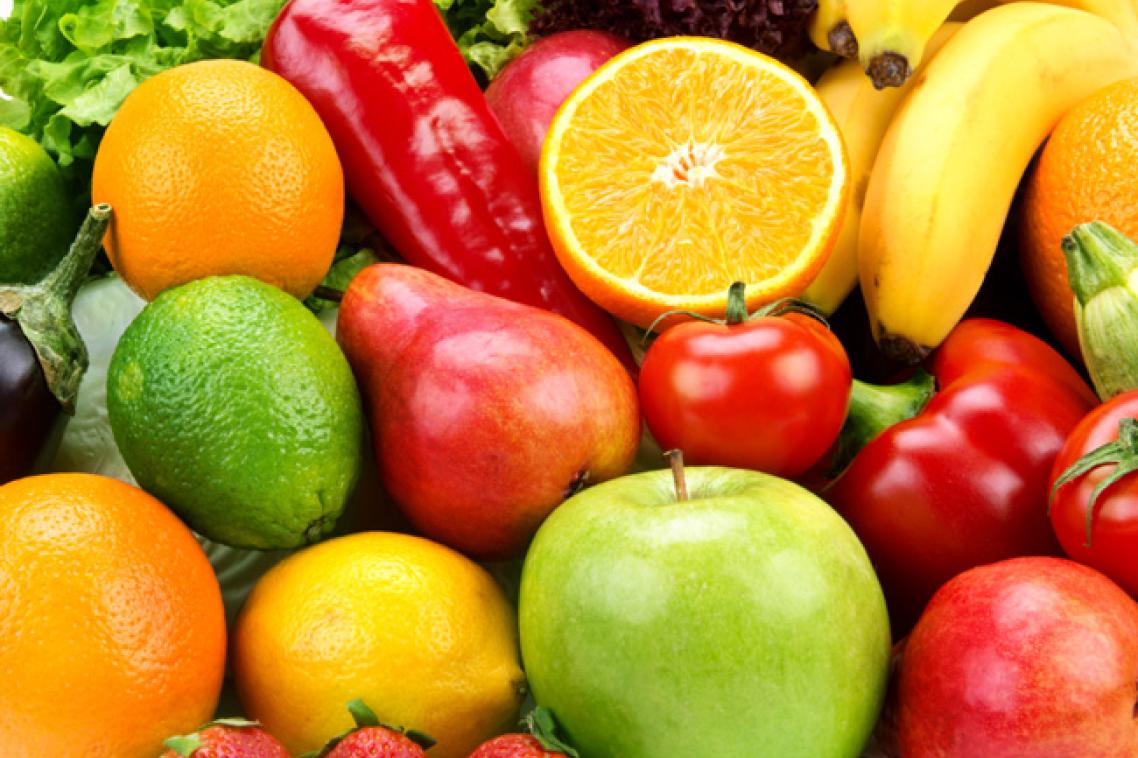
Fruit and vegetables have been identified as a vital key to mental well-being.
A University of Queensland study suggests eating eight or more portions of fruit and vegetables a day not only leads to better physical health but improves mental well-being.
The study, by health economics researcher Dr Redzo Mujcic from UQ’s School of Pharmacy, involved more than 12,000 Australian adults.
Dr Mujcic found participants were at their happiest when they ate five portions of fruit and four portions of vegetables each day.
“The results showed that the optimal consumption bundle is around four serves of fruit and four serves of vegetables a day for most well-being measures, and that less than 25 per cent of Australian adults consume this quantity,” he said.
Dr Mujcic said the study challenged healthy-eating guidelines promoted by many governments around the world.
“Many public health messages, such as the World Health Organization guidelines, promote the consumption of five serves of fruit and vegetables daily,” he said.
“While the combined portion of eight or more may seem relatively high, the present findings are closely in line with recent studies from the UK and New Zealand.
“Our research indicates that current guidelines are in need of review.”
The research found that well-being benefits derived from eating more fruit and vegetables were much higher for women than men, and that solely eating fruit had a greater impact on overall mental health than eating vegetables.
Dr Mujcic said he used data from the annual Household, Income, and Labour Dynamics Australia (HILDA) Survey to answer the age-old questions – are fruit and vegetables good for us? And, how much should we be eating?
“The data has been collected from the same set of individuals, aged between 15 and 93, over a two year period on their dietary and lifestyle choices, along with a number of mental and physical health measures,” he said.
“With this data, we were able to use much richer statistical methods to answer these types of questions.”
Study participants were asked to rate their level of happiness and record their daily consumption of fruit and vegetables.
Dr Mujcic said large-scale randomised control trials were needed to better inform existing public health messages and social policy.
One portion is the equivalent to one piece of fruit or vegetable the size of the palm of your hand.
The research paper can be found here.
Media: Dr Redzo Mujcic, UQ School of Pharmacy, Ph +61 (0)7 3346 1975, r.mujcic@uq.edu.au.
Topics
Related articles

Sick of being told to ‘just lose weight’? Health promotion shouldn’t come with weight stigma
