
Quantum reality check
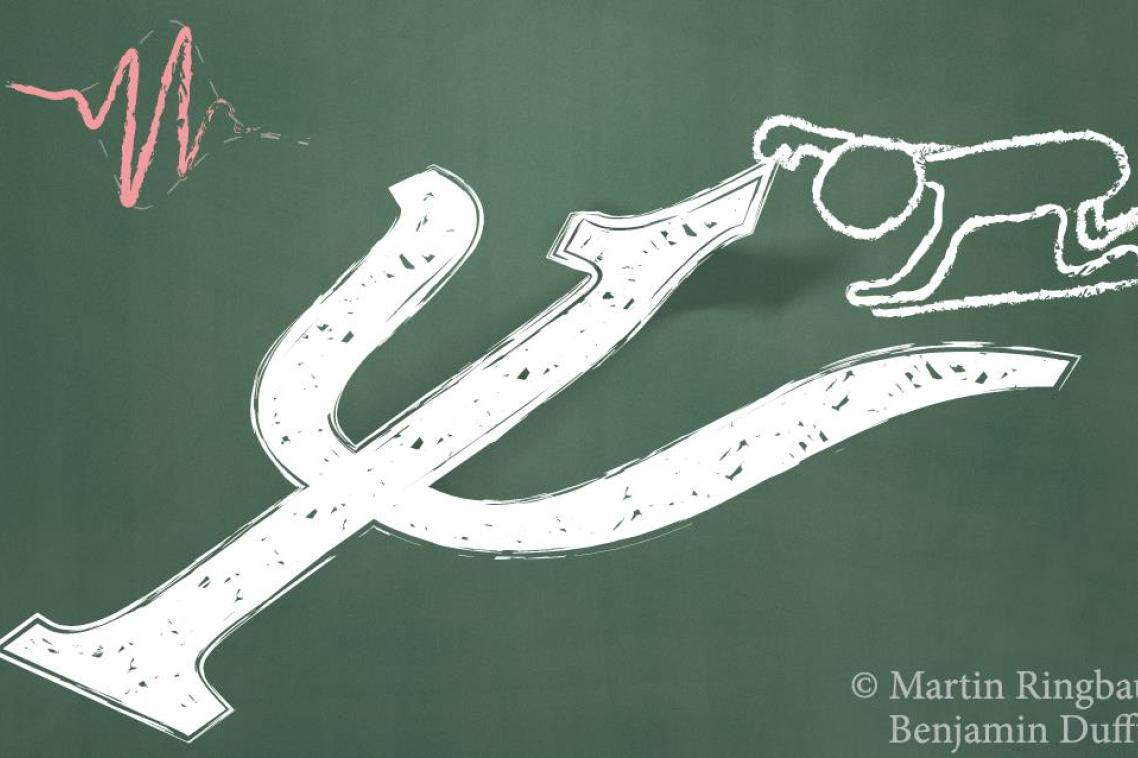
Schrödinger’s cat highlights a long-standing dilemma in quantum mechanics: is the cat really alive and dead, or is the weirdness just in our head?
Researchers at The University of Queensland have now made major progress in answering this question.
Using four-dimensional states of photons, and subjecting them to very precise measurements, they ruled out the popular view that describing the cat as dead and alive is just due to a lack of knowledge about its real state.
As with all objects in quantum physics, the cat is described by the quantum wavefunction.
Dr Alessandro Fedrizzi, from the UQ School of Mathematics and Physics (SMP), said that although the quantum wavefunction is our central tool for describing physical systems in quantum mechanics, it is still unclear what it actually is.
“Does it only represent our limited knowledge about the real state of a system, or is it in direct correspondence with this reality?” he said.
“And is there any objective reality at all?”
This debate has remained purely theoretical for decades, until three teams of quantum theorists — including co-authors UQ’s Dr Cyril Branciard and Dr Eric Cavalcanti from The University of Sydney — recently proposed experimental tests to answer this question.
Lead author and UQ PhD student Mr Martin Ringbauer said that the new approach tests whether the competing interpretations of the wavefunction can explain why we cannot tell quantum states apart with certainty, which is a central feature of quantum mechanics.
“Our results suggest that, if there is objective reality, the wavefunction corresponds to this reality,” Mr Ringbauer said.
In other words, Schrödinger’s cat really is in a state of being both alive and dead.
As measurements improve further, physicists will be left with two possible interpretations of the wavefunction: either the wavefunction is completely real, or nothing is.
The authors of the study, published in Nature Physics, are Mr Martin Ringbauer, Mr Benjamin Duffus, Dr Cyril Branciard, Dr Eric Cavalcanti, Professor Andrew White and Dr Alessandro Fedrizzi.
The study can be found at http://dx.doi.org/10.1038/nphys3233.
The work was supported by the Australian Research Council Centres of Excellence for Engineered Quantum Systems and Quantum Computation and Communication Technology, as well as the Templeton World Charity Foundation.
Watch Dr Alessandro Fedrizzi present a short video on the research here.
Media: Mr Martin Ringbauer (+61 7 3365 2444, m.ringbauer@uq.edu.au); Dr Alessandro Fedrizzi (+61 7 5336 7031, fedrizzi@physics.uq.edu.au); Professor Andrew White (+61 4 6625 6329, agx.white@gmail.com); Faculty of Science Engagement Officer Aarti Kapoor (+61 0449 863 208, a.kapoor@uq.edu.au)
Topics
Related articles

Hay fever can strike even when grass pollen concentrations are low
