
Navigating nerve fibres take different shapes
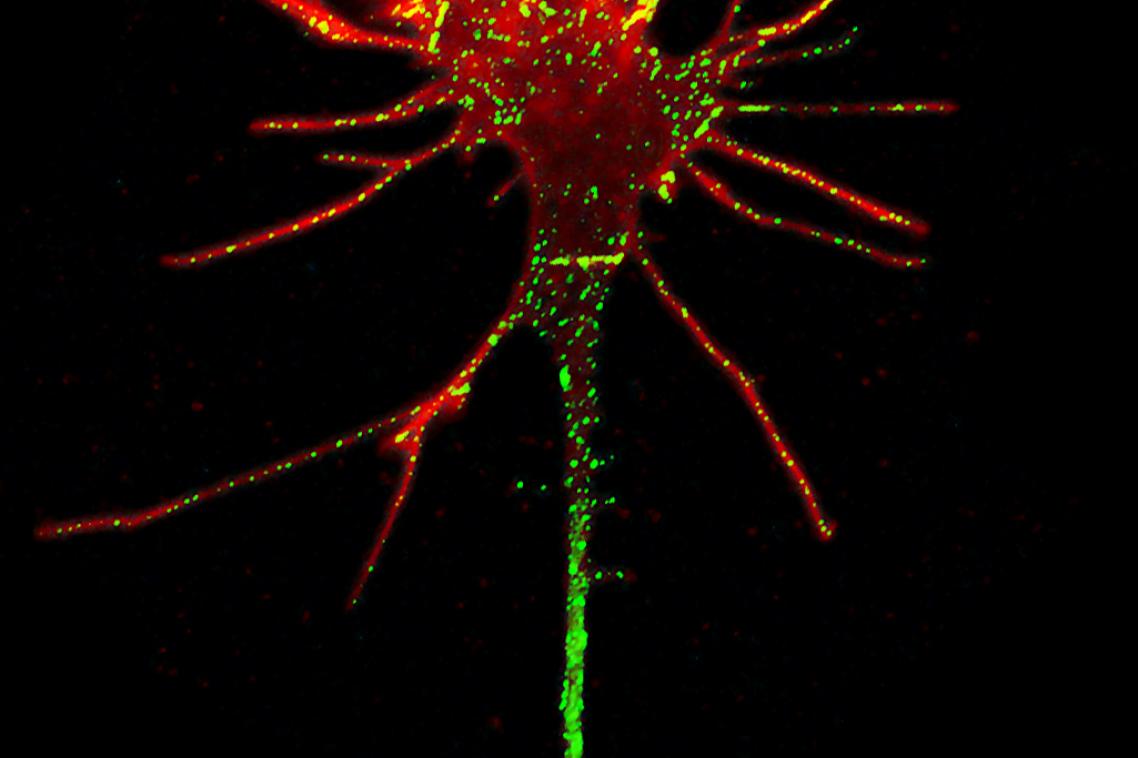
An analysis of how nerve fibres make vital connections during brain development could aid the understanding of how some cognitive disorders occur.
University of Queensland scientists at the Queensland Brain Institute, the School of Mathematics and Physics, and the School of Biomedical Sciences identified six key dimensions of the shapes that the tips of nerve fibres take on while navigating through the developing nervous system to make a connection.
Study leader Professor Geoff Goodhill from QBI said the relation between these shape dimensions and nerve fibre growth had been poorly understood.
“We’re trying to understand how nerve fibres are guided to their target,” Professor Goodhill said.
“The tips of nerve fibres have very complex shapes, but there previously hasn’t been much research into understanding them.
“There are believed to be an astonishing quadrillion nerve connections in the brain, and by understanding what’s involved in normal nerve fibre guidance, we can start to see what we can possibly do to prevent miswiring from occurring.”
Recent discoveries suggest that wiring problems may underpin a number of nervous system disorders including autism, dyslexia, Down syndrome, Tourette’s syndrome and Parkinson’s disease.
“Many cognitive disorders have been linked to the initial wiring of the brain during development, so by understanding the basic rules by which nerves find their targets, perhaps we could ultimately help prevent these disorders in the future,” Professor Goodhill said.
“Interestingly, rat nerve fibres growing in a culture dish, and zebrafish nerve fibres in the living brain, displayed the same growth cone shapes.
“That is good evidence to indicate that we have identified very basic biological properties that are transferrable across species.”
More than 50,000 images of nerve fibres were used in the study, using a mathematical analysis to assign 500 parameter points for the tip of each fibre to determine its shape.
A key finding of the study was that the tips of nerve fibres oscillate during navigation, and the stronger and more rapid the oscillations the faster the nerve fibres moved.
“Our next step is to study the role these shape dynamics play in nerve fibre navigation, and whether there are any behaviours we can influence,” he said.
The new analysis, published in the journal BMC Biology, was funded by grants from the Australian Research Council and National Health and Medical Research Council.
Media: Darius Koreis, +61 7 3346 6353, d.koreis@uq.edu.au; Professor Geoff Goodhill, +61 7 3346 6431, g.goodhill@uq.edu.au.
Topics
Related articles

Feed the children: food provision in early childcare falls short
