
Saving Barry the turtle is a group effort
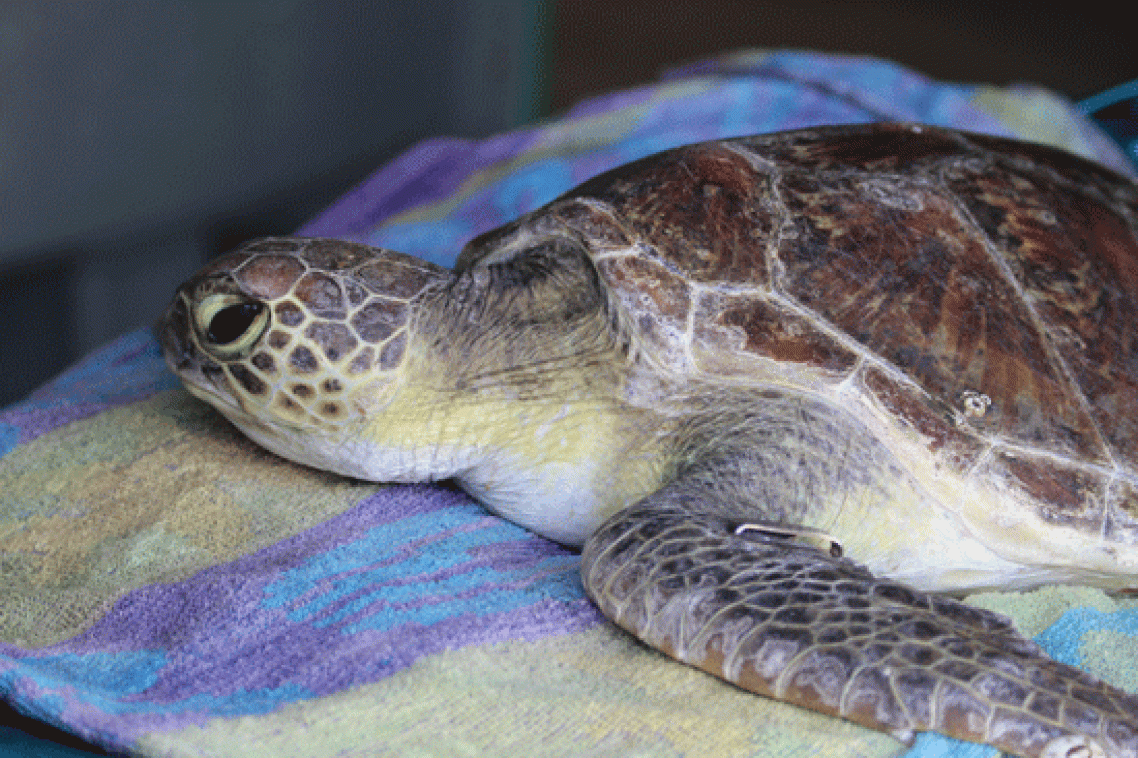
The University of Queensland’s Moreton Bay Research Station, the Quandamooka Rangers, Sea World, and the Queensland Parks and Wildlife Service all worked together to save the 49cm turtle, who had a severe case of floating syndrome.
Moreton Bay Research Station Education Officer Dr Kathy Townsend said Barry was so listless that when she first saw him she initially thought he had died in transport.
“He was suffering from extreme dehydration and about half his scutes − the large scales covering the shell − had severe UV damage and had lifted off,” Dr Townsend said.
“Luckily the Quandamooka Rangers who found him brought him straight to the station to undergo triage care.”
Dr Townsend immediately placed Barry on several rehydrating drips in an attempt to revive him.
“The change was spectacular: he went from near-dead to lifting his head to check us out,” she said.
Floating syndrome occurs when a turtle’s gut becomes paralysed, preventing it from being able to digest food.
Instead, the food decomposes, releasing gases that get caught in the body cavity and cause the animal to float.
“The condition occurs either from a parasite infection or from swallowing marine debris like plastic bags or balloons,” Dr Townsend said.
“Turtles with floating syndrome can’t absorb water so they quickly dehydrate and, because they can’t dive underwater, they’re often attacked by other animals, hit by boats or severely sunburnt.”
Once Barry was stabilised the Queensland Parks and Wildlife Service took him to Sea World for a full assessment and antibiotic treatment.
“He will spend several weeks at Sea World fattening up and undergoing rehabilitation under veterinary supervision,” Dr Townsend said.
“It really is wonderful how Queensland’s marine conservation community works together on these cases.
.
“Once Barry is back to full health we’ll release him back to the ocean, so he can hopefully live a long and happy life.”
A week after Barry was treated at Moreton Bay Research Station a second turtle, Billy, arrived with similar symptoms, highlighting the need to keep plastic and other rubbish out of the ocean.
Billy has joined Barry at Sea World and is expected to make a full recovery.
Watch footage of Barry when he first arrived at Moreton Bay Research Station, from the surface and from below.
Media: Dr Kathy Townsend 0428 388 959, kathy.townsend@uq.edu.au.
Related articles
UQ melanoma expert named Australia’s most innovative researcher by NHMRC
