
Anniversary marked with research honour
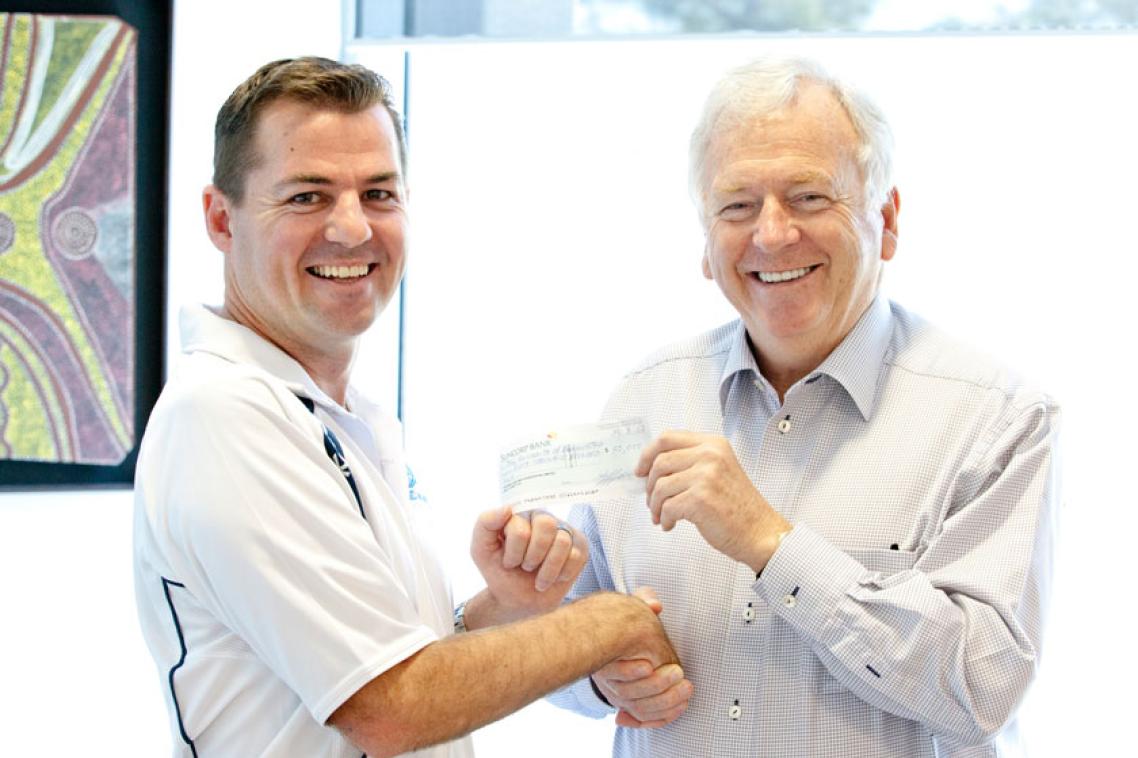
A new Fellowship in motor neuron disease (MND) research has been announced on the first anniversary of the death of campaigner and fundraiser Scott Sullivan.
Under the Fellowship, MND expert Dr Shyuan Ngo will work with The University of Queensland and The Royal Brisbane and Women’s Hospital’s (RBWH) Dr Rob Henderson for the next three years, bringing together clinical skills and science to better understand the disease.
The Fellowship was co-founded by the RBWH Foundation and the MND and Me Foundation.
MND and Me Foundation CEO Paul Olds said Mr Sullivan was passionate about seeing quality research making a difference to this devastating disease.
“Scott was a strong advocate of the work undertaken at RBWH and UQ’s Queensland Brain Institute, so it’s with great pleasure that we are able to help facilitate research collaborations between both parties in Scott’s honour,” he said.
Dr Ngo was appointed following a global recruitment campaign and will offer new insights into the disease while working to develop therapies for MND.
“It is fantastic that after conducting an international search for the right person we were able to offer the Fellowship to Shyuan,” Mr Olds said.
“She is a local scientist with very strong ties to the local MND community, and is a great fit for the role,” he said.
Dr Ngo’s research position at UQ is in partnership with the School of Biomedical Sciences, which is funding laboratory space, research staff and dedicated equipment..
Dr Ngo said she would have a particular focus on the role of energy metabolism in progressing the disease.
“We notice in the clinic that patients have hyper-metabolism, and that those who lose weight very, very quickly tend to be the ones who pass away very early,” Dr Ngo said.
“By understanding how changes in the way in which the body generates and uses energy affects how quickly the disease progresses, we hope to develop strategies to better manage the disease course.”
An estimated 1900 Australians live with the terminal disease, for which there is no known cure.
Media: Darius Koreis, +61 7 3346 6353, d.koreis@uq.edu.au; Paul Olds, +61 7 3394 5333, paul@mndandme.com.au.
Topics
Related articles

Would subsidising weight loss drugs make health care fairer?
