
Rare baby a testament to roo poo study success
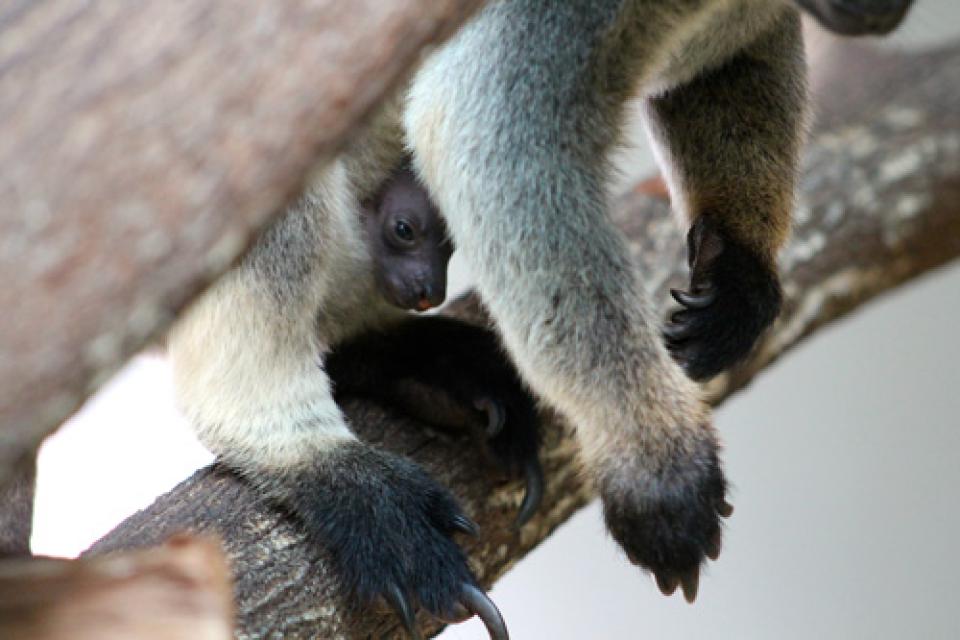
University of Queensland researchers and Dreamworld staff are celebrating the birth of one of Australia’s rarest species of tree kangaroo.
Mupee is the first Lumholtz tree kangaroo to be born into Dreamworld’s Australasian captive management program.
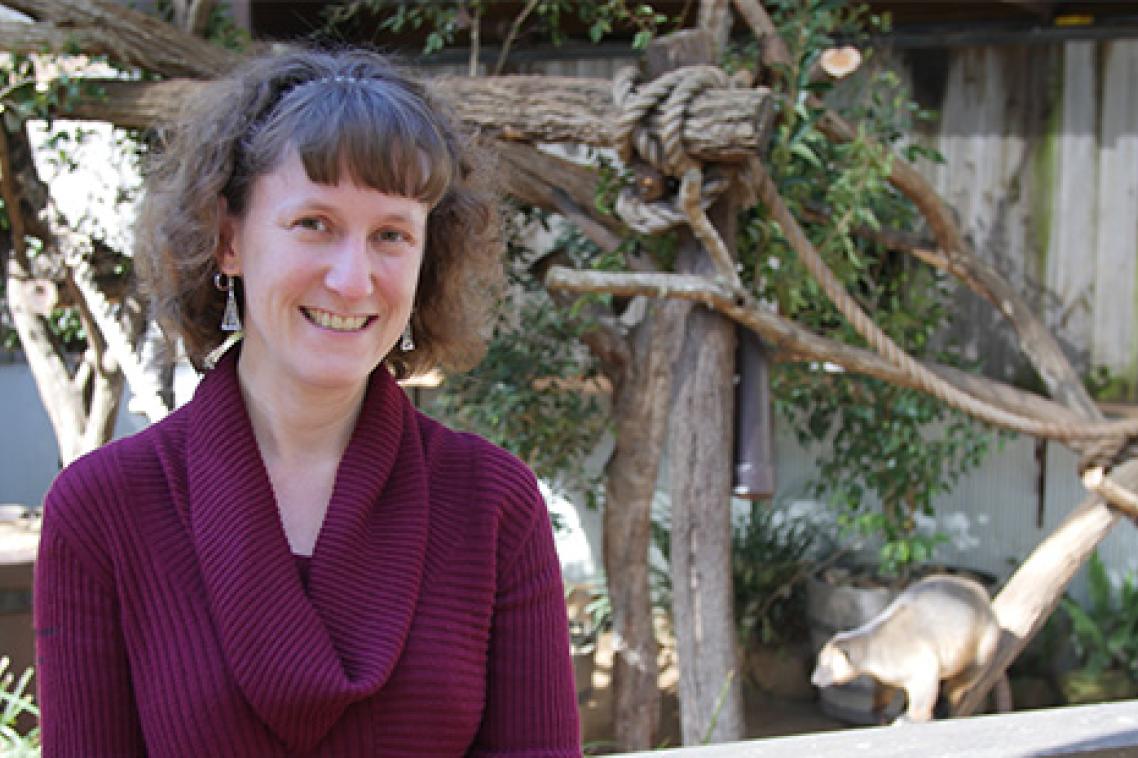
UQ School of Agriculture and Food Sciences reproductive biologist Dr Tamara Keeley worked with Dreamworld staff to investigate potential breeding problems in a female Lumholtz tree kangaroo.
Dreamworld staff collected tree kangaroo poo samples for Dr Keeley, who has used non-invasive endocrinology tests to monitor wildlife over the past 13 years.
Dr Keeley said the Lumholtz tree kangaroo had different patterns of reproduction to wallabies and other kangaroos, and was more difficult to breed.
“Little was known about fertility of this cryptic, solitary, tree-dwelling species, which has a relatively low reproduction rate with more than a year between the birth of single offspring,” Dr Keeley said.
“We were able to give Dreamworld an estimate of when the next fertile period was likely to occur, which helped improve the likelihood of success for mating,” she said.
“I found that initially there was an abnormally long cycle length between times of fertility in this animal.
“This is something that has never been reported in the literature for any species of tree kangaroo, and it overturns what we knew about reproduction in the Lumholtz tree kangaroo.”
Dr Keeley said hormonal testing was a valuable tool for scientists.
“With just a single poo sample we can safely monitor our native animal populations without stressing them or changing their normal routines,” she said.
The Lumholtz tree kangaroo population is declining, with only an estimated 10,000 left in the wild.
Dreamworld Life Sciences General Manager Al Mucci said there was only a small window of fertility for Lumholtz tree kangaroos, limiting their chances for mating success.
“We needed a non-invasive way to detect whether the tree kangaroo was at the right stage of the reproductive cycle to be receptive to males,” Mr Mucci said.
“Dreamworld’s collaborative relationship with UQ highlights the important work being done in this area at both institutions.”

The Lumholtz tree kangaroo is one of only two known Australian species of tree kangaroo, both found in Far North Queensland, and is the smallest tree kangaroo of the 14 species in Australia and Papua New Guinea.
In collaboration with UQ’s Associate Professor Johnston, Dr Keeley teaches an animal reproduction course where students learn to run simple hormonal tests to detect pregnancy in animals.
The course will be an important component of four new UQ programs– the Bachelors of Sustainable Agriculture, Equine Science, Veterinary Technology and Wildlife Science.
Find out more about the Lumholtz tree kangaroo here.
Media: Dr Tamara Keeley, +61 7 54601 117, +61 424728283, t.keeley@uq.edu.au. Dreamworld: Lyndal Dennis, 07 5605 8277, 0403 318 684, lyndal.dennis@dreamworld.com.au. Second image caption: Lumholtz tree kangaroo joey, Mupee. For more images, please contact Lyndal Dennis.
Related articles

Insights strengthen outlook for Australia’s buffalo industry
