
Warmer seas to bring big changes for marine life
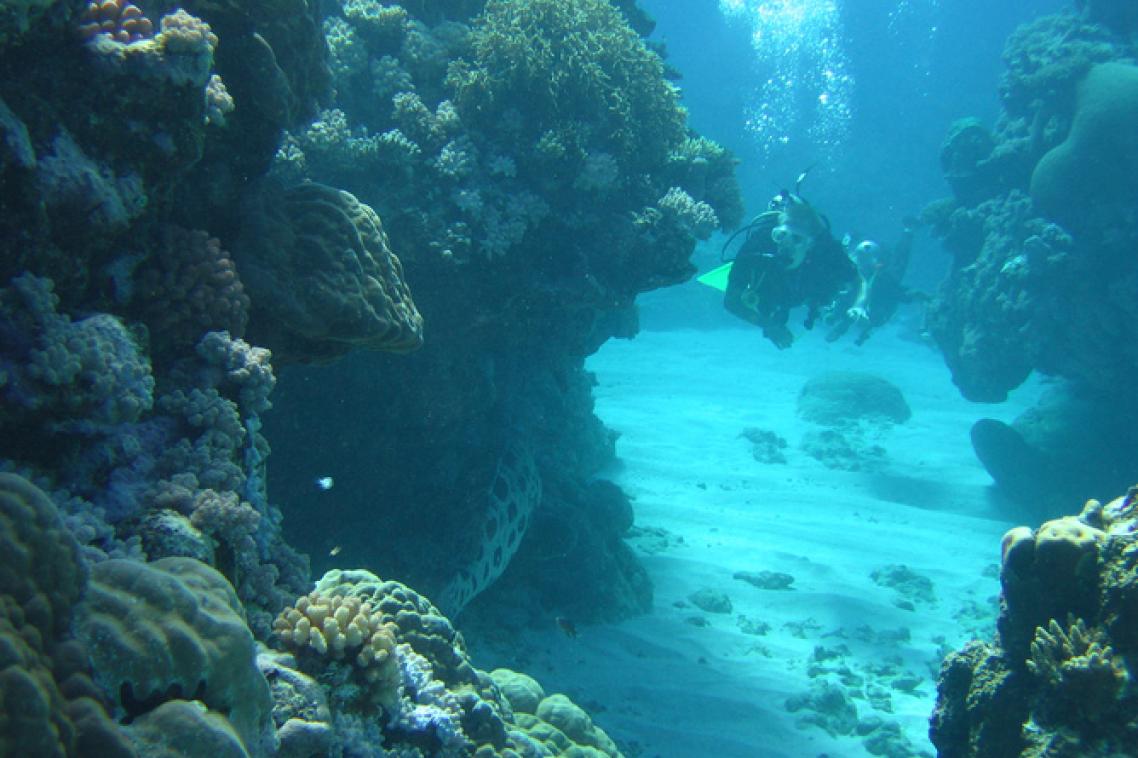
Warming oceans will cause profound changes in the global distribution of marine species, new research shows.
The University of Queensland’s Professor John Pandolfi, from the ARC Centre of Excellence for Coral Reef Studies, said the international research team modelled the impacts of a changing climate on almost 13,000 marine species, more than 12 times as many species as previously studied.
“A rapidly warming climate will cause many species to expand into new regions, causing impact on native species in those areas,” Professor Pandolfi said.
“Some species will have much more restricted ranges, particularly those around the tropics, and these species are more likely to face extinction.”
Professor Pandolfi said global patterns of species richness would change significantly, with considerable regional variability. Above all, the study showed the broad geographic effects of climate change.
“This study gave us hope that species have the potential to track and follow changing climates,” Professor Pandolfi said.
“But it also gave us significant cause for concern, particularly in the tropics, where strong biodiversity losses are predicted.
“This is especially worrying, and highly important for Australia’s coral reefs.
“Other studies have shown high extinction risk for plant and animal life in tropical regions, where localised human impacts – in addition to climate change – have resulted in substantial degradation.”
To model the projected impact of climate change on marine biodiversity, the researchers used climate-velocity trajectories, a measurement which combines the rate and direction of movement of ocean temperature bands over time, together with information about thermal tolerance and habitat preference.
The researchers said the analysis provided the simplest expectation for the future distribution of marine life, and showed recurring patterns of high rates of species invasion and local extinctions.
“The changes are likely to make currently distinct ecological communities much more similar to each other in many regions by the end of the century,” Professor Pandolfi said.
“New combinations of resident and migrant species will present unprecedented challenges for conservation planning.
“Countries will need to coordinate their conservation efforts to have any real chance of combating the potentially severe biodiversity losses that a changing climate might impose.”
Professor Pandolfi said that above all, the study showed the broad geographic effects of climate change.
Professor Elvira Poloczanska, from CSIRO, said the research had shown how climate change would mix up biodiversity patterns in the ocean.
“Ecological communities which are currently distinct will become more similar to each other in many regions by the end of the century,” she said.
Dr David Schoeman from the University of the Sunshine Coast said the model suggested there could be time to prevent significant climate-related extinctions outside of the tropics.
“Results under a scenario in which we start actively mitigating climate change over the next few decades indicates substantially fewer extinctions than the results from a business-as-usual scenario,” Dr Schoeman said.
Possibly more worrying though, was “the immense development of novel biotic assemblages”.
“We have little idea how these new combinations of species in ocean systems around the world will affect ecosystem services, like fisheries,” Dr Schoeman said.
“We should be prioritising ecological research aimed specifically at addressing this question.”
Climate velocity and the future of global redistribution of marine biodiversity by Jorge Garcia Molinos, Benjamin S. Halpern, David S. Schoeman, Christopher J. Brown, Wolfgang Kiessling, Pippa J. Moore, John M. Pandolfi, Elvira S. Poloczanska, Anthony J. Richardson and Michael T. Burrows is published today in the journal Nature Climate Change.
Media: Professor John Pandolfi, j.pandolfi@uq.edu.au, +61 (0) 400 982 301; Eleanor Gregory, eleanor.gregory@jcu.edu.au, +61 (0) 428 785 895.
Related articles

Transforming communities: 2026 UQ Alumni Award winners
