
Cancer test predicts treatment outcome
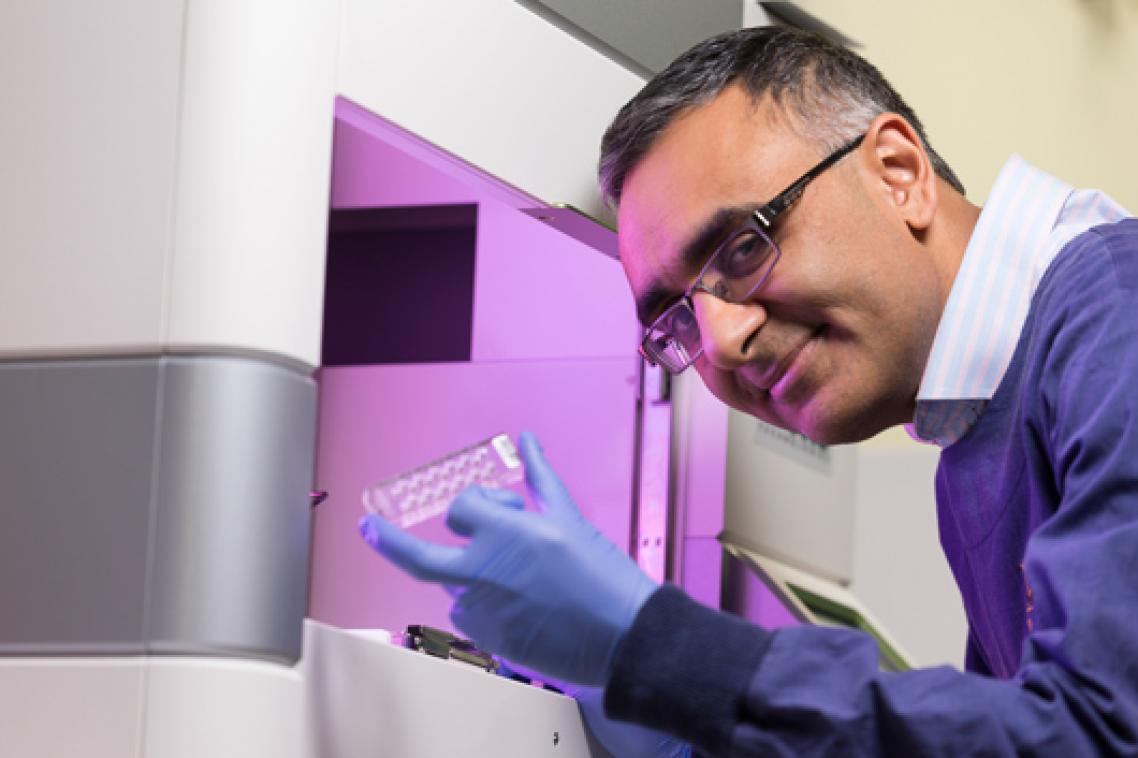
University of Queensland researchers have announced a new tool in the fight against cancer, with the development of a world-first test that will direct treatment choices for patients with some forms of blood cancer.
The test, developed by the UQ Diamantina Institute’s Professor Maher Gandhi, can predict how patients with a specific form of non-Hodgkin’s lymphoma will respond to standard treatment.
Professor Gandhi said results from a landmark study regarding the tool would help clinicians identify the best course of action for patients with Diffuse Large B-Cell Lymphoma (DLBCL).
Leukaemia Foundation Queensland CEO Bill Petch said the test could help patients access newer drugs in the future.
“This isn’t just another test. It’s a game-changer,” Mr Petch said.
“Professor Gandhi’s discovery will mean patients get access to the best treatment for them, first time, every time.
“It will significantly reduce relapse rates and have a significant impact on how drugs are funded and delivered into the healthcare system.
“The implications for this country’s health economics are enormous but, most importantly, patients will get access to the best treatments more quickly.
“If this test can then translate to other medicines and blood cancers, it could open the door to new drugs from overseas by shedding more light on their potential here in Australia.”
Professor Gandhi said this type of non-Hodgkin’s lymphoma was the sixth most common form of cancer, with up to 2000 Australians are diagnosed each year.
Professor Mahar Gandhi - Cancer test predicts treatment outcome from The University of Queensland on Vimeo.
“It can be fast growing and aggressive, so early diagnosis is vital, as is swift treatment,” he said.
“Fortunately, the majority of cases respond very well to the current first line treatment, which is a combination of chemotherapy and immunotherapy.
“However, some patients do not respond, and for these people the prognosis is poor. “
“The test will allow clinicians like myself to determine which patients are unlikely to respond well to standard treatment, thus avoiding ineffective and unnecessary chemotherapy and prompting consideration of other treatment options.”
The Leukaemia Foundation Queensland partly funded the research, which is published in the prestigious Lancet Haematology journal.
Researchers are seeking a provisional patent for the test and are working with commercial partners to develop the technology further.
Professor Gandhi and a patient will be available for media interviews on Friday 2 October, at the Translational Research Institute, Woolloongabba.
Video footage for media use is also available. To arrange an interview or access the footage, contact Kate Templeman +61 (0)409 916 801.
Media: Professor Maher Gandhi, m.gandhi@uq.edu.au, +61 7 3443 8026; Kate Templeman, k.templeman@uq.edu.au+61 7 3443 7027, +61 (0)409 916 801.
Topics
Related articles

Sick of being told to ‘just lose weight’? Health promotion shouldn’t come with weight stigma
