
It’s 2015, so where’s my flying car?
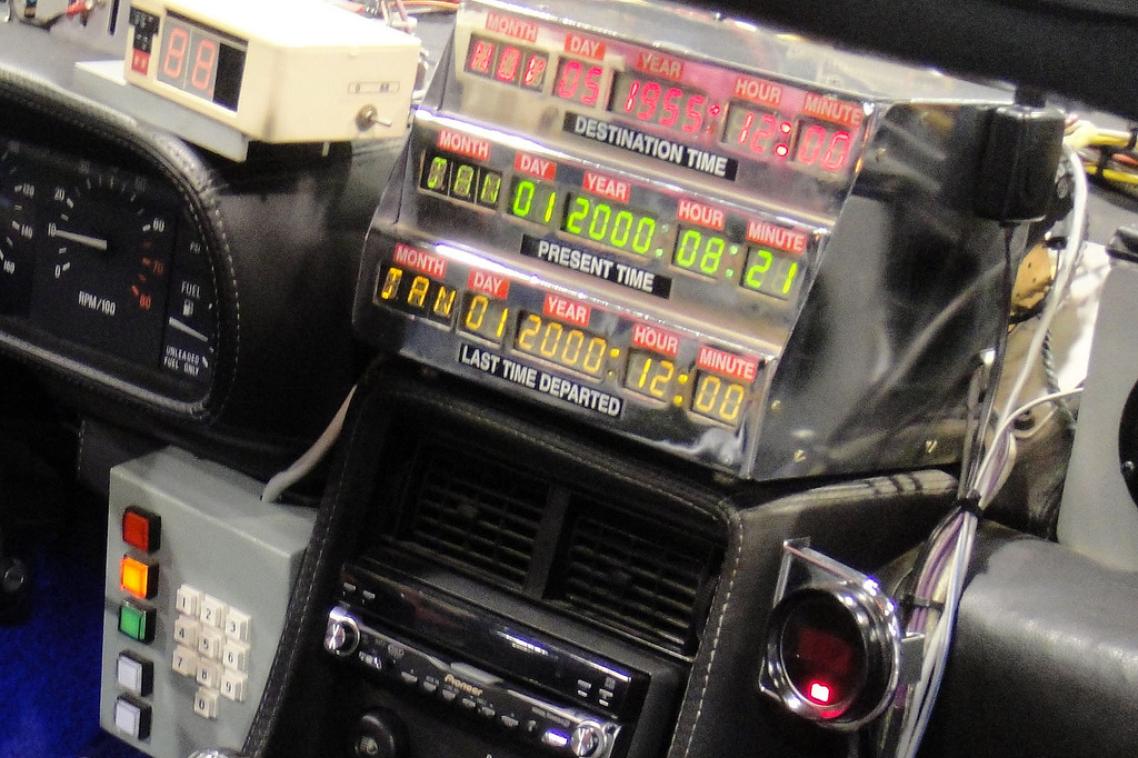
Today, 21 October 2015, marks the day Marty McFly and Doc Brown arrive in the fictional future of the iconic film Back to the Future II.
While we aren’t expecting the time-travelling duo, played by Michael J. Fox and Christopher Lloyd, to arrive from the past — what about the film’s other predictions of the year 2015?
According to UQ researchers, it seems the filmmakers were both spot on and way off.
Where’s my flying car?

According to University of Queensland mechatronics lecturer Dr Pauline Pounds flying cars do in fact exist and have been around for almost 100 years.
“The first flying car, the Curtis Autoplane, was actually built and patented in 1917,” said Dr Pounds.
“But unfortunately it was both a bad car and bad plane.
“The problem with flying cars is they need enormous amounts of energy to fly, particularly if they have a vertical take-off and landing feature like in the film.”
While there are currently flying cars on the market, Dr Pounds said these are more or less just small planes which can “taxi a bit faster”.
Can I travel through time?
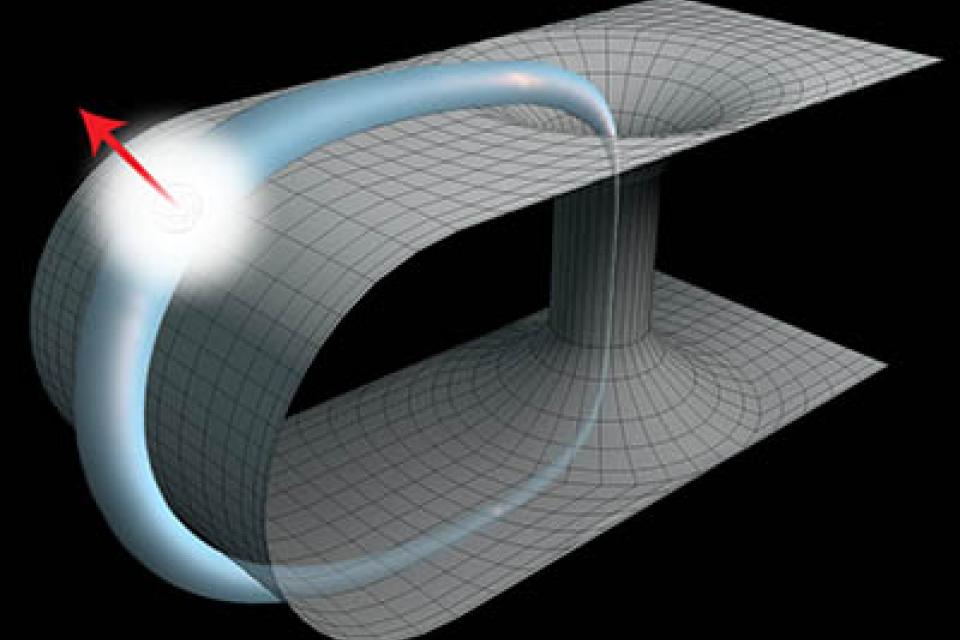
According to UQ experts, the short answer is yes and no. Einstein’s theory of general relativity suggests the possibility of travelling backward through time using an Einstein-Rosen bridge, also known as a wormhole.
UQ physics researcher, Martin Ringbauer, has used single particles of light to simulate the behaviour of quantum particles when travelling through time.
He said this possibility in Einstein’s equations has puzzled researchers for decades, as it creates paradoxes in the classical world like the “grandfather paradox”.
“This paradox is the exact problem Marty encounters in the movie when he almost prevents his parents from meeting,” Mr Ringbauer said.
“As he starts changing the past, he begins disappearing.
“By changing the past in this way he would erase his own existence and could have never set out for the time travel in the first place.”
Where’s my hoverboard?

There has been various examples of functioning hoverboards on the internet, as well as a range of hoax videos of full flying examples.
However, according to UQ theoretical physicist Professor Ben Powell, a device which has the capabilities and control of Marty McFly’s retro ride is still a way off.
“The working hover boards you may have seen on the internet levitate by using superconductors and magnets, similar to the way a maglev train works” Professor Powell said.
“While this is great technology, these board require a superconducting surface to levitate above and they don’t have the abilities to change directions or accelerate and brake in mid air.
“So to have hover boards like those in the film, we would need superconductors that work at room temperature, rather than the very cold temperatures that currently known superconductors work at.”
Today’s technology
While we might not be able to visit last week, fly our car to the beach or gently hover down to the shops, other predictions of 2015 the film made were spot on. For example:
- Google glass
- Tablet computers
- Wall mounted flat-screen televisions
- Video conferencing
- Virtual reality headsets
- Voice and finger print control technology
- Even dog walking drones
Media: Dr Pauline Pounds, pauline.pounds@uq.edu.au, +61 (0)416 238 326; Professor Ben Powell, b.powell1@uq.edu.au, +61 (0)410 922 649; Martin Ringbauer, m.ringbauer@uq.edu.au; UQ Communications, Casey Fung, c.fung@uq.edu.au, +61 (07) 3346 7887.
Related articles

UQ to support development of mobile launcher for high-speed flight R&D
