
UQ in the depths of “blue carbon” research
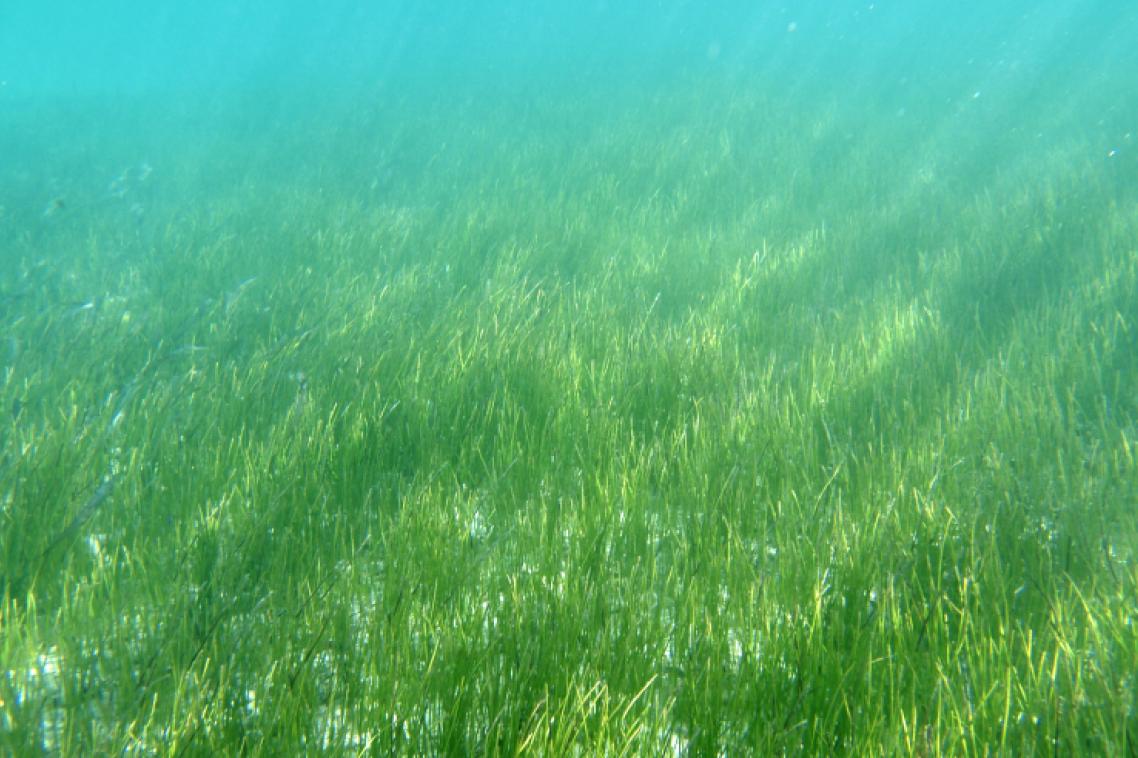
The University of Queensland has an extensive portfolio of “blue carbon” research which seeks to better understand the role of oceans and their ecosystems in reducing carbon emissions and tackling climate change.
Professor Catherine Lovelock of UQ’s School of Biological Sciences said “blue carbon” was the term used to describe carbon stored in marine and coastal environments.
“A new blue carbon research project was unveiled at the global climate change talks in Paris last week at a roundtable convened by Australia and the International Blue Carbon Initiative,” Professor Lovelock said.
UQ is leading two of the four work packages of the CSIRO Coastal Carbon Biogeochemistry Cluster which represented investment of $15 million by CSIRO and partners (University of Western Australia, University of Technology Sydney, Southern Cross University, Griffith University, and the Australian Institute of Marine Science) from 2012-2016.
Professor Lovelock is a member of the International Blue Carbon Working Group that has set the agenda for Blue Carbon internationally (The Blue Carbon Initiative) and advises the Blue Forests project, part of the United Nations Environment Programme.
She said UQ’s wide-ranging research included:
- Studying seagrass, mangrove and tidal marsh carbon storage and mapping blue carbon environments in Australia and internationally (through UQ’s Global Change Institute, the School of Biological Sciences and the UQ School of Geography, Planning and Environmental Management).
- Natural resource management of blue carbon assets and economic analyses;
- Legal analyses relating to blue carbon (TC Beirne School of Law).
UQ partners with national and international institutions to lead Blue Carbon research and facilitate its uptake include CSIRO; QLD Government, Department of Environment Australia; Conservation International; Ministry of Marine Affairs and Fisheries, Indonesia and a range of national and international Universities and research institutions.
Federal Environment Minister Greg Hunt said Australia had significant blue carbon resources, with coastal wetlands alone estimated to be storing in the order of 2.5 billion tonnes of carbon.
Media: Professor Catherine Lovelock, 0429 854 507 c.lovelock@uq.edu.au;
Professor Stuart Phinn, +61 7 3365 6526 s.phinn@uq.edu.au;
Dr Justine Bell +61 7 3365 6588, j.bell3@uq.edu.au;
Dr Megan Saunders, Global Change Institute, m.saunders1@uq.edu.au.
Related articles

UQ nutrition trial targets healthier piglets with fewer antibiotics
