
Even snakes get spinal aches
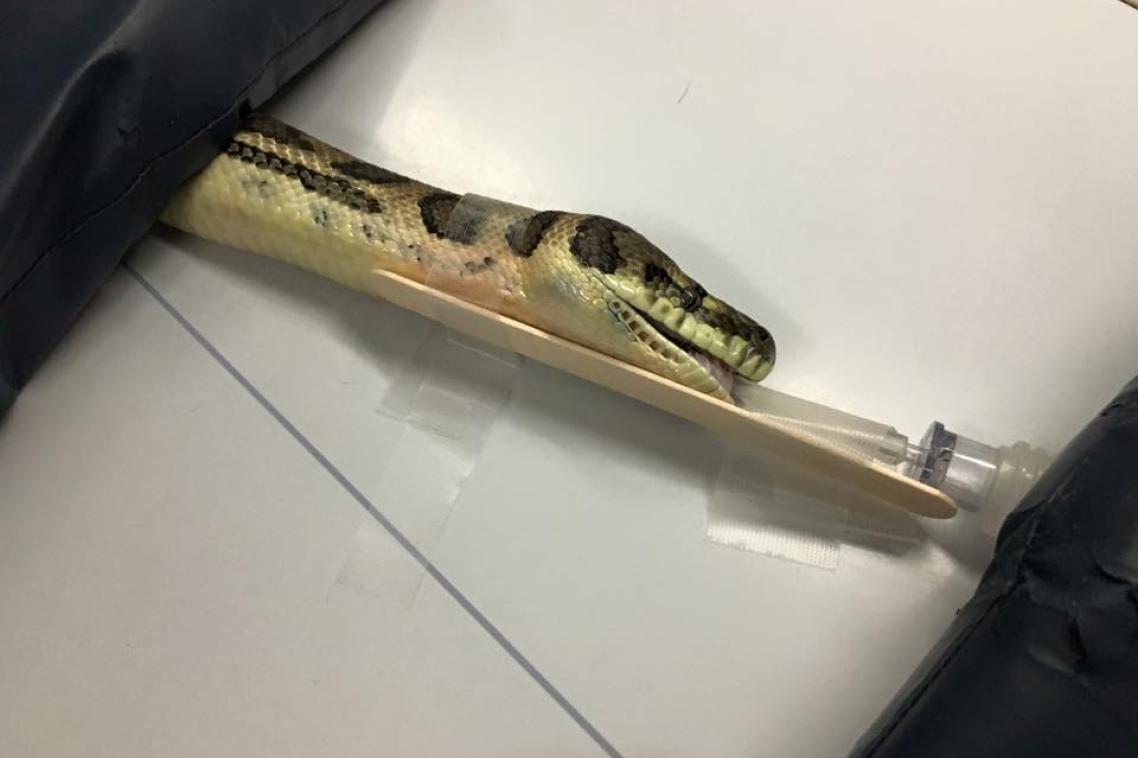
Even animals that spend all day on their front can have back problems , as the University of Queensland Small Animal Hospital avian and exotics team knows all too well.
The team, part of the School of Veterinary Science, treated an eight-foot-long Proserpine Carpet Python for spinal pain earlier this month.
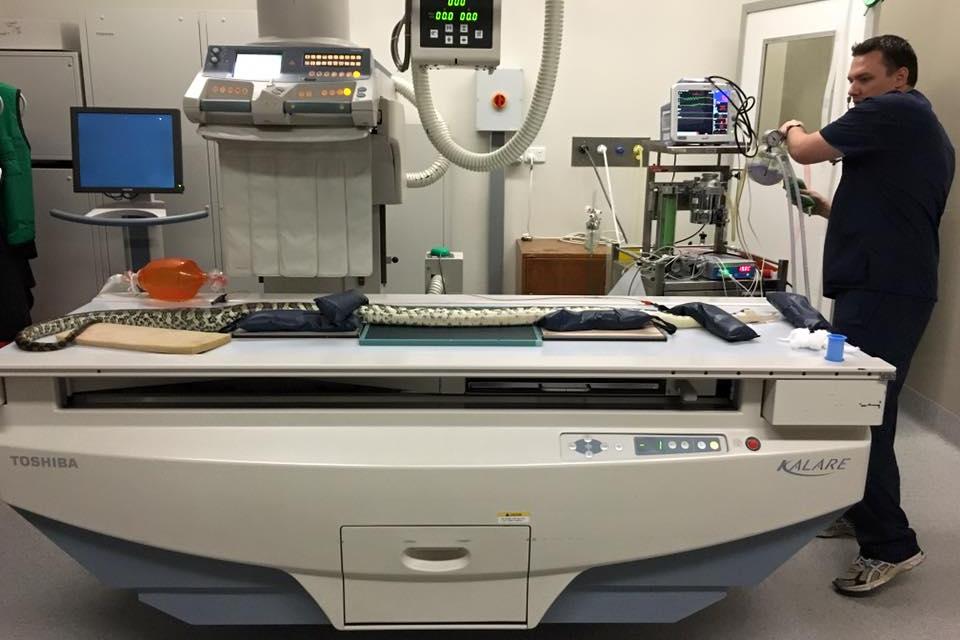
Associate Professor Dr Bob Doneley said the snake was longer than the X-ray table, and required special treatment for assessment.
“Snakes have between 300 and 400 vertebrae, each with a pair of ribs attached,” he said.
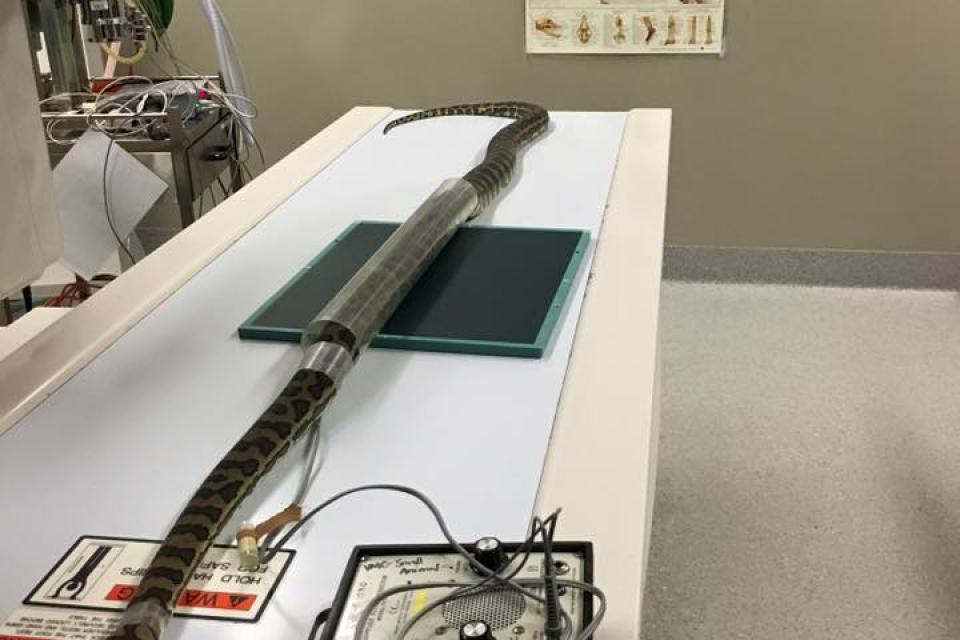
And though non-venomous, the Proserpine snake could still wind tightly around a human and her bite could still pack a punch.
“It was a matter of anaesthetising her and then using a plastic tube to keep her back straight while we took the X-rays," Dr Doneley said.
“One vertebrae in her spine was starting to dissolve and we haven’t ruled out an infection.”
The team put the snake on painkillers and antibiotics, and will check her progress in six months.
“Nothing happens in reptiles in a hurry,” Dr Doneley said.
Gary Fitzgerald, the clinic’s head nurse, is the owner of the snake. A keen herpetologist, Mr Fitzgerald has kept reptiles since he was a small boy and, with his training as a veterinary technician, he is alert to any signs of problems.
“He noticed this snake was becoming a bit more aggressive than usual, and also that when it was moving, it was keeping part of its back very straight,” Dr Doneley said.
“It would take an experienced reptile vet and keeper to notice this problem. So we examined the snake and pressed along its back and it reacted as if in pain.”
There’s an art to anaesthetising snakes, as the blood vessels cannot be seen through the skin and if you hit a muscle instead of a vein, the anaesthetic may not work.
“You’ve got to know where the veins are, then they take a minute or two to go to sleep and we put them on an anaesthetic machine using a ventilator.”
The clinic sees about 1000 wildlife cases a year, offering a variety of cases for UQ veterinary students to learn about treating and caring for wildlife.
“I always get a buzz when someone tells me they have released something,” Dr Doneley said.
“What they learn here, they won’t learn in a private practice where the focus is more on domestic animals. This is a huge opportunity to learn about disease, medicine, surgery and general care of birds, reptiles, small animals and wildlife cases.
“The skills they learn now will help students to help them and similar species in future, which is particularly important if they become endangered.”
The Veterinary School receives no government funding for wildlife care so it relies on community support through the Wildlife Emergency Care Fund.
“We are always grateful for donations to care for our native animals,” Dr Doneley said.
Click here to donate.
Caption: X-Raying an eight-foot-long Proserpine Carpet Snake.
Contact: Dr Bob Doneley, 07 54601 788 or r.doneley@uq.edu.au or UQ Communications on 07 3346 0561 or communications@uq.edu.au
Related articles

How brainless sea sponges use sunset as a cue to prepare for metamorphosis
