
Students hone human dissection skills for prestigious prize
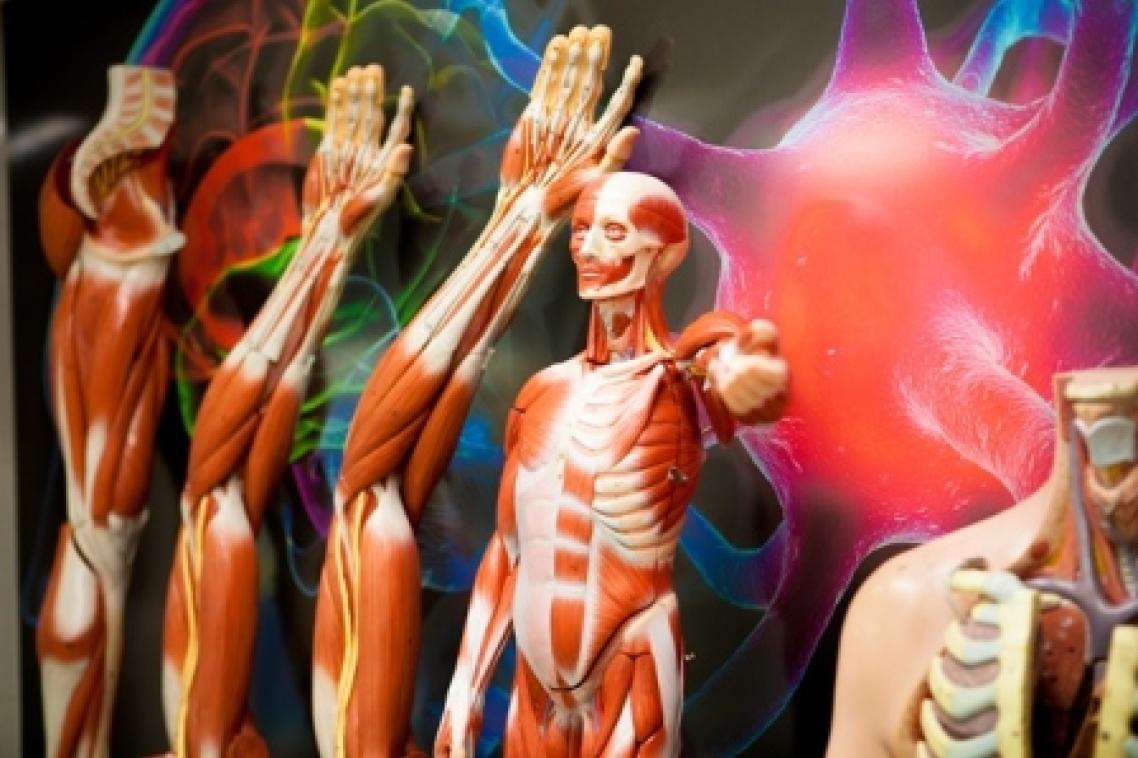
Originality and exceptional technical skills will decide which University of Queensland anatomy student wins the 2016 Royal Australasian College of Surgeons (RACS) Dissection Prize.
The judging of the annual competition will take place at UQ’s St Lucia campus at 10.30am on Friday 26 February.
Each human dissection takes more than 50 hours and 25 students have been working on their entries since last October.
The RACS award began in 1992 and allows School of Biomedical Sciences (SBMS) anatomy students to demonstrate their practical anatomical skills in a dissection of their choice.
UQ Chief Anatomist Dr Vaughan Kippers said entries were judged on three criteria.
“The first criterion the judging panel will be looking for is an original concept or idea, not just a copy of a dissection which has been undertaken before,” he said.
“The second criterion is an exceptional display of technical dissection expertise, and finally the student’s single sheet explanation about the dissection will also be taken into consideration.”
The entries will be judged anonymously by a panel of five judges with a wealth of anatomical expertise.
Three retired surgeons on this year’s panel also represent three generations of SBMS alumni.
Nonagenarian Professor Sam Mellick taught anatomy to fellow judge and alumnus Dr Walter Wood, who in turn taught alumnus and panel chief judge Dr Peter Wragg.
Other judging panel members are anatomist and UQ alumnus Professor Michael Bryden, and the first prize winner of the 2015 RACS Anatomy Dissection Prize Dr Dennis Yeow.
Dr Kippers said the winning dissection entries from each year were preserved and used as teaching material.
“The ingenuity shown by students year after year provides us with a unique set of teaching aids for future students undertaking anatomy courses in medicine, science and specialist surgical training programs,” he said.
“We are very grateful to those who donate their bodies to medical science through the UQ Body Donor Program and allow us to maintain the exceptional standard of anatomical skills for which the University is known internationally.”
Media: Dr Vaughan Kippers, v.kippers@uq.edu.au, + 61 (7) 3365 7549, Ms Lynda Flower, l.flower@uq.edu.au, + 61 (7) 3346 9865.
Related articles

Shaping the future of medicine: UQ Medical School turns 90
