Skip to menu Skip to content Skip to footer
News

World Wildlife Day - UQ experts available for comment
3 March 2016
Decorative
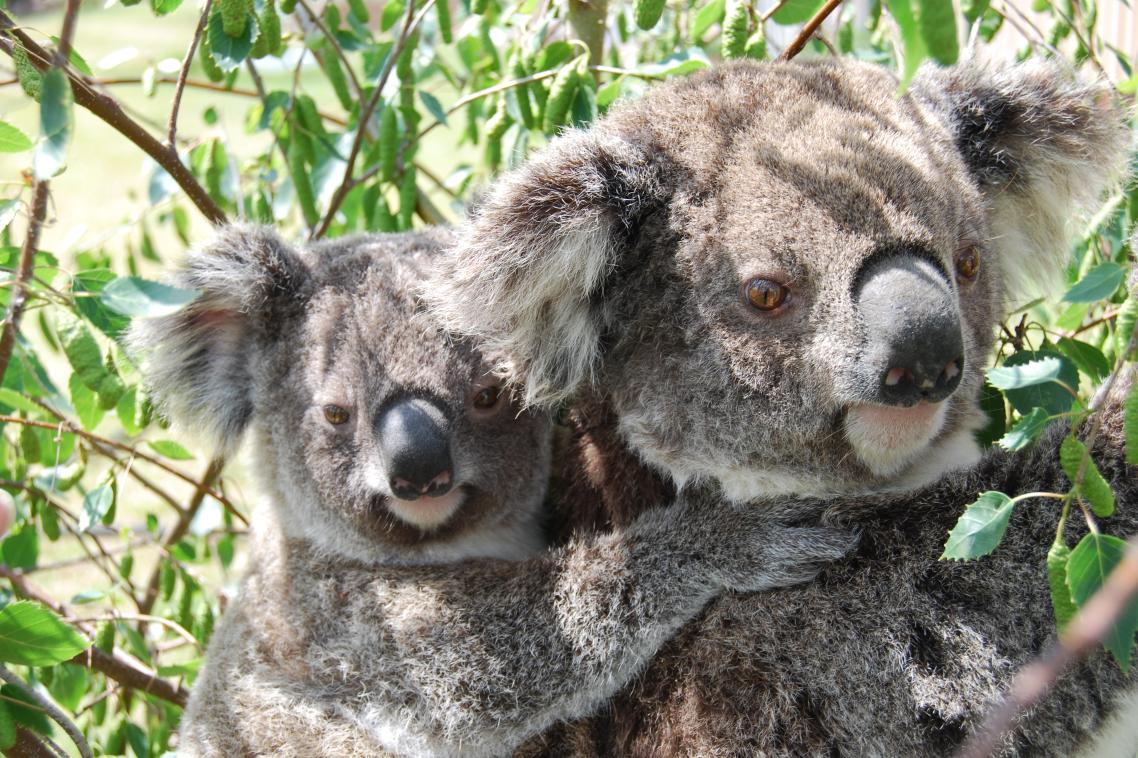
Food resources and habitat is impacted by a changing climate.

Today is World Wildlife Day.

UQ experts available for comment for World Wildlife Day:

Journalists are welcome to contact experts listed below directly for interviews and comment. Mobile phone numbers available on request.

Dr Hosking’s research indicates the top-ranked priority areas for conservation across eastern states, based on predictions of where both koalas and suitable vegetation will be most likely to persist.
Contact: 07 3443 3113, c.hosking@uq.edu.au

Dr McAlpine’s research interests are in forest fragmentation and its impacts on biodiversity in tropical and sub-tropical forests, wildlife management and modelling and forest mapping and monitoring using remote sensing.
Contact: 07 3365 6620, c.mcalpine@uq.edu.au
 

Dr Ellis's research addresses the ecological dilemmas faced by koalas and land managers attending to their requirements, from issues of competing habitat utilisation to climate variability and resource extraction. He is investigating mechanisms of sexual selection and regulators of population dynamics among koala populations across Queensland. 
Contact: 07 3365 1670, w.ellis@uq.edu.au

Dr Baxter is a senior lecturer in natural systems management. He has researched egrets, koalas, black-striped wallabies, feral goats, blac-shanked douc langurs and dingoes. He is interested in finding novel ways to solve intractable problems and in finding ways to apply scientific research.
Contact: gbaxter@uqg.uq.edu.au, 07 3365 0479
 

Dr Ridgway manages the Healthy Oceans Program at the Global Change Institute. Dr Ridgway moved to Australia from South Africa to undertake a PhD in Marine Science at UQ on connectivity of coral reefs. Dr Ridgway also worked at the Great Barrier Reef Marine Park Authority (GBRMPA). At GBRMPA, Dr Ridgway was involved in the project management of the Climate Change Action Plan as well as overseeing the Reef Health Impact Survey and BleachWatch programs. 
Contact: 07 3344 3147, t.ridgway1@uq.edu.au

Professor Hoegh-Guldberg is deeply-motivated by a desire to communicate science effectively, undertake game-changing research and to find high-impact solutions to address several of the most pressing and serious challenges facing humanity worldwide, such as climate change, food security, clean energy and population growth.
Contact: 07 3443 3111, oveh@uq.edu.au

Mr Cook is the Climate Communication Fellow for the Global Change Institute. He created the website SkepticalScience.com, which won the 2011 Australian Museum Eureka Prize for the Advancement of Climate Change Knowledge. John co-authored the college textbook Climate Change Science: A Modern Synthesis and the book Climate Change Denial: Heads in the Sand. His writing was included in The Best Australian Science Writing 2014, a collection of Australia’s finest science writing of the year.
Contact: 07 3443 3108, j.cook3@uq.edu.au

Media: UQ Communications, Caroline Bird, c.bird1@uq.edu.au or 07 3365 1130

Related articles

Three researchers wearing blue protective lab gowns stand among rows of potted chickpea plants inside a controlled-environment plant research facility.

Turning up the heat on chickpea yield

A University of Queensland study has outlined a practical pathway for accelerating the development of heat adapted chickpeas using data from new ‘omic’ technologies. PhD candidate Callum Jamie said the suite of technologies offered tremendous opportunities to understand how a complex trait like heat tolerance works. “The narrow genetic diversity in the elite chickpea gene pool has limited conventional breeding’s effectiveness for stress tolerance,” Mr Jamie said. “These technologies have improved our capacity to dissect trait architecture and phenotype secondary traits but their use in chickpeas has been limited.” The technologies include genomics, epigenomics, transcriptomics, proteomics, metabolomics, phenomics and enviromics, and help provide a comprehensive picture of biological systems. Epigenomics helps understand what controls gene activity; transcriptomics considers gene expression; proteomics protein production; metabolomics looks at biochemical processes; phenomics observes traits; and enviromics considers environmental factors influencing outcomes. Mr Jamie said previous studies had focused on just 1 to 2 -omic datasets, a small number of genotypes, and single tissues. This has meant it was hard to infer what results meant for trait architecture and mechanisms and the ability to extrapolate the information to breeding populations was limited. There have also been challenges around cost, scalability and integrating very different types of data to make the technologies useful. To overcome the hurdles, Mr Jamie’s research at the Queensland Alliance for Agriculture and Food Innovation has resulted in a proposed staged approach. It would start with genomic prediction and phenotyping, before adding -omic layers as costs fall and unknowns were resolved. “These technologies are novel and we still don’t know which information provides added value and how best to integrate all of this data to achieve an outcome,” Mr Jamie said. His PhD is supported by the Grains Research and Development Corporation (GRDC) and the International Research Training Group (IRTG) Accelerating Crop Genetic Gain and is aligned to a project which aims to fast-track the development of chickpea varieties adapted to high temperatures. Project leader Dr Millicent Smith said heat stress causes severe yield implications through flower and pod loss, reduced pollen viability and impaired grain filling. “Late sown chickpea is particularly in the firing line across most of Australia's crop in southern Queensland and northern New South Wales,” Dr Smith said. “We want to ensure that Australian growers maintain their competitive edge. “New varieties with improved genetics to cope with heat stress are essential for the future. “This work, suggesting a staged approach to utilising the new -omic technologies, is an exciting frontier.” The research was published by Food and Energy Security. Callum Jamie’s PhD is supported by the Grains Research and Development Corporation (GRDC) and the International Research Training Group (IRTG) Accelerating Crop Genetic Gain.
15 October 2026
Close-up photograph of a red-bellied black snake coiled across pale, weathered wood. The snake has glossy black scales on its back and vivid red coloration along its sides and underside. The image highlights the texture of the scales and the contrast between the dark body and the light wood background.
Analysis

Deadly fungi are harming Australia’s wild reptiles. This is how to stop the spread

With spring underway and the weather warming, reptiles are on the move in suburbs, parks and bushland across Australia. Snake catchers and wildlife carers are responding to calls for help, and reptile enthusiasts – known as “herpers” – are heading outdoors in search of their next sighting.
13 October 2026

Media contact

Subscribe to UQ News

Get the latest from our newsroom.