
UQ study questions Indian viability of Galilee Basin coal
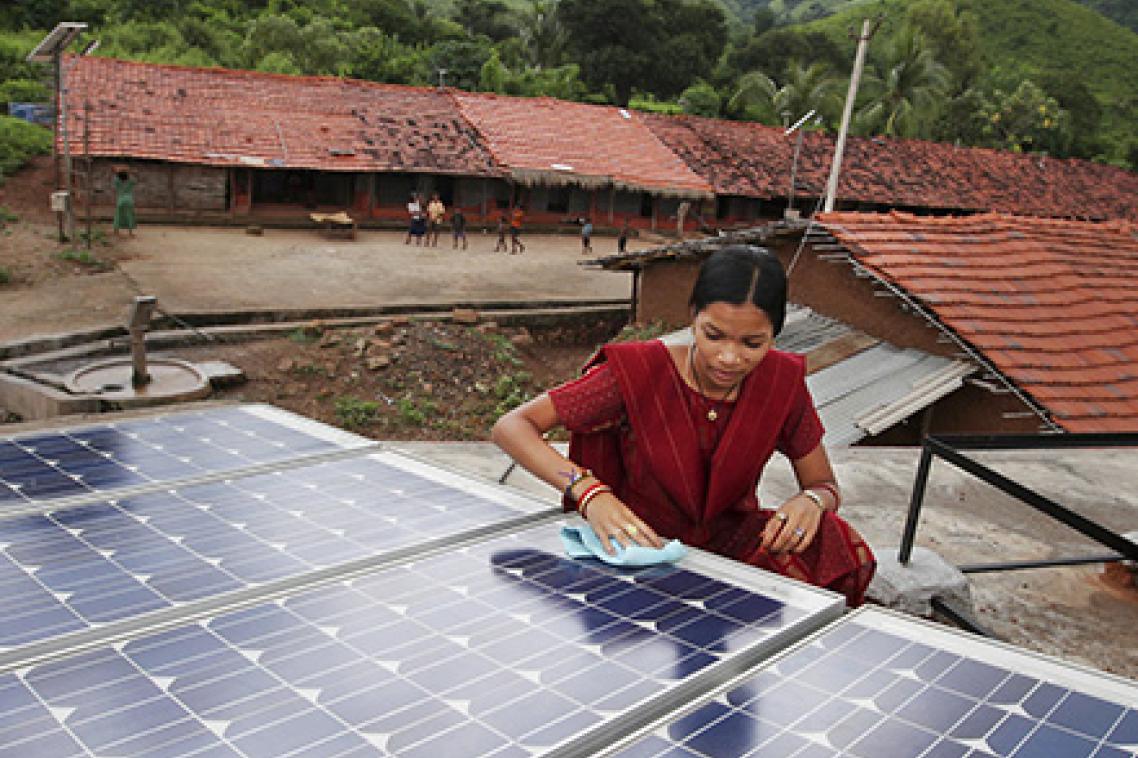
University of Queensland analysis of the costs associated with delivering Galilee Basin coal to India has called into question the project’s long-term viability.
UQ Global Change Institute energy researcher Lynette Molyneaux said the economic profile of many energy-poor states in India was unsuited to supporting coal-fired power.
“In Bihar state, a community of 100 million people who largely rely on agriculture, they don’t have the industrial base to underwrite the necessary costs,” she said.
In a detailed analysis published in Renewable Energy, Ms Molyneaux and colleagues calculated many of the unavoidable costs involved with shipping Galilee Basin coal from central Queensland to Bihar.
They compared these costs with the costs of deploying a decentralised renewable micro grid in the same region.
Their calculations included a percentage of the costs required to buy and develop the Abbot Point Coal Terminal, as well as the projected costs to transport coal to India and then by rail to Bihar, –850km from the east Indian port of Paradip.
“We estimate it would cost about $US94 a tonne to deliver Galilee Basin coal to Bihar,” Ms Molyneaux said.
“Overall, we found that it would cost about $US29 billion over 20 years to supply even a modest amount of electricity to each household in Bihar.
“Admittedly, building coal-fired power stations to do this would result in some 8500 jobs, but similarly scaled micro-grid infrastructure based on renewable energy would result in an estimated 79,000 jobs.
“Coal-fired power is dependent on the development of industry in Bihar. Without this, electricity is too expensive for the rural poor.
“It has already been demonstrated in neighbouring Bangladesh that solar home systems have reduced the use of noxious fuels and provided employment for more than 100,000 people,” Ms Molyneaux said.
“The elephant in the room for proponents of coal-fired power to relieve energy poverty for the rural, agrarian poor is that remote rural locations have little or no industry to underwrite the cost of electrification.
“Coal-fired power stations are not designed to run for just a few hours a night, which is what the 15.8 million households in Bihar need to light their homes and charge their mobile phones.”
The research, Rural electrification in India: Galilee Basin coal versus decentralised renewable energy micro grids, is published in Renewable Energy.
Media: Lynette Molyneaux, l.molyneaux@uq.edu.au, (07) 3346 1003; GCI Communications, gcicomms@uq.edu.au, (07) 3443 3110
Related articles

Turning up the heat on chickpea yield
