
Fishing for the future of coral reefs
New science-based fishery regulations are needed if coral reefs are to have a future in the face of climate change.
An international team, led by University of Queensland researchers, has found that tighter fishery regulations are needed to preserve corals of the Caribbean.
The study shows that Caribbean coral reefs are experiencing mounting pressure from global warming, local pollution and over-fishing of herbivorous fish.
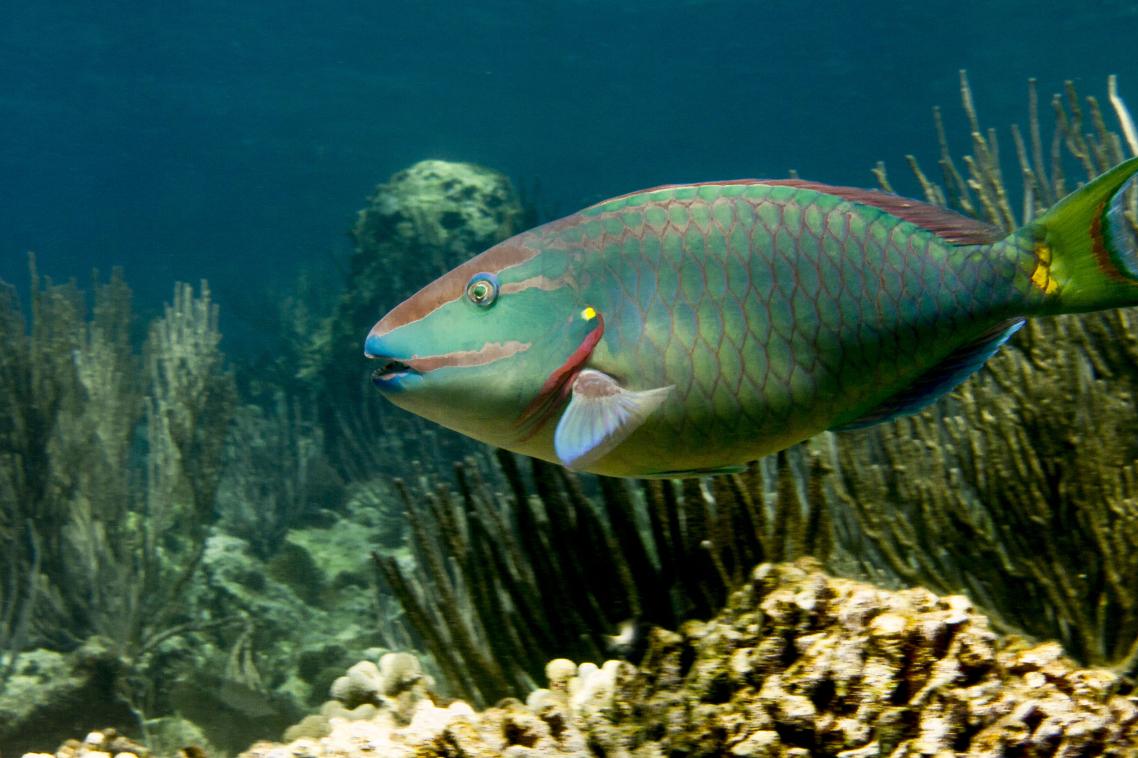
Researcher Dr Yves-Marie Bozec, from UQ’s School of Biological Sciences and the ARC Centre of Excellence for Coral Reef Studies, said herbivorous parrotfish were needed because they eat seaweed, which can smother coral and prevent corals from recovering.
“While several countries in the Caribbean have taken the bold step of banning the fishing of parrotfish (including Belize, Bonaire, Turks and Caicos Islands), parrotfish fisheries remain in much of the region,” Dr Bozec said.
The research team analysed the effects of fishing on parrotfish and combined this with an analysis of the role of parrotfish on coral reefs.
“We conclude that unregulated fisheries will seriously reduce the resilience of coral reefs,” Dr Bozec said.
“However, implementation of size limits and catch limits to less than 10 per cent of the fishable stock provide a far better outlook for reefs, while also allowing the fishery to persist.”
Study co-author Professor Peter Mumby from UQ’s School of Biological Sciences said a number of countries wanted to modify their fisheries to reduce impacts on reefs.
“What we’ve done is identify fisheries’ policies that might help achieve this,” Professor Mumby said.
The new study, published in the journal Proceedings of the National Academy of Sciences today, argues that science should be used to revise current fisheries practices for herbivorous fish in the Caribbean.
The authors have provided tools to help fisheries managers make such changes.
“Ultimately, the more we do to maintain healthy coral reefs, the more likely it is that fishers’ livelihoods will be sustained into the future,” Professor Mumby said.
“We already know that failure to maintain coral habitats will lead to at least a threefold reduction in future fish catches.”
Media: Dr Yves-Marie Bozec y.bozec@uq.edu.au, +61 (0)432 855 758. High resolution videos and photographs are available from Professor Peter Mumby at p.j.mumby@uq.edu.au, +61 (0)449 811 589.
Topics
Related articles

UQ to support development of mobile launcher for high-speed flight R&D
