
Tiny microbes could help mining remediation
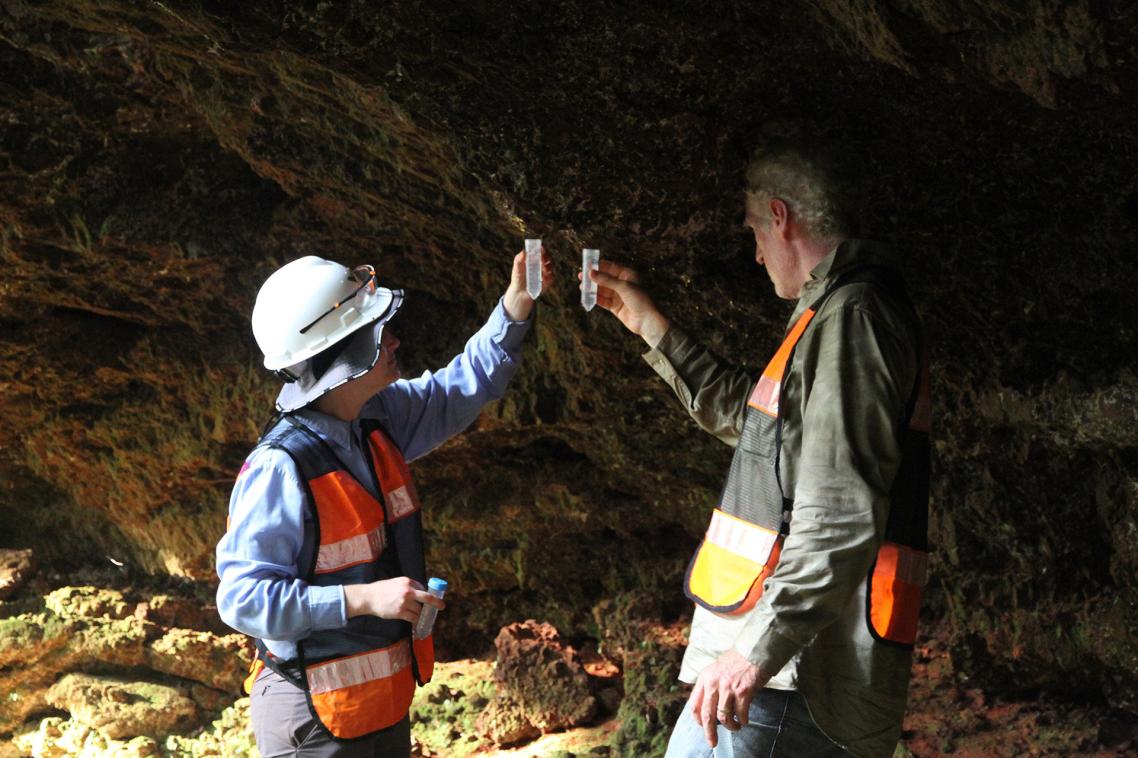
Termite guts could contribute to mining site rehabilitation and pay big dividends for the planet, thanks to University of Queensland research.
UQ School of Earth Sciences researcher Dr Emma Gagen said termite guts were under the microscope in research investigating how microorganisms could help remediate iron ore sites once mining stops.
The research, with Brazilian miner Vale, is tackling how to promote formation of canga, a type of iron cement crust that naturally forms as a protective layer over the top of iron ores.
“Canga hosts very distinct ecosystems possessing unique endemic plant species, such as bromeliads, that are adapted to high iron concentrations and harsh conditions,” Dr Gagen said.
“During the mining process, canga is broken up and moved away to access the underlying ore, but the project is looking at ways to speed up its re-formation after mining.
“This would allow for specialised indigenous plants which grow on canga and are critical for biodiversity to be re-established faster.
“We are pursuing a number of lines of inquiry into microbe-mineral interactions, but one line investigates the gut of termites that build nests in and over canga.
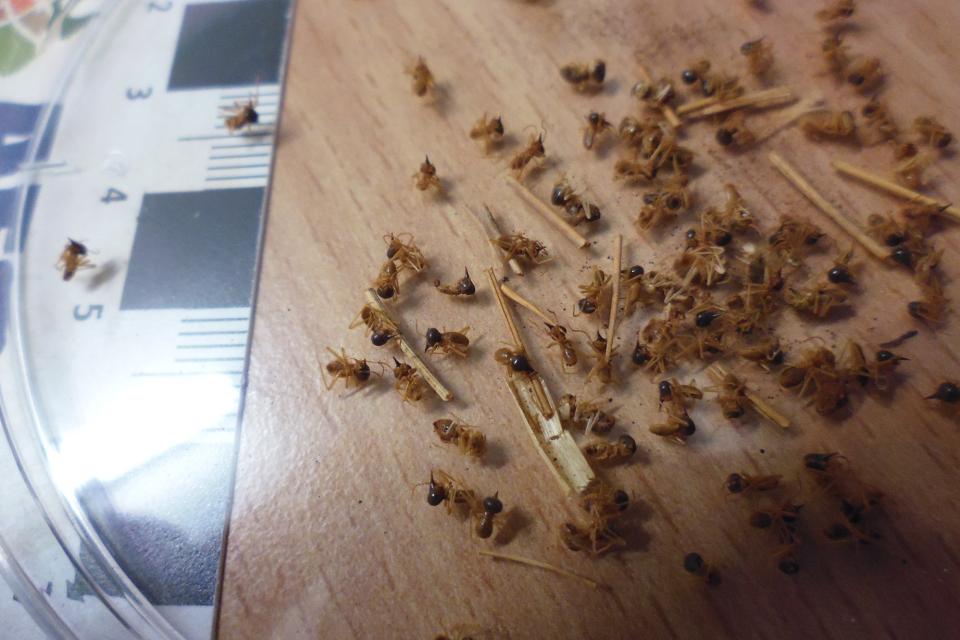
“The gut of a termite has little oxygen, making it a great environment for microorganisms that can dissolve iron oxides in canga.
“I am looking at how canga microorganisms dissolve and reform iron oxides which are chemical compounds composed of iron and oxygen,” she said.
Dr Gagen said the team planned to establish a field trial in Brazil to develop a bio-remediation strategy for iron ores by re-establishing canga.
Professor Gordon Southam and Professor Paulo Vasconeclos of UQ’s School of Earth Sciences, and Professor Gene Tyson of UQ’s School of Chemistry and Molecular Biosciences lead the project.
Professor Southam said the university-industry collaboration would produce economic benefits for the world's iron mining industry through advanced training in mining-related research, and through the completion of the mining life cycle by site remediation.
“This will enhance Australia's position as a global leader in providing innovative solutions to today's mining challenges,” he said.
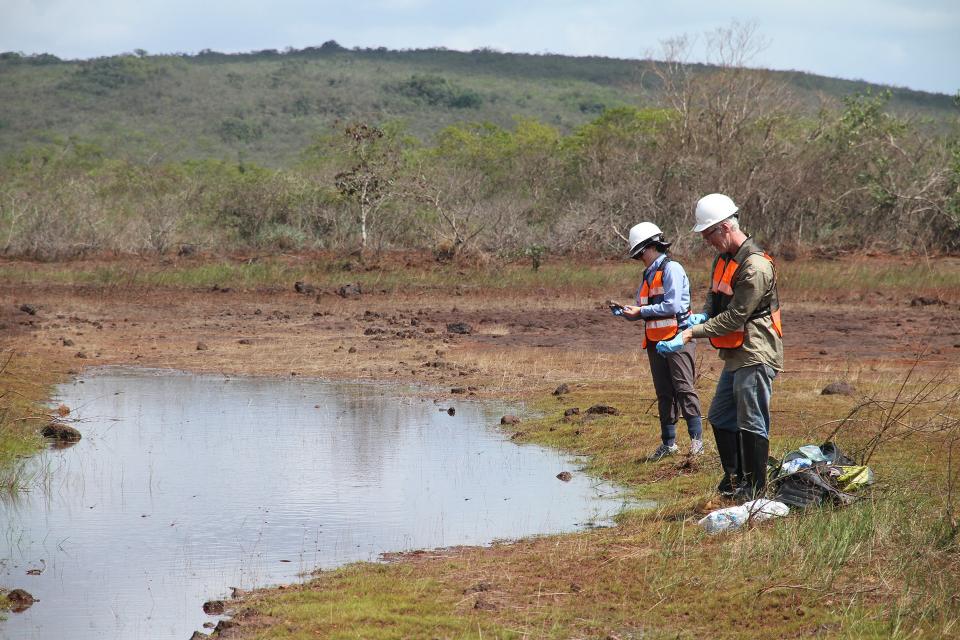
Photo by Dr Gerald Hartig.
Much of the project work, funded by an Australian Research Council Linkage grant, is being conducted in the Vale-UQ Geomicrobiology Laboratory at UQ’s St Lucia campus.
Media: Dr Emma Gagen, e.gagen@uq.edu.au, +61 7 3365 9778, or Professor Gordon Southam, g.southam@uq.edu.au, +61 7 3365 8505.
Images taken by Dr Gerald Hartig.
Related articles

Vaccine platform receives funding to help protect against emerging mosquito-borne disease threats
