
Ancient crops provide clue to Madagascar’s past
Remnants of ancient crops have provided researchers with clues that could help map the movement of humans across the globe more than 1300 years ago.
The University of Queensland-led international study has uncovered the first direct archaeological evidence that Madagascar was colonised by a Southeast Asian community.
UQ School of Social Science archaeologist Dr Alison Crowther said genetic research had confirmed that the inhabitants of Madagascar shared close ancestry with Southeast Asians, but archaeologists had until now struggled to find evidence of their early presence on the island.
“We have now identified 2443 individual crop remains,” she said.
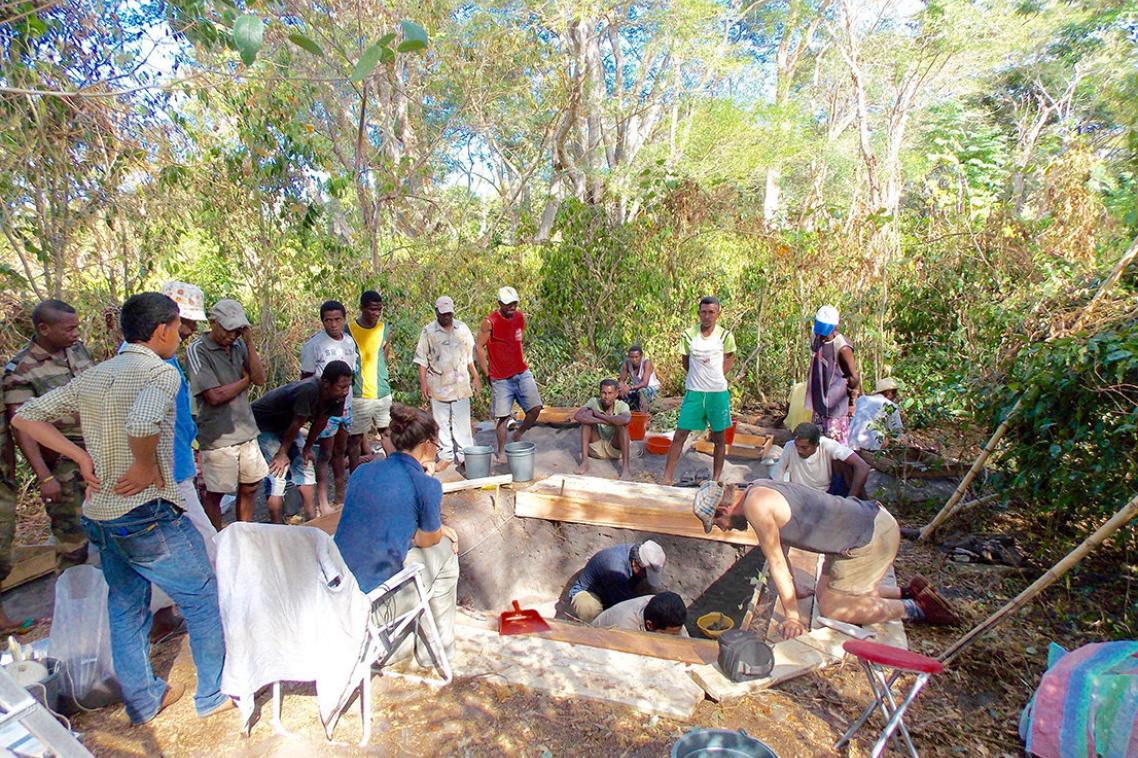
“The remains were obtained through archaeological excavations at 18 ancient settlement sites in Madagascar, the Comoros and coastal eastern Africa dating back to the 7th to 12th centuries.
“What was amazing to us was the stark contrast that emerged between the crops on the east African coast and offshore islands versus those on Madagascar and the nearby Comoros Islands.
“The more we looked, the starker the contrast became.
“The samples taken from sites on Madagascar and the Comoros contained few or no African crops, but were instead dominated by species such as Asian rice, mung bean and Asian cotton,” she said.
By examining where else in the Indian Ocean these crops were grown, and drawing on historical and linguistic data, the team was able to make a strong case that the crops reached Madagascar from Island Southeast Asia.
Fellow researcher and Max Planck Institute for the Science of Human History Director of Archaeology Dr Nicole Boivin said there was still a lot to learn about the island’s past.
“But what is exciting is that we finally have a way of providing a window into the island’s highly mysterious Southeast Asian settlement and distinguishing it from settlement by mainland Africans,” she said.
“This means that archaeologists can use those remains to finally start to provide real material insights into the colonisation process.”
The research team plans to return to Madagascar to continue the work. Dr Crowther said much work remains to be done.
“We are keen to understand who these people were and what impact they had,” she said.
The team’s findings are published in Proceedings of the National Academy of Sciences.
Media contacts: Alison Crowther, 0400 636 350, 3365 2757, a.crowther@uq.edu.au
Related articles

Unpacking wheat’s water use for drought research
