
World-first research aims to turn Brisbane River back to blue

The Nile is known for its length, the Amazon for its girth, and the Brisbane River for its murky brown colour, but one University of Queensland researcher is working to make it crystal clear.
UQ School of Civil Engineering PhD student Jesper Nielsen is completing a world-first study collecting river turbulence data using a device mostly built by himself.
He hopes data from the study, which begins this month, can be used to help clean up the murky river.
Mr Nielsen said no one had ever collected accurate turbulence data from the river bed all the way up to the surface.
“The only data available of river turbulence was taken either from a single point in the water column or in lab experiments,” he said.
“I was surprised to find no one had ever done a study like this.”
Mr Nielsen said constructing the device was a challenge. He spent months designing and testing in hydraulics laboratories — even making his own custom-electronic circuitry for his ‘turbulence tower’ device.
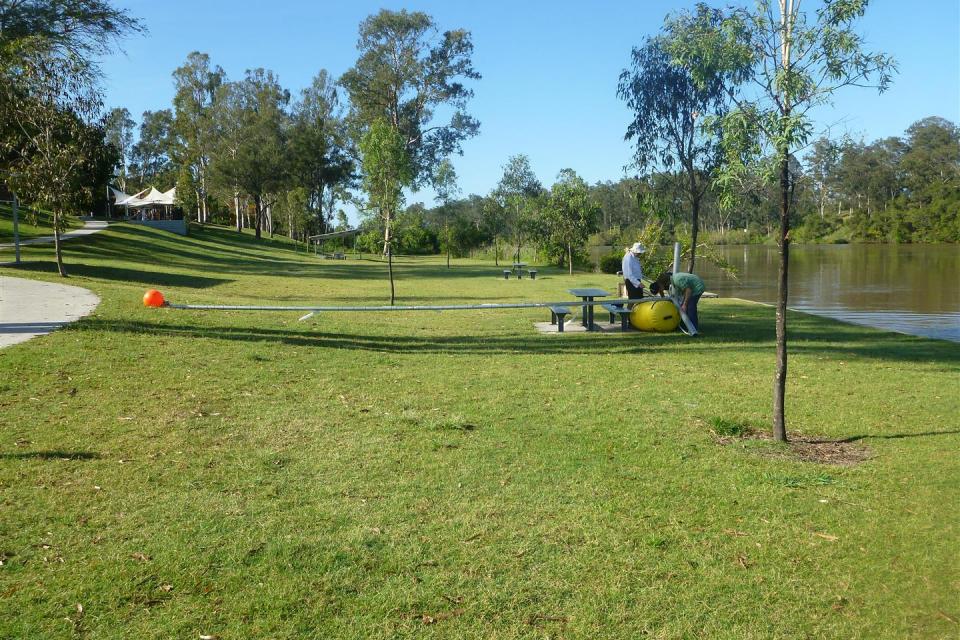
The contraption consists of a 10 metre vertical mast supported on a legged base which sits on the river bed.
Mr Nielsen said it sounded simple, but needed structural aluminium, engineering plastics, precision machining, high-strength magnets, robotics, radio communication, an inflatable salvage bag– and the list goes on.
Mr Nielsen said it was vital that the mast remained perfectly still as the instrument used to measure turbulence was attached to it, and any movement would confuse the measurements.
“I really hope this information can be used to figure out how to clean up the Brisbane River.
“A clear, healthy river is beneficial for wildlife and for all the people who use the river or live near it.”
After successful testing of a five-metre version in the Brunswick Heads River, a full 10-metre turbulence tower has been deployed and tested in the Brisbane River.
The first major data collection campaign starts in June.
Mr Nielsen is a finalist in the 2016 Healthy Waterways People's Choice Award, you can vote for his research here.
Media: Jesper Nielsen, j.nielsen4@uq.edu.au, 0408 158 715; UQ Communications, Casey Fung, c.fung@uq.edu.au, 07 3364 8525, 0433 638 643.
Second image: The turbulence tower.
Related articles

UQ’s QARC wins at Engagement Australia Awards
