
The eyes have it: revealing the secrets of cow emotions
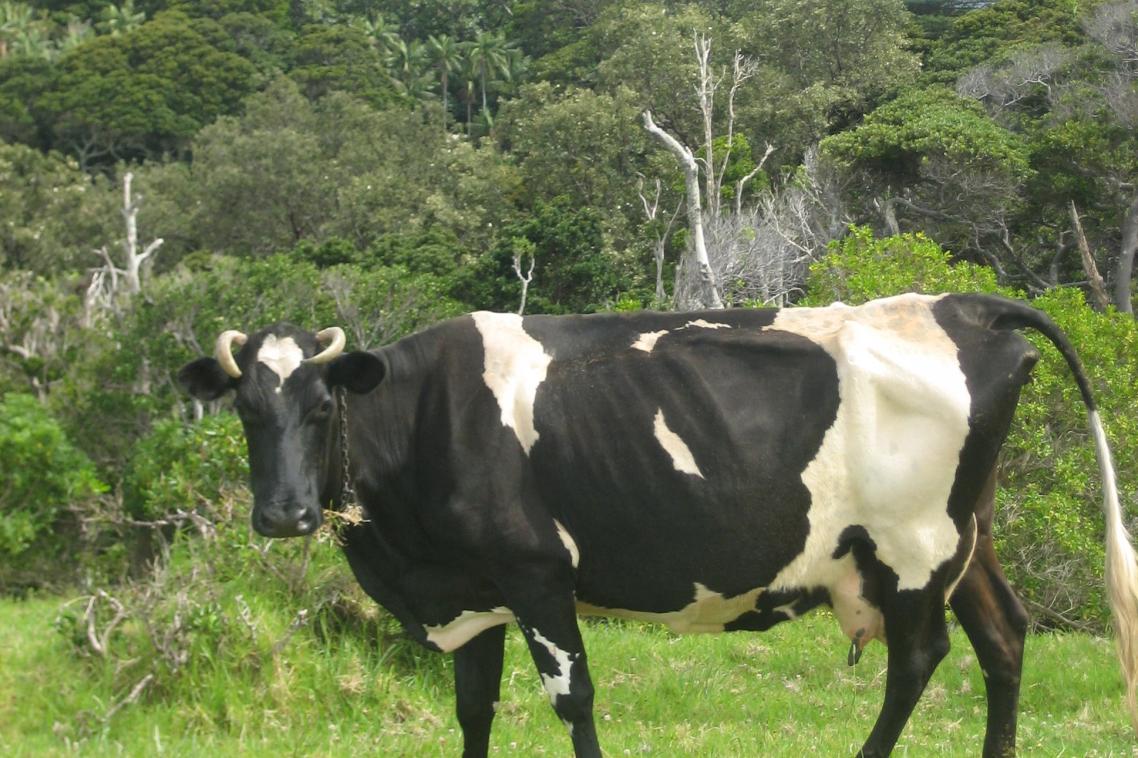
Cows that pass you on the right might be giving you the “evil eye”, according to an international study that could help cattle breeders reduce animal stress and anxiety levels.
University of Queensland Centre for Animal Welfare and Ethics Director Professor Clive Phillips said people could gain valuable insight into cows’ emotional temperaments by observing their predominant eye use when interacting with other cattle and with humans.
“We found that cows increase the use of their left eye when viewing threats,” Professor Phillips said.
“Cows that predominantly used their left eye in all types of interactions had a more fearful temperament.
”They were also more likely to view an unfamiliar person in the centre of a track with their left eye, keeping the person on their right as they passed.
“However, a person in familiar clothing was viewed predominately with the cows’ right eye, with the cow keeping the person to their left as they passed.
“Dominant cows are less likely than their subordinates to use their left eyes to monitor confrontations with other cows.”
Professor Phillips said UQ began the study five years ago in an attempt to monitor the welfare of cows and improve systems to enable farmers to breed stock to cope better with intensive production systems.
The research is based on lateralisation, a process occurring when the left or right side of the brain controls processing.
“In a number of vertebrate species, the brain’s right side, connected to the left eye, specialises in rapidly analysing and responding to novel or threatening stimuli such as predators,” Professor Phillips said.
“The left side, connected to the right eye, specialises in considered, detailed processing such as deciding what to eat and what to avoid eating.
“We are now progressing this research to relate eye use to other indicators of emotions so we can get a more comprehensive picture of how to detect anxious cows,” he said.
The research with the UQ Gatton campus dairy herd involved the University for Applied Science in the Netherlands, the University of Cambridge and Princeton University. It is published in the Journal of Dairy Science.
Media: Professor Clive Phillips, c.phillips@uq.edu.au, 0406 340 133, +61 7 5460 1158.
Topics
Related articles

White wine drinkers help pinpoint what’s missing in no and low alcohol drinks
