
UQ triggers reef fish colour vision study
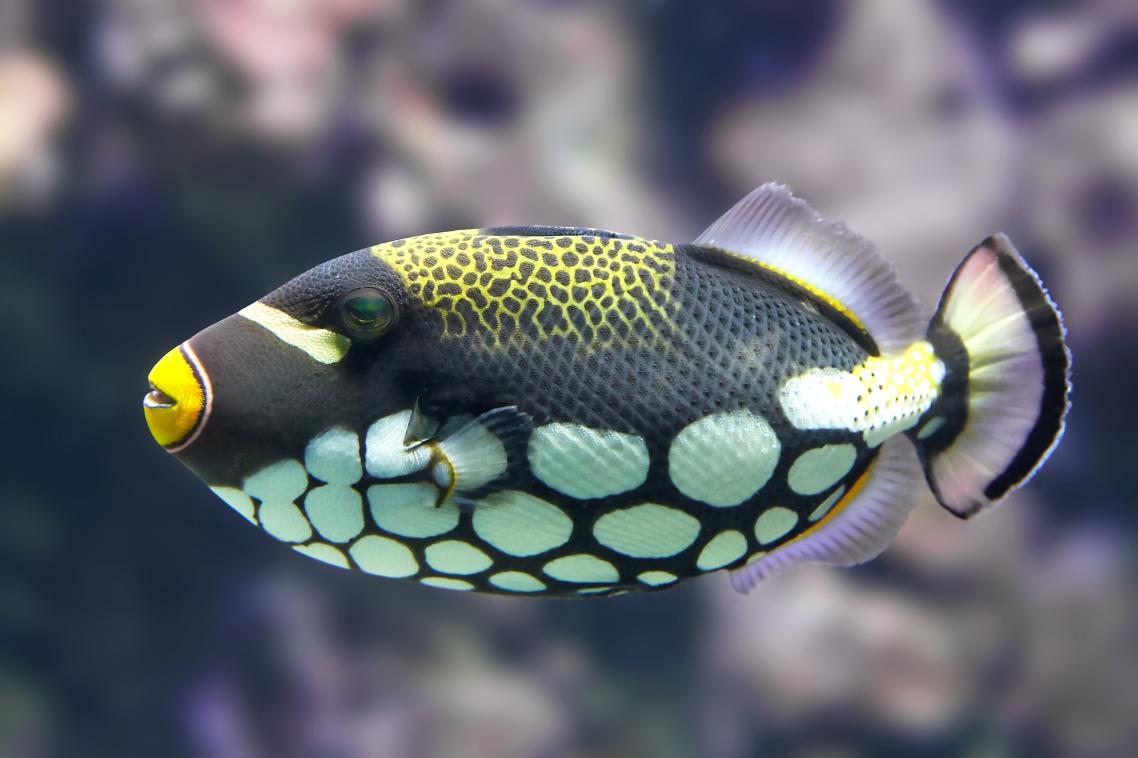
Researchers at The University of Queensland have established that reef fish see colours that humans cannot.
A team from Professor Justin Marshall’s Sensory Neurobiology Lab at the Queensland Brain Institute ran a series of behavioral experiments with trigger fish, in a bid to decode how they see the world.
Professor Marshall said previous studies had looked into how goldfish saw colour, but this was the first study into how reef fish discriminate colours.
“Coral reefs are the most colourful environments in the world, and it’s now become clear that reef fish see colours we can’t,” Professor Marshall said.
“Some reef fish, such as the anemonefish ‘Nemo’ and other damselfish can see the UV wavelengths we protect ourselves from.
“Triggerfish, on the other hand, see more or less the same colour range we do but their colour discriminations are different.
“Thinking about it, this is no big surprise. Their colour tasks are blue-biased, as they live in a blue ocean.
“Ironically, as the colours of the reef change and disappear because of climate change, we are just beginning to understand how reef inhabitants see and experience their vibrant world,” he said.
Professor Marshall said Dr Connor Champ led a series of detailed behavioural tests, where trigger fish were rewarded for discriminating against progressively similar colours.
It emerged that trigger fish see colours in some colour regions in more detail than humans.
“Many people ask me ‘Why study fish?’ and my first answer is: “Because I love them,” Professor Marshall said.
“But this sort of comparative look at animal systems is vitally important to understand not just the beauty of nature and how to look after it, but to consider the possible applications in the human world.”
Comparative colour vision research at QBI is helping in cancer detection, satellite design and data storage on computers.
The research, published in Royal Society Open Science, was funded by the Australian Research Council.
Media: Professor Justin Marshall, justin.marshall@uq.edu.au; QBI Executive Communications Manager Kirsten MacGregor, k.macgregor@uq.edu.au, 0448 108 441.
Related articles

Fewer and fewer parents will smack their children – but it’s still legal. Should that change?
