Dying for charisma
If you’re a leader who wants to be perceived as charismatic, you’re better off dead.
University of Queensland School of Psychology researcher Dr Niklas Steffens and colleagues conducted two studies which tested notions of charisma.
“One of these studies looked at 48 heads of state who died while in office between 2000 and 2013 and how commonly they were referred to as being charismatic,” Dr Steffens said.
“We analysed almost 2.5 million articles referencing these heads of state, including articles from before their death and post mortem.
“What we found was that, across these 48 leaders, on average they were twice as likely to be linked to charisma after dying.
“The paradox is that mortality is the basis for a particular form of immortality.”
One figure who featured prominently in the study's analysis was Pope John Paul II, who was almost four times more frequently linked to charisma in death than he was in life.
Others substantially more likely to be considered charismatic post mortem included Palestinian leader Yasser Arafat, and former Kosovar president Ibrahim Rugova, as well as Venezuelan head Hugo Chavez.
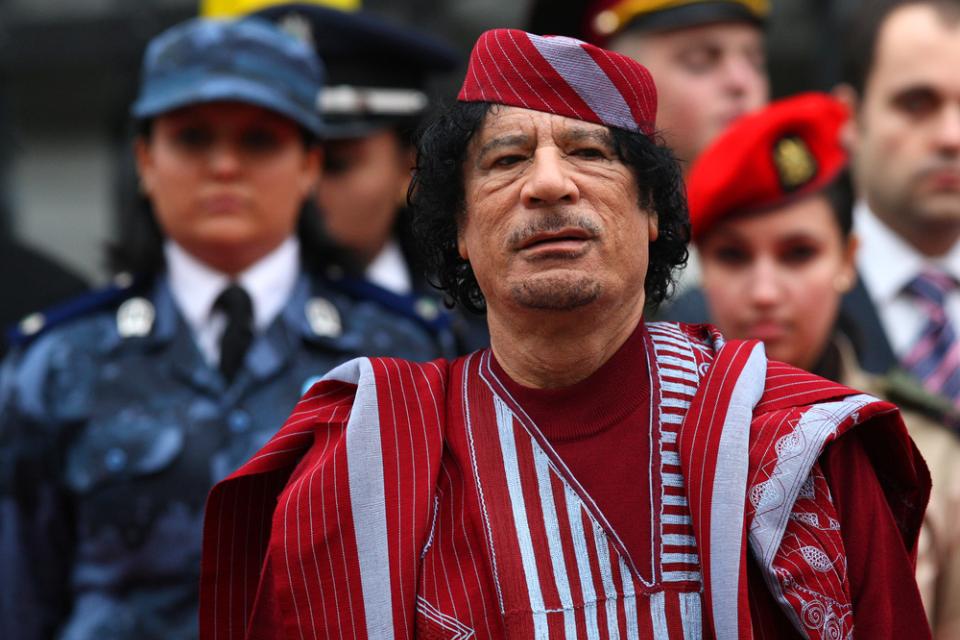
Thirteen of the 48 leaders bucked the trend and were more frequently described as charismatic while alive, most notably deceased Ghanaian president John Atta Mills.
In a second study, UQ researchers Dr Steffens, Dr Kim Peters and Professor Alex Haslam, and Professor Rolf van Dick of Goethe University Frankfurt, studied differing perceptions of late scientist Richard Din.
Mr Din died in 2012 after being exposed to bacteria which he had dedicated his life to combatting.
Co-author Dr Kim Peters said participants in the study were asked to read one of two different biographies about his life, one which mentioned his death and the manner of his death, and a version which omitted this.
“We also changed the titles so that one was about the 'Life of a scientific crusader' and the other about the 'Death of a scientific crusader',” Dr Peters said.
“Results from 392 people surveyed found that Mr Din was considered more charismatic and more ‘at one’ with America when it was identified that he had died.
"It shows that charisma is not so much a personal attribute as an attribution that others make.
"The basis of this attribution is also a sense that a leader is serving the group rather than themselves, and this is something that becomes clearer after their death."
Results of the study have been published in the journal The Leadership Quarterly.
Media: Dr Niklas Steffens, n.steffens@uq.edu.au, +61 7 3346 9555; Dr Kim Peters, k.peters@uq.ed.au, +61 7 3346 9157; Robert Burgin, UQ Communications, r.burgin@uq.edu.au, +61 7 3346 3035, +61 448 410 364.
Related articles

From cooked breakfast to their own TV, aged care residents need to watch for extra fees