
Jaws open long-term shark population information
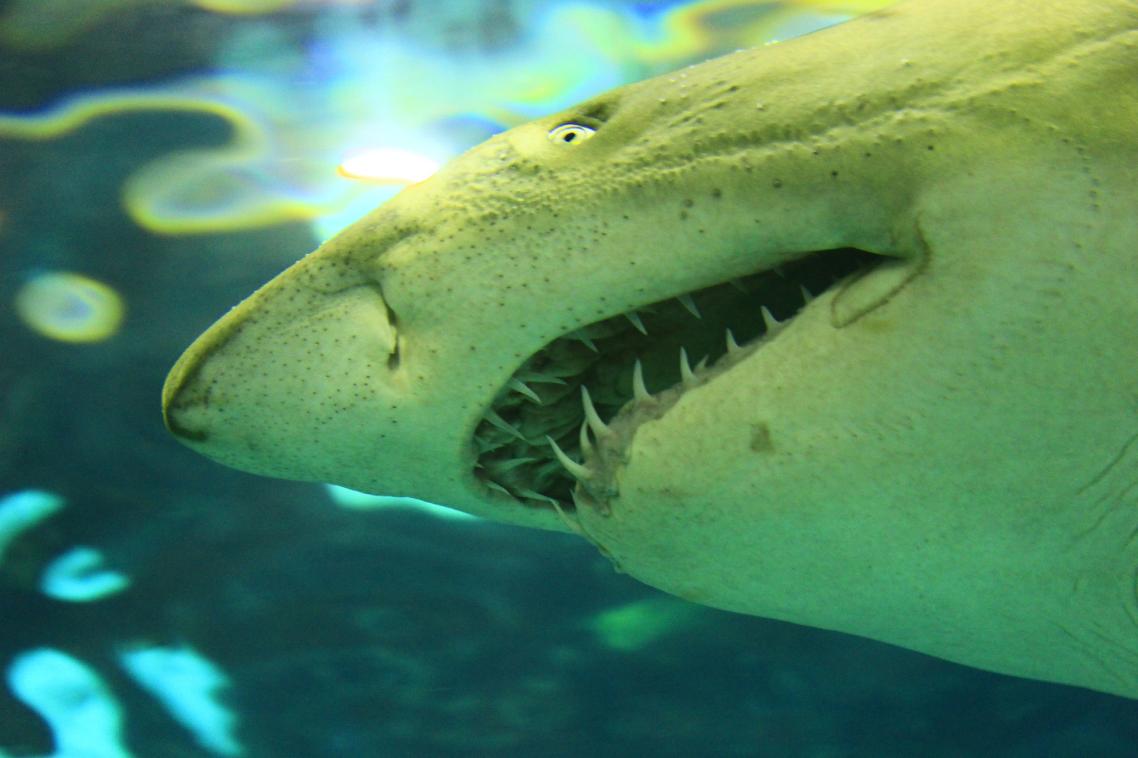
An international study led by University of Queensland researchers seeks to understand how white and tiger shark populations have changed over time.
UQ School of Biomedical Sciences’ Associate Professor Jenny Ovenden and Professor Mike Bennett hope the project will provide a better understanding of shark population sizes and potential changes in their distributions, information that is likely to help with the species’ conservation and management.
Associate Professor Ovenden said scientists would analyse DNA extracts from shark jaws held in museum and trophy collections around the world, and tissue samples from living and recently deceased animals.
“Satellite tagging provides information about a few individuals for a short period of time, however genetics provides information about all individuals in a population over much longer timeframes,” Associate Professor Ovenden said.
“Using DNA, we can get a more complete picture of shark populations.
“For instance, how many white and tiger sharks are there off the Australian coast now, compared to their numbers 100 years ago?”
Professor Bennett said the study would provide valuable insights into the different biology of both species.
“The two species have different distributions worldwide, different modes of reproduction and have experienced different levels of interaction and impact with humans,” he said.
“We expect to find signatures of adaptive evolution which have come about as a result of global change and exploitation.”
The researchers will liaise with game fishing clubs and private and public museums to extract DNA from shark jaws, which will then be sent to UQ’s Queensland Brain Institute for nuclear genome sequencing.
“We will be tracking down some long-time, dedicated recreational fishers who are very good at keeping records of where and when sharks were caught – their information will be invaluable,” said Professor Bennett.
The project has received an Australian Research Council Discovery grant, which coincides with funding a research collaborator has received in Denmark.
Professor Einar Nielson in Denmark will conduct a concurrent study which will assist in providing a global overview of shark populations in both northern and southern hemispheres.
Media: Kim Lyell, k.lyell@uq.edu.au, +61 7 3346 5214, 0427 530 647.
Related articles

UQ vaccinologist backed by Life Sciences Queensland
