
Bacteria with Midas touch could be boost for gold exploration and processing
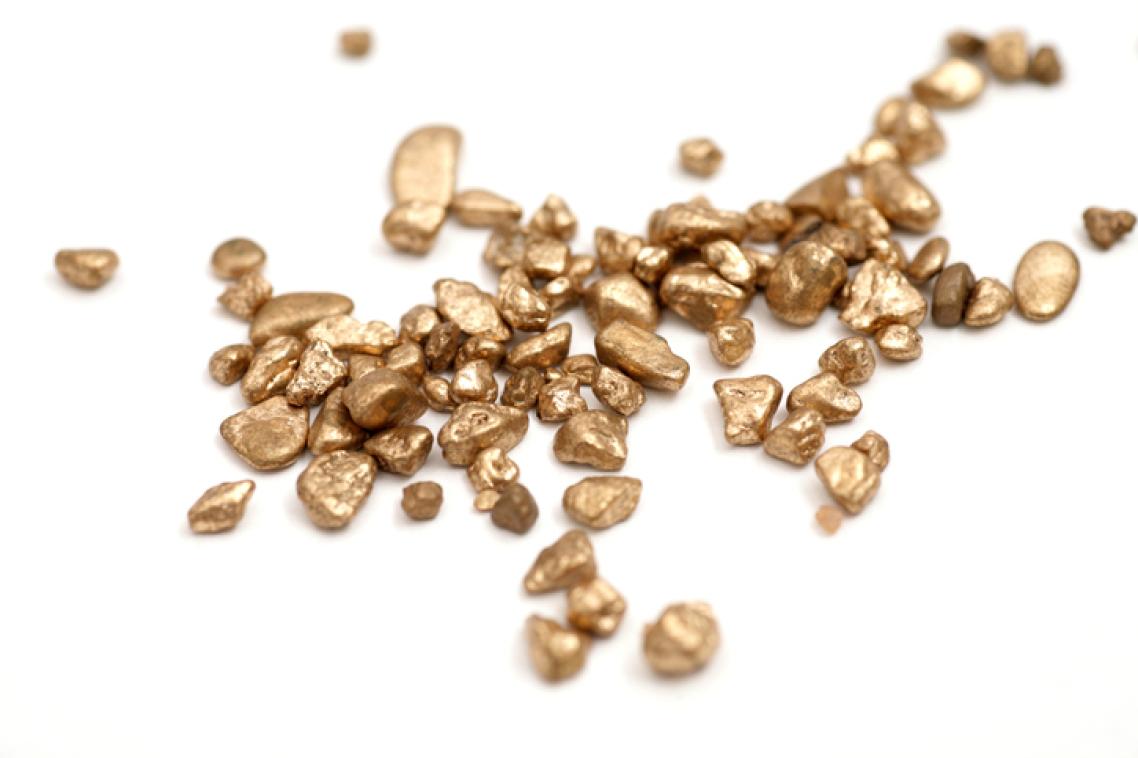
Gold could be discovered and extracted more quickly and recycled more efficiently, thanks to research into “nugget-producing” bacteria.
Professor Gordon Southam from The University of Queensland’s School of Earth and Environmental Sciences led the study, which gained insights into gold’s biogeochemical cycle.
“In the Earth’s surface, gold can be dissolved, dispersed and reconcentrated into nuggets,” Professor Southam said.
“This epic ‘journey’ is called the biogeochemical cycle of gold.
“We now know just how long this cycle takes, and we hope to make to it even faster in the future.”
Primary gold deposits are produced under high pressures and temperatures deep below the Earth’s surface and are usually mined from these large primary deposits.
“In the natural environment, primary gold makes its way into soils, sediments and waterways through biogeochemical weathering and eventually ends up in the ocean,” Professor Southam said.
“On the way bacteria can dissolve and re-concentrate gold; a process which removes most of the silver and forms gold nuggets.
“Our results show that this transformation takes place in just years to decades – a blink of an eye in terms of geological time.”
Professor Southam said the “surprising” results led the way for many interesting applications such as optimising the processes for gold extraction from complex ore and re-processing old tailings or recycled electronics, which currently was not economically viable.
The research collaboration with Dr Frank Reith and Dr Jeremiah Shuster from the University of Adelaide’s School of Biological Sciences included John and Johno Parsons from the Prophet Gold Mine in Queensland, and Dr Geert Cornelis – formerly from CSIRO.
The team analysed numerous gold grains collected from West Coast Creek, west of Gympie, using high-resolution electron-microscopy.
The researchers showed that five “episodes” of gold biogeochemical cycling had occurred on each gold grain. Each episode was estimated to take between 3.5 and 11.7 years – a total of under 18 to almost 60 years to form the secondary gold.
“Understanding this gold biogeochemical cycle could help mineral exploration by finding undiscovered gold deposits or developing innovative processing techniques,” said Dr Shuster.
“If we can make this process faster, then the potential for re-processing tailings and improving ore-processing would be game-changing. Initial attempts to speed up these reactions are looking promising.”
The work is published in the journal Chemical Geology.
Media: Professor Gordon Southam g.southam@uq.edu.au, +61 7 336 58505
Related articles
UQ researchers fast-tracking therapies for cancer, arthritis, Alzheimer's, vaccines
