
Blind academic calls for Royal Commission into abuse of people with disabilities
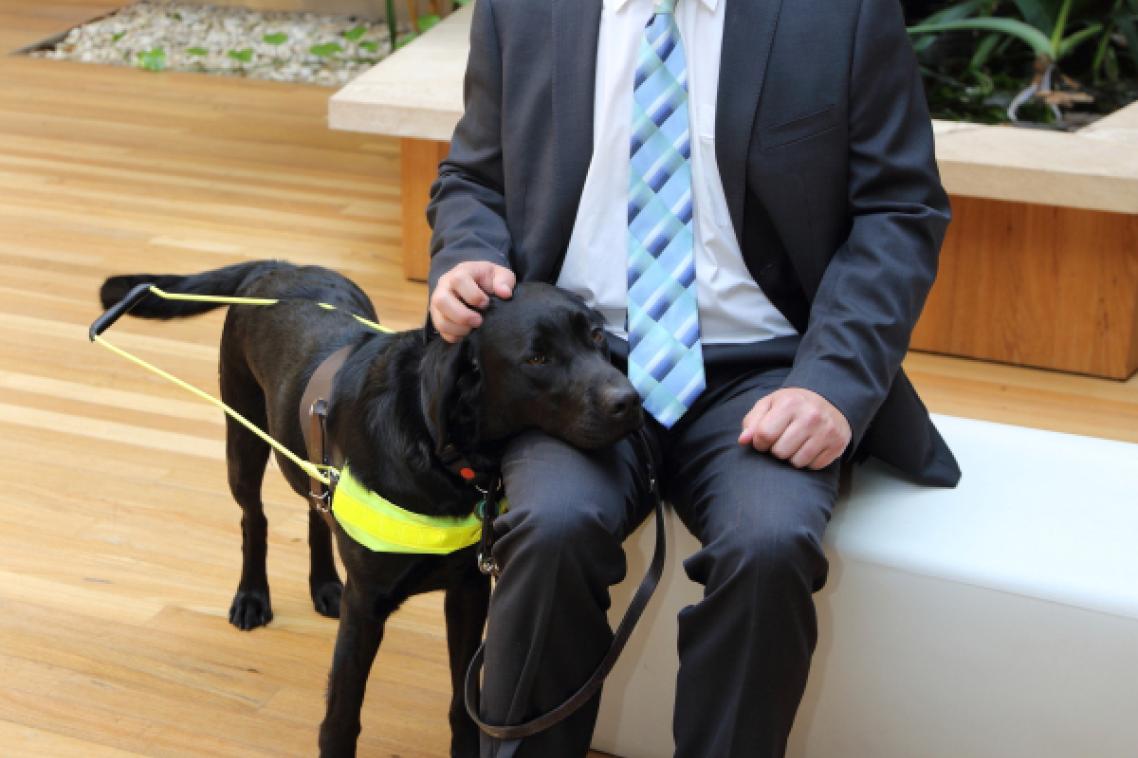
A legally blind academic from The University of Queensland has thrown his full support behind a petition demanding Prime Minister Malcolm Turnbull launch an immediate Royal Commission into the abuse of disabled people.
Dr Paul Harpur, a senior lecturer at UQ’s TC Beirne School of Law and former Paralympian said the abuse of people suffering physical and mental disabilities was a national crisis that warranted the far-reaching powers and independence of a Royal Commission.
“It is a very serious issue that is reaching into all areas of disability care in institutions like hospitals, aged-care homes and even into people’s home where disabled people are becoming victims of horrendous domestic violence and abuse,” Dr Harpur said.
“It’s also very widespread and it is impacting people with psychiatric conditions and people like myself who are dependent on assistance animals.
“People with disability are subject to multiple and aggravated forms of human rights violations.
“Virtually every Australian with disability encounters human rights violations at some point in their lives, and many experience it every day of their lives.
“They occur every day in every region of every state and territory in Australia.”
Dr Harpur’s extensive research into disability abuse over the past eight years was a factor in the tabling of the petition that called for a Royal Commission and was sent to the Prime Minister’s office on April 7.
The letter was signed by 100 prominent academics from across Australia including Dr Harpur and his fellow UQ academics Professor Heather Douglas, Dr Melanie O’Brien and Monica Taylor, Director of UQ’s Pro Bono Centre.
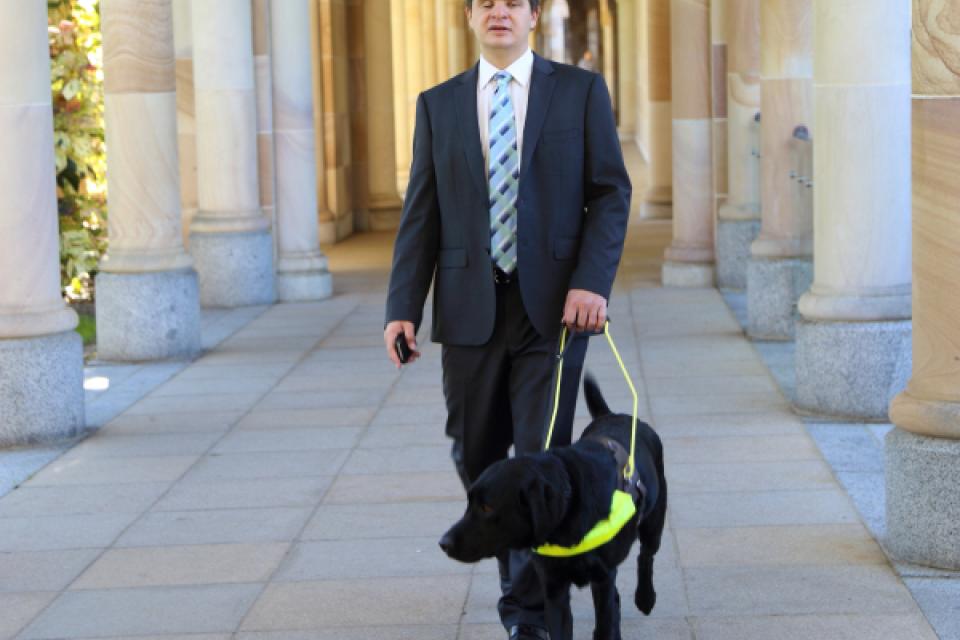
As a former Paralympian, Dr Harpur represented Australia at the 2000 Olympics in Sydney, the 2002 Commonwealth Games in Manchester, the 2004 Olympics in Athens and the 2006 Commonwealth Games in Melbourne.
He lost his sight as a 14-year-old when he was struck by a train near Wynnum in Brisbane’s bayside and, in the ensuing years, he completed a Bachelor of Law, Masters of Law and a PHD.
Dr Harpur cited a shocking case in Los Angeles last week when a 24-year-old man was sentenced to three years and eight months for throwing a young blind boy’s assistance dog off a balcony.
He said another major factor was the failure of authorities and the community alike to recognise the complete vulnerability of people with physical and mental disabilities.
“For example, someone in a wheelchair is at a clear disadvantage when it comes to defending themselves and/or their rights when they’re under the care of a hospital or institution,” he said.
“These are all serious issues that need to be addressed as soon as possible to prevent further cases of abuse.”
Media: Grant Stockwell, g.stockwell@uq.edu.au, +61 7 3346 0700.
Related articles

Soft plastic recycling in Australia is struggling. How do we fix it?
