
Researchers shed light on how our eyes process visual cues
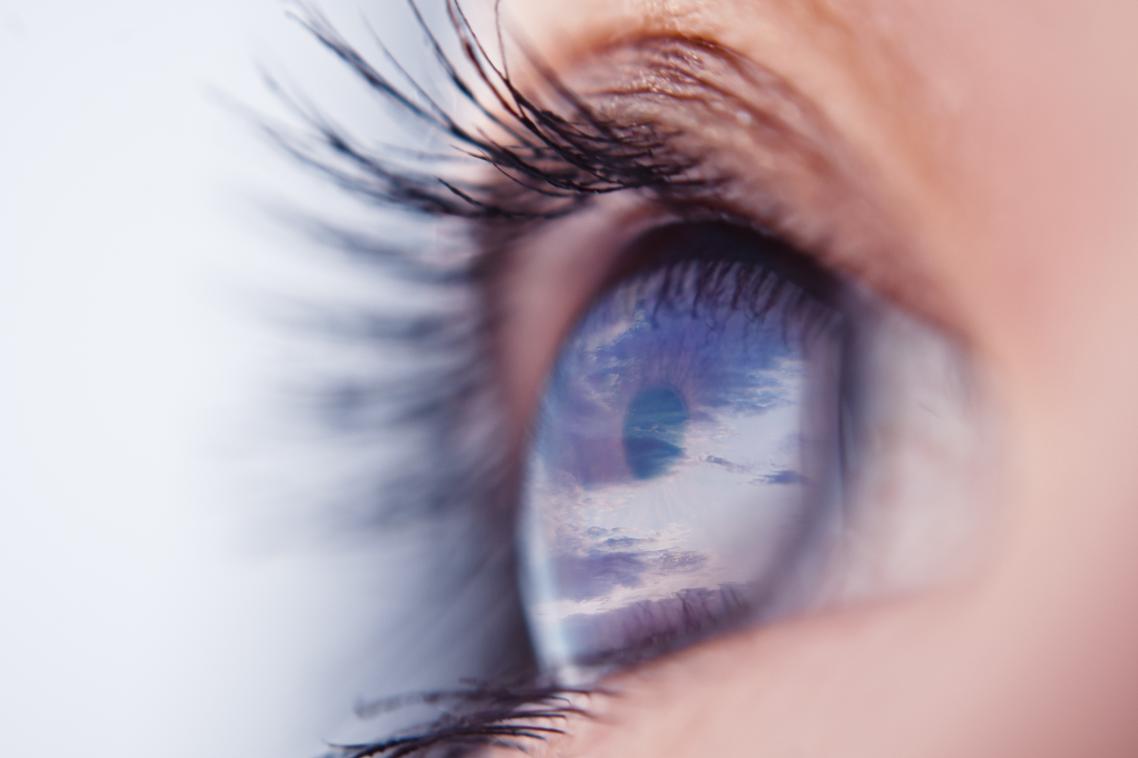
The mystery of how human eyes compute the direction of moving light has been made clearer by scientists at The University of Queensland.
Using advanced electrical recording techniques, researchers from UQ’s Queensland Brain Institute (QBI) discovered how nerve cells in the eye’s retina were integral to the process.
Professor Stephen Williams said that dendrites – the branching processes of a neuron that conduct electrical signals toward the cell body – played a critical role in decoding images.
“The retina is not a simple camera, but actively processes visual information in a neuronal network, to compute abstractions that are relayed to the higher brain,” Professor Williams said.
“Previously, dendrites of neurons were thought to be passive input areas.
“Our research has found that dendrites also have powerful processing capabilities.”
Co-author Dr Simon Kalita-de Croft said dendritic processing enabled the retina to convert and refine visual cues into electrical signals.
“We now know that movement of light – say, a flying bird, or a passing car – gets converted into an electrical signal by dendritic processing in the retina,” Dr Kalita-de Croft said.
“The discovery bridges the gap between our understanding of the anatomy and physiology of neuronal circuits in the retina.”
Professor Williams said the ability of dendrites in the retina to process visual information depended on the release of two neurotransmitters – chemical messengers – from a single class of cell.
“These signals are integrated by the output neurons of the retina,” Professor Williams said.
“Determining how the neural circuits in the retina process information can help us understand computational principles operational throughout the brain.
“Excitingly, our discovery provides a new template for how neuronal computations may be implemented in brain circuits.”
The study, Dendro-dendritic cholinergic excitation controls dendritic spike initiation in retinal ganglion cells, has been published in the journal Nature Communications.
Media: Donna Lu, communications@qbi.uq.edu.au, +61 405 661 856
Related articles

Australian classrooms are getting a ‘digital detox’ – what does this mean for schools and students?
