Dangerous bacteria a true survivor
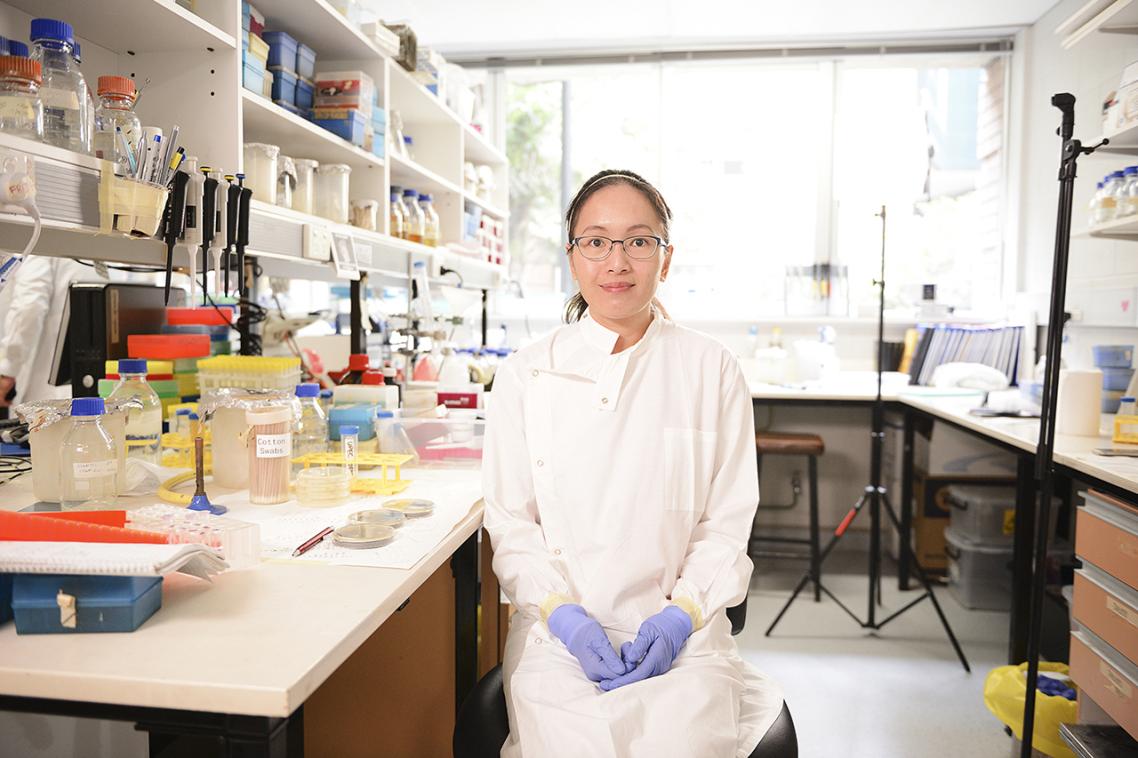
Infectious bacteria E. coli can defend itself and grow in acidic and copper-rich human environments a new University of Queensland study suggests.
Dr Karrera Djoko of the School of Chemistry and Molecular Biosciences has revealed the remarkable lengths Escherichia coli goes to in order to survive.
“E. coli is a normal gut bacterium that causes conditions such as urinary tract infection and food poisoning,” Dr Djoko said.
“During the progress of colonisation and infection, E. coli experiences mid and extreme drops in pH (to become acidic), for example in the stomach, intestinal lumen, and genital and urinary tracts.
“Recent evidence suggests that copper levels are also elevated at some of these infected sites.
“Our study suggests E. coli can alter its metabolism and harness an amino acid – glutamine - to survive and grow in human acidic and copper-rich environments.
“This system is found only in E. coli and not in other bacterial organism, suggesting that E. coli is highly specialised to cope with the combined acid and copper stress.
“This may contribute to the success of E. coli in battling the human immune system.”
Dr Djoko said glutamine was the most abundant free amino acid in systemic circulation in the human body.
She suggested E. coli may be able to access the glutamine stores in the human body, but more research is needed to test this idea.
“We hope that our work will guide the development of new generation antibacterials that work by manipulating nutrient metal levels (especially copper) at the infected sites to combat infections,” Dr Djoko said.
“Many infections caused by E. coli have now become resistant to treatment by antibiotics.
“There is increasing interest in using strategies that can disarm bacteria by boosting the action of immune system.”
The study, published in PNAS (doi: 10.1073/pnas.16020232114) was funded by the National Health and Medical Research Council.
It is a collaboration between several groups and the Australian Infectious Diseases Research Centre, featuring co-authors Dr Minh-Duy Phan, Dr Kate Peters, Professor Mark Walker, Professor Mark Schembri and Professor Alastair McEwan.
In September, Dr Djoko will take up an Assistant Professorship at Durham University, UK, where she will continue the work.
Media: Dr Karrera Djoko, k.djoko@uq.edu.au, +61 7 3365 4603.
Related articles

From cooked breakfast to their own TV, aged care residents need to watch for extra fees