
The science behind the appeal of controversial art
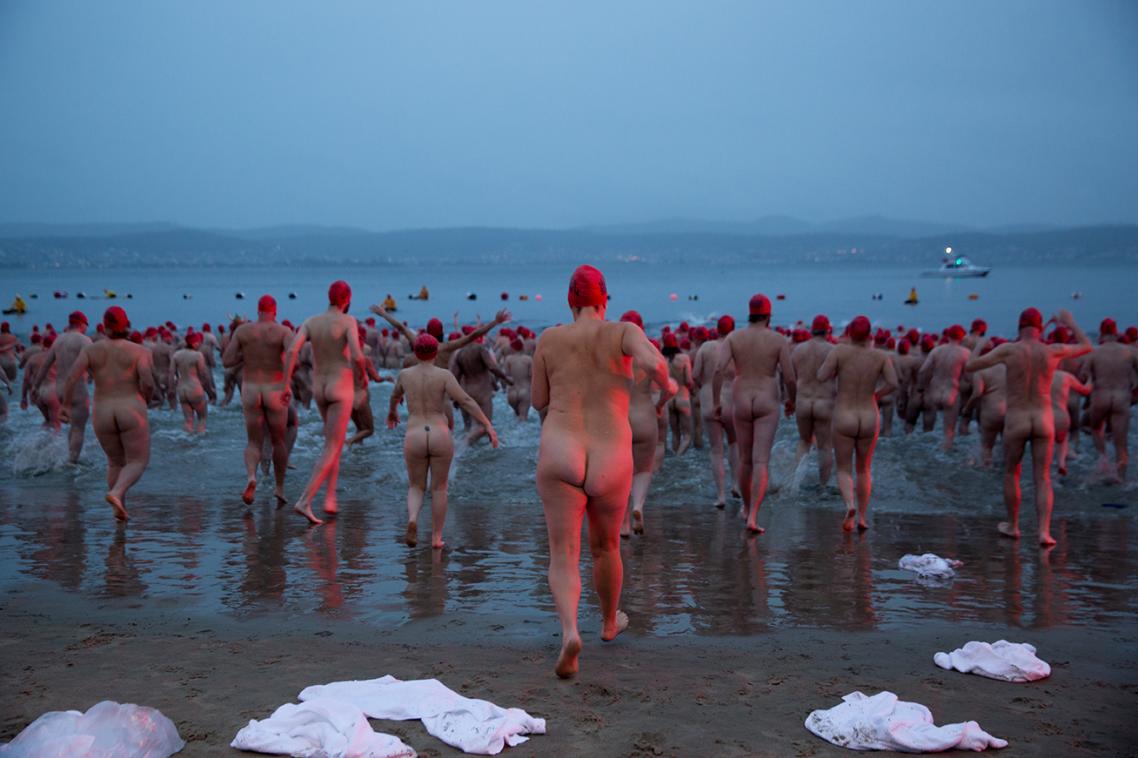
Would you attend a sacrificial ritual art performance involving 500 litres of blood and an animal carcass? Or go for a group nude swim on a cold winter morning?
Such attractions might not appeal to everyone, but they attract hundreds – sometimes thousands – of attendees to events and festivals around the world.
UQ School of Psychology researchers Dr Tegan Cruwys and Laura Ferris headed to Dark Mofo, the annual midwinter arts festival presented by Tasmania’s Museum of Old and New Art (Mona), to examine the modern-day attraction to events with ritualistic and primal themes.
“Dark Mofo is a fascinating festival that explores the links between ancient mythology and traditions and contemporary life,” Dr Cruwys said.
“There are many reasons why people may want to attend such events, and we will be using scientific methods to understand more, beyond the sensationalist media coverage and speculation.”
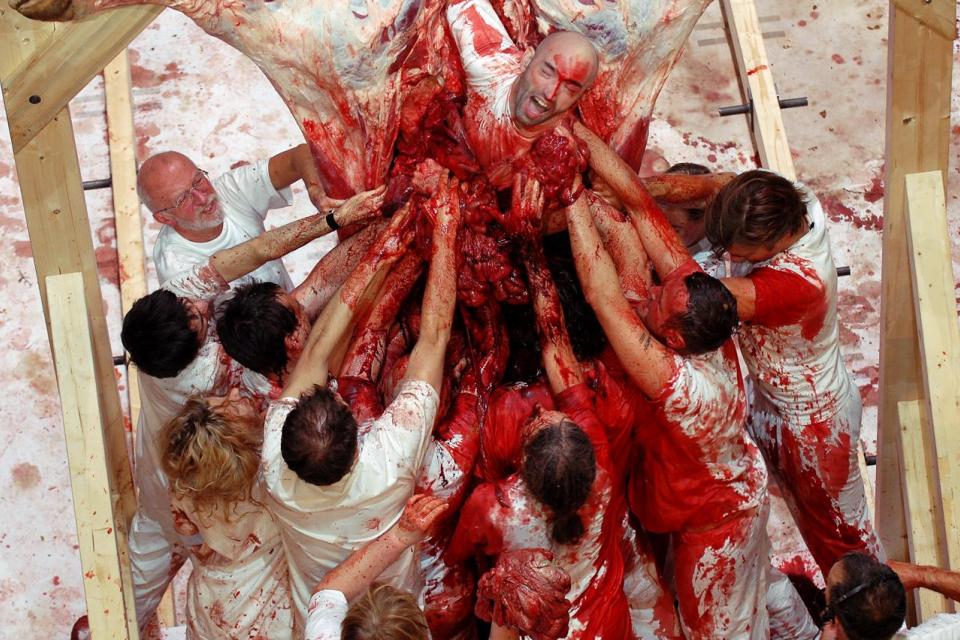
150.Action, a ‘bloody, sacrificial ritual performance’ by Austrian artist Hermann Nitsch, had received media attention for the use of a slaughtered bull.
It is part of an ongoing series of controversial work that began in the 1960s. Performers in white clothing bathe in blood and handle the body of a dead animal, along with vegetables, fruit and seafood.
“We looked at the collective nature of the event as a clue to understanding what people get out of it,” Ms Ferris said.
Another collective activity being examined during the festival was the Nude Solstice Swim, where hundreds of swimmers plunge into the Derwent River to mark the shortest day of the year and the end of the festival.
Although less controversial than 150.Action, Ms Ferris says it is still perplexing to some people, seeing others strip naked and jump into brutally freezing water together.
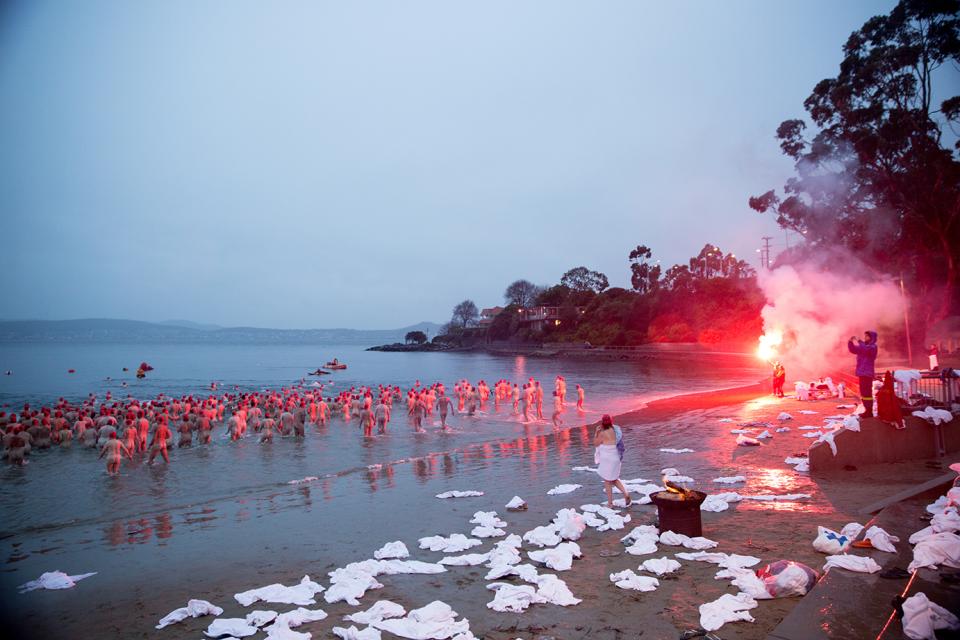
“We are intrigued about why people get involved in the swim and what they get out of it,” she said.
“By investigating the psychology of these events, we hope to bring the art closer to science.”
The study is supported by Dr Cruwys’ Discovery Early Career Researcher Award (DECRA) project ‘Does shared group membership increase social risk taking?’, funded by the Australian Research Council.
Central image: Hermann Nitsch - Burgtheatre
Media: Laura Ferris, l.ferris@uq.edu.au, +61 7 402 334 849; Dani Nash, UQ Communications, dani.nash@uq.edu.au, +61 7 3346 3035.
Topics
Related articles

What was Australia’s first novel?
