
Taking the ‘hacktivist’ approach to technology

A free online course released today by The University of Queensland is encouraging people to learn about the dark underbelly of the technology and media apps they use every day.
Course leader Dr Sebastian Kaempf from the School of Political Science and International Studies says MEDIAWARx: Global Media, War, and Technology encouraged learners to take a “hacktivist” approach in their use of technology.
“We face a disturbing trend today where the same technologies we use in our daily lives – the internet and smart phones primary among them – are intersecting with war, violence, cyberespionage and surveillance,” Dr Kaempf said.
“Corporations, governments and other actors are rapidly reshaping the world of technology and cyberspace, with repercussions that threaten the future of liberal democracy, human rights and freedom.”
“Hacking in this sense does not mean doing something unlawful, but rather developing an intellectual curiosity about the technology that has come to surround us,” he said.
“We have become accustomed to taking our social media and our devices for granted. The risk is that our ignorance might backfire and be used against us.
“Becoming hackers, therefore, is an important form of digital stewardship that we as citizens in democratic societies need to embrace.”
The massive open online course (MOOC) has been adapted from Dr Kaempf’s undergraduate on-campus course Global Media, War and Peace, and features interviews with experts from around the globe, interactive tools, polls, media analysis and discussion forums.
Jack Gibney took the on-campus course in semester one this year and believes the MOOC’s online resources will increase flexibility for UQ students.
“The MOOC is a great opportunity for on-campus students to work through the course at their leisure,” he said.
“At times you may progress through it in small chunks that fit neatly into spare moments, while at others you might invest consecutive hours – the MOOC format ensures both approaches are always available and equally rewarding.”
Enrol for free here: MEDIAWARx: Global Media, War, and Technology on edX.
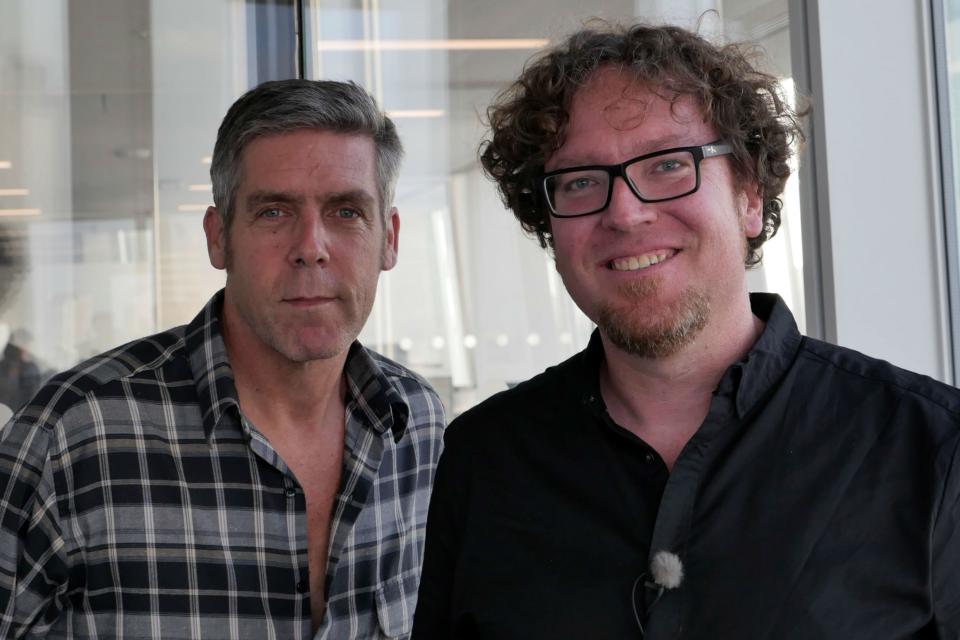
Images: (Top right): iStockphoto. (Below left): Dr Seb Kaempf, right, with Richard Gizbert, creator of The Listening Post, Al Jazeera’s weekly media critique and analysis show - one of many people Dr Kaempf interviewed in developing the course.
Media: Catherine Bennett, UQx, c.bennett1@uq.edu.au, +61 7 3346 0850
Related articles

How controlling (and tolling) a narrow waterway near ancient Troy changed history
