
UQ marine scientists expose planetary emergency in new Netflix documentary
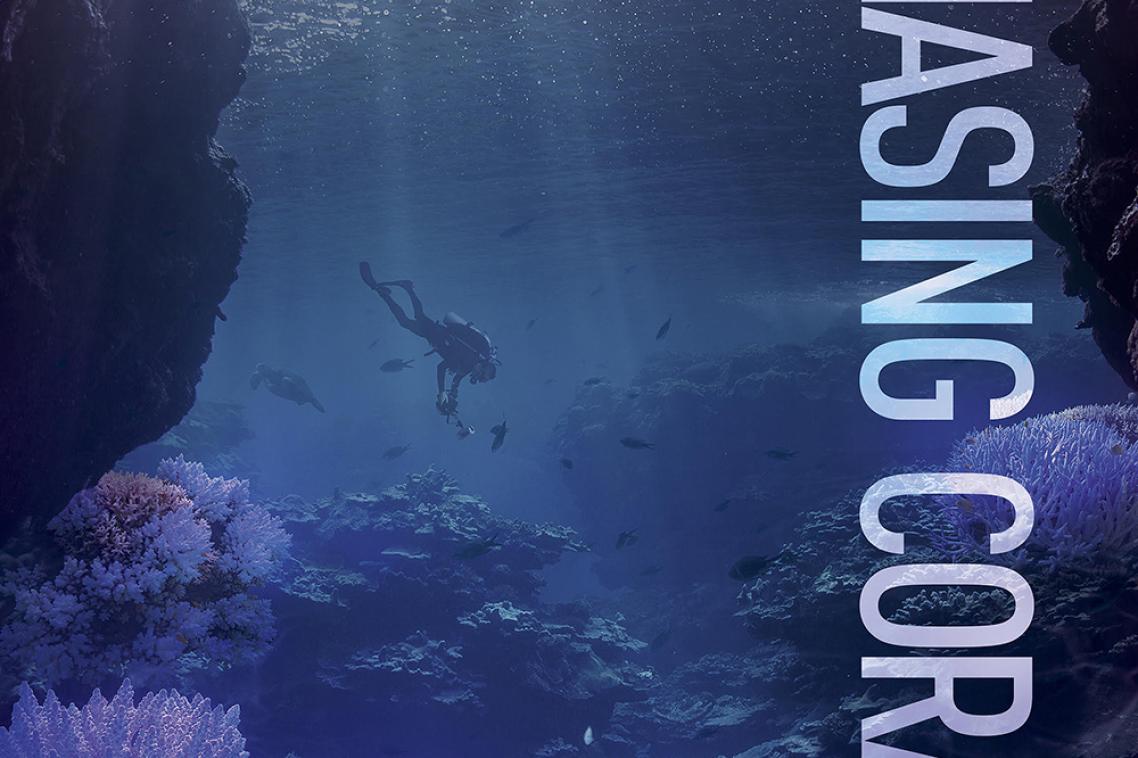
A new Netflix documentary, Chasing Coral, has hit the world’s small screens.
The University of Queensland’s Professor Ove Hoegh-Guldberg was the chief scientific adviser on the documentary, which starkly records and reveals the impact of climate change on the world’s coral reefs.
Emmy award-winning filmmaker Jeff Orlowski’s film follows a team of divers, photographers and scientists on the epic ocean adventure.
Professor Hoegh-Guldberg plays a starring role in the documentary along with UQ marine scientists Dr Pim Bongaerts, Dr Manuel Gonzalez-Rivero, Professor Justin Marshall, and other world-renowned coral reef experts.
Professor Hoegh-Guldberg said the documentary was a powerful way to reveal the impact climate change is having on our reefs.
“This is as much about the emotional side of reef losses as it is about the compelling science behind this planetary emergency,” he said.
For the past three years, Jeff and his team have followed the work of The Ocean Agency, revealing the global bleaching event and its impacts on the world’s coral reefs.
Audiences will witness the painful process as the team invent the first ever time-lapse camera to record coral bleaching as it happens. The effort is anything but straightforward as the scientists doggedly battle technical malfunctions and the force of nature below the waves.
With its breathtaking photography, nail-biting suspense, and startling emotion, Chasing Coral is a dramatic production.
The film is the result of more than 650 hours spent underwater; footage from volunteers in 30 countries, as well as support from more than 500 people from across the world.
Chasing Coral by Exposure Labs premiered on Netflix, and was produced in association with Argent Pictures, The Kendeda Fund and in partnership with The Ocean Agency and View Into the Blue.
Media: Professor Ove Hoegh-Guldberg, oveh@uq.edu.au, @oveHG: GCI Communications - Rachael Hazell, r.hazell@uq.edu.au, +61 7 415 814 529.
Related articles

Shaping the future of medicine: UQ Medical School turns 90
