
Pollution impact on global burden of disease undercounted
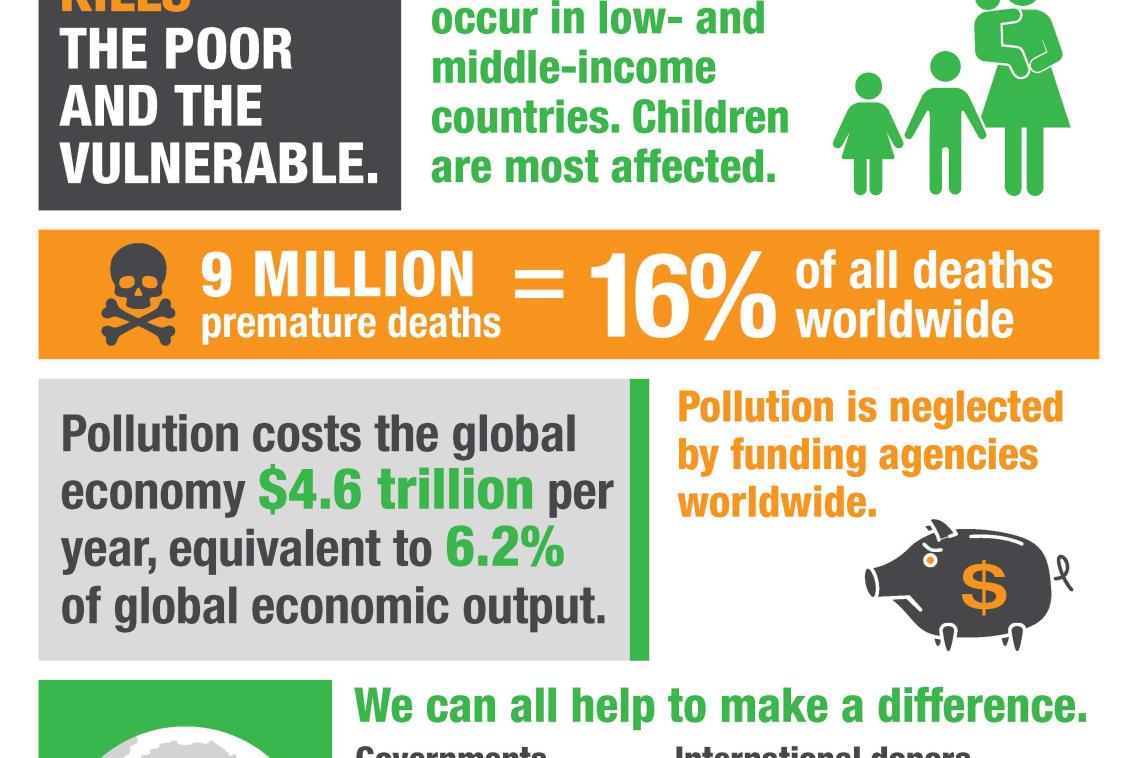
Diseases caused by pollution were responsible for an estimated nine million premature deaths in 2015, a global report has found.
University of Queensland researcher Professor Peter Sly said the figure represents 16 per cent of all deaths worldwide.
“If you look at this from a public health policy perspective, that’s more than AIDS, tuberculosis and malaria combined, and more than 15 times more than all wars and other forms of violence,” Professor Sly said.
“Children are at high risk and even low dose exposure in utero and early infancy can result in disease, disability and death in childhood and across the lifespan.”
Professor Sly is a Commissioner with the Lancet Global Commission on Pollution and Health, an initiative of The Lancet, the Global Alliance on Health and Pollution and the Icahn School of Medicine at Mount Sinai, which today released its final report here.
“The key messages are that pollution has a major impact on health, particularly in low and middle income countries, and it actually costs more to do nothing than to implement proven solutions.
Professor Sly, who is Director of the Children’s Health and Environment Program, said pollution is not widely recognised as a health problem in Australia, but there is a body of research which suggests that it is.
“There are peer-reviewed studies which show that exposure to pollutants causes higher levels of respiratory illnesses and impacts foetal growth,” he said.
“While we are not Beijing or Delhi, we can still measure and demonstrate health impacts of pollution on the Australian population, and water contamination from firefighting foam is just one recent example.”
The Commission, which includes representatives from the United Nations Development Program and the World Bank, has found that reducing pollution presents an incredible opportunity to save lives and grow economies.
“Many of the pollution control strategies have proven cost-effective in high and middle income countries, and are ready to be exported and adapted by cities and countries at every level of income,” Professor Sly said.
“The report urges countries to include pollution planning into their planning processes, and asks for support from development assistance agencies to design and implement programs that reduce pollution and save lives.”
Media: Professor Peter Sly, p.sly@uq.edu.au; UQ Communications, Kim Lyell, k.lyell@uq.edu.au, +61 427 530 647.
A social media tool kit with images and video here: http://gahp.net/commission-launch-social-media-toolkit/. Data visualization on the global pollution map here: www.pollution.org
Related articles

Testosterone testing the military: how the manosphere shaped US government policy
