
Lost in translation: What does no net loss mean?
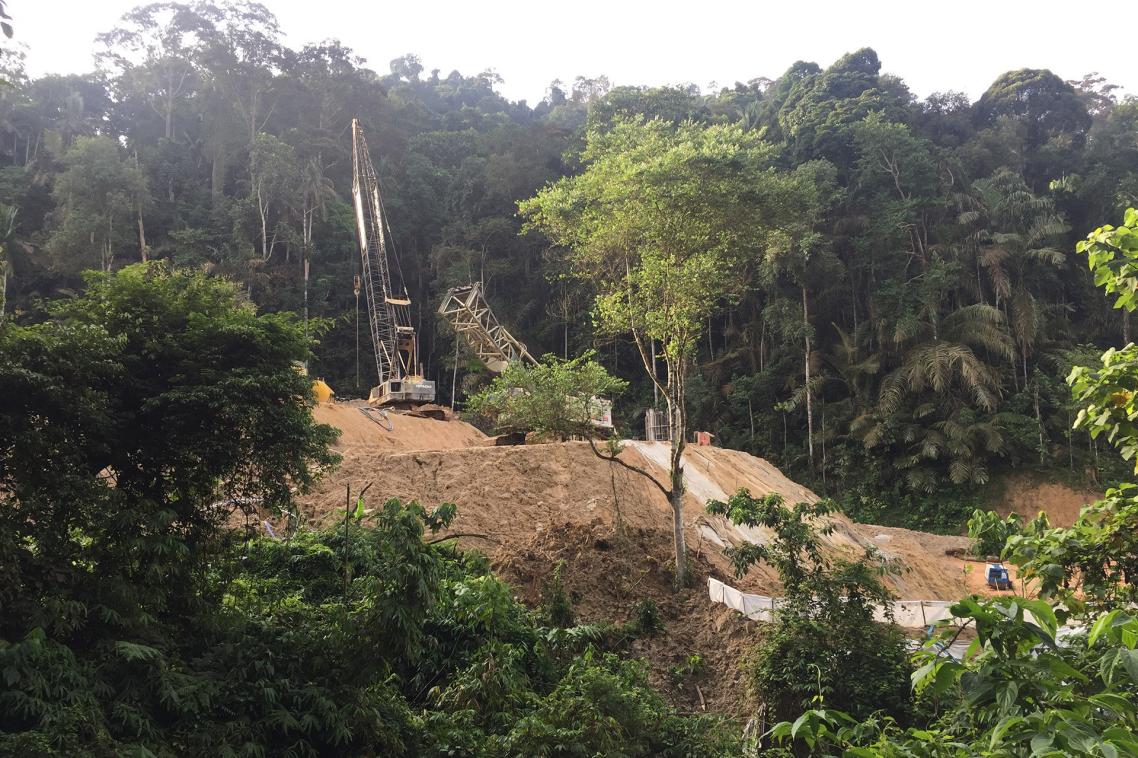
No net loss – a buzz phrase in environmental policy – is an approach that aims to neutralise negative environmental impacts from human activities.
However, a University of Queensland-led study has shown the phrase can often be misleading.
UQ School of Earth and Environmental Sciences researcher Martine Maron says the no net loss principle aimed to counteract the negative impacts of development on things like biodiversity, wetlands, or land productive capacity – the natural capital that people value.
“The idea is to generate gains elsewhere, for example, through protection and restoration efforts, so the net result of the losses and gains is neutral,” Associate Professor Maron said.
“But while this sounds like an appealing goal, whenever this approach is used, we first need to ask: no net loss – compared to what?”
Associate Professor Maron said the problem was that no net loss could refer to two quite different things.
“It can mean keeping the environment as it is now, but it can also mean allowing the environment to decline,” she said.
“The first meaning is what most people would intuitively understand by the term no net loss. It is an ambitious goal but it’s what is needed to halt global environmental degradation.
“However, many policies actually use the second meaning, which means no net loss relative to ongoing current declines.
“For a threatened species at risk of declining to extinction, this second type of no net loss can be a disaster.
"Unfortunately, there are many biodiversity offsetting policies that work like this.”
Such disparate definitions of no net loss mean the outcomes of these policies were equally inconsistent, resulting in anything from more, less, or exactly the same amount of natural capital being retained.
“Context is important. Without that frame of reference the term ‘no net loss’ becomes meaningless,” Associate Professor Maron said.
“This area of environmental policy is long overdue for scrutiny and standardisation, and we believe our research is a strong step towards this.”
The study is published in Nature Sustainability (doi: 10.1038/s41893-017-0007-7).
Media: Martine Maron, m.maron@uq.edu.au, @martine_maron, 0417110537.
Related articles

UQ to support development of mobile launcher for high-speed flight R&D
