
UQ Zika detection breakthrough a potential lifesaver
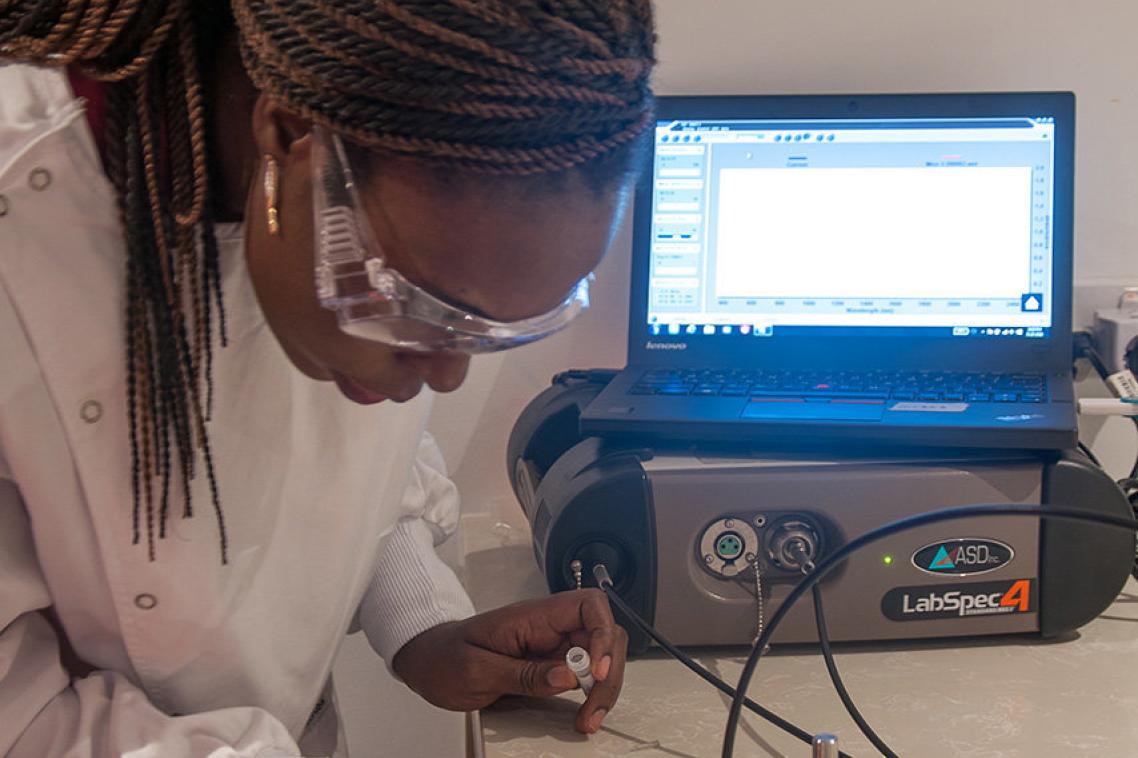
A cheap and effective tool that could save lives by helping health authorities target mosquitos infected with Zika virus has been developed by researchers from the University of Queensland and colleagues in Brazil.
Dr Maggy Sikulu-Lord and Dr Jill Fernandes, at the Queensland Alliance for Agriculture and Food Innovation, found Near Infrared Spectroscopy (NIRS) was 18-times faster and 110-times cheaper than the current detection method.
“We can quickly identify mosquitoes that are infected with Zika virus so public health authorities can treat affected areas before disease spreads to humans,” Dr Sikulu-Lord said.
“This is definitely going to be a game-changer in disease surveillance, especially in the prediction of disease outbreaks.
“It only involves shining a beam of light onto mosquitoes and using that information to determine if the mosquito is infected.”
Zika is a mosquito-borne virus that can cause abnormalities in unborn babies and is linked to the rare paralysing condition called Guillain-Barre Syndrome (GBS).
Dr Sikulu-Lord hopes the World Health Organisation will use NIRS in countries where Zika is endemic.
“We hope public health authorities can use it to predict future disease outbreaks and save lives by treating mosquito populations in time.”
She said the technology had potential to detect a number of diseases.
“We hope to have results for detecting dengue and malaria in mosquitoes in the next few months.
“We don’t think it will eradicate diseases but it will give us the ability to detect diseases quickly so that we can stop disease outbreaks.”
So far, NIRS technology has been shown to have a 94 to 99 per cent accuracy rate in identifying infected mosquitoes under laboratory conditions in Brazil.
The team, which includes researchers Dr Rafael de Freitas and his team (Fiocrus, Rio de Janeiro) Dr John Beier (University of Miami) and Dr Floyd Dowell (USDA), is testing the accuracy of the technique under field conditions in Rio de Janeiro.
The article is published in Scientific Report (doi.org/10.1038/s41598-018-27998-7).
This work is supported by the Combating Zika and Future Threats Grand Challenge. Grand Challenges Canada’s Stars for Global Health, funded by the Government of Canada, provided funding for pilot data collection.
This product is made possible through the generous support of the United States Agency for International Development (USAID). The contents are the responsibility of The University of Queensland and do not necessarily reflect the views of the USAID or the United States Government.

Media: QAAFI Research Fellow Dr Maggy Sikulu-Lord, maggy.lord@uq.edu.au, +61 7 3346 2264, 0423 630098; UQ Communications Natalie MacGregor, n.macgregor@uq.edu.au, +61 7 3365 1120.
.embed-container { position: relative; padding-bottom: 56.25%; height: 0; overflow: hidden; max-width: 100%; } .embed-container iframe, .embed-container object, .embed-container embed { position: absolute; top: 0; left: 0; width: 100%; height: 100%; } .embed-container { position: relative; padding-bottom: 56.25%; height: 0; overflow: hidden; max-width: 100%; } .embed-container iframe, .embed-container object, .embed-container embed { position: absolute; top: 0; left: 0; width: 100%; height: 100%; } .embed-container { position: relative; padding-bottom: 56.25%; height: 0; overflow: hidden; max-width: 100%; } .embed-container iframe, .embed-container object, .embed-container embed { position: absolute; top: 0; left: 0; width: 100%; height: 100%; }
Topics
Related articles

How smoking makes Australians poorer – and what we can do about it
