
Brain secrets that flow in our blood
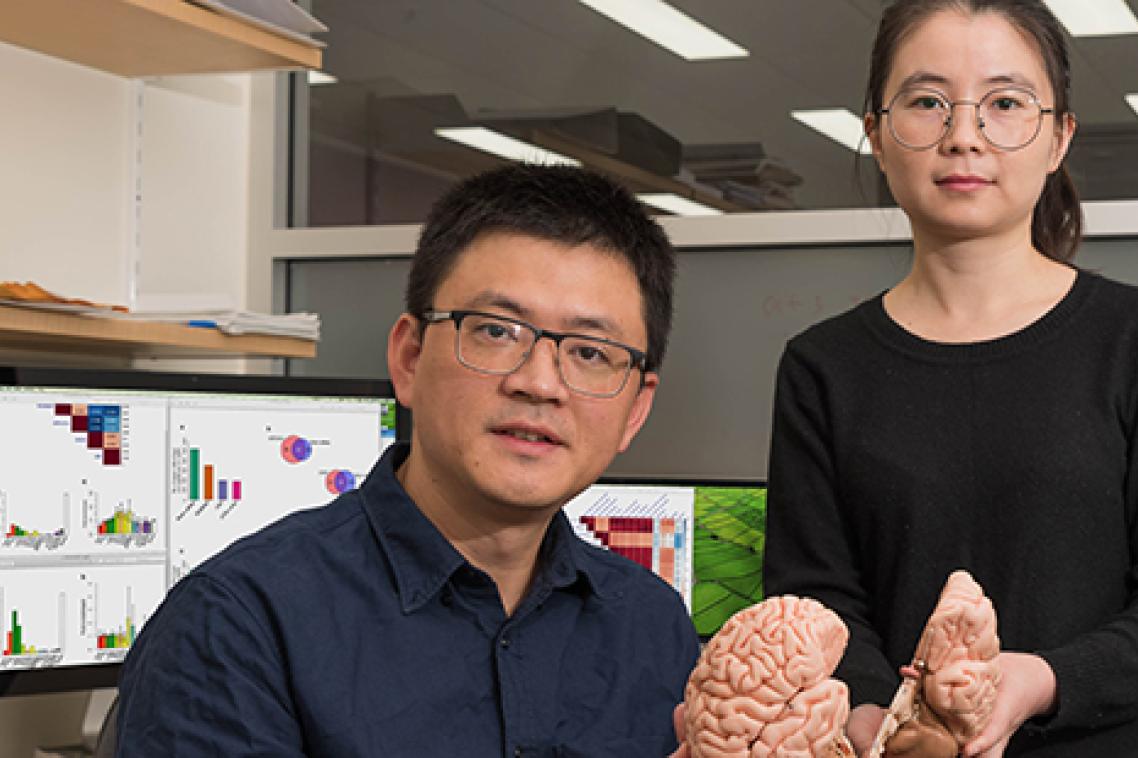
Our blood can be used to uncover genetic secrets inside the brain, according to University of Queensland research.
A team led by Professor Jian Yang from UQ’s Institute for Molecular Bioscience and Queensland Brain Institute, and Dr Ting Qi from the Institute for Molecular Biosciences, discovered blood samples can be used to identify gene targets for brain-related traits like IQ and diseases such as schizophrenia.
Professor Yang said this discovery would open up new avenues of research and improve scientists’ ability to unravel the complexity of brain disease.
“Identifying gene targets for brain diseases is an essential part of understanding disease risk and developing treatment and prevention strategies,” he said.
“But the effects of individual genes on brain traits are often very small, meaning we require large sample numbers to find the gene targets, and only a few hundred brain samples are available in most databases.
“We wondered whether we could overcome this issue by using blood samples, which number in tens of thousands, to identify gene targets for brain-related complex traits and diseases.”
Professor Yang, Dr Qi and the team found the local genetic controls of gene expression in the brain are very similar to those in blood.
“This discovery provides strong justification for using genetic effects on gene expression estimated from blood samples as a proxy for those in the brain to boost the power of our studies to identify the genes underlying brain traits and disorders,” Dr Qi said.
“Using blood data enabled us to find 97 genes associated with IQ, schizophrenia, years of education and cigarette smoking, compared to 61 using brain data alone.”
Professor Yang last year won the Frank Fenner Prize for Life Scientist of the Year at the Prime Minister’s Prizes for Science, and this year has made several significant discoveries, including using genetic data to identify modifiable disease risk factors, pinpointing the genes and epigenetic factors that are linked to specific diseases, natural selection and evolution.
The study is published in international scientific journal Nature Communications.
It was funded by the Australian Research Council, the Australian National Health and Medical Research Council, the US National Institutes of Health and the Sylvia & Charles Viertel Charitable Foundation.
Media: Professor Jian Yang, jian.yang@uq.edu.au, +61 7 3346 6396; IMB Communications, communications@imb.uq.edu.au, +61 7 3346 2132, +61 421 819 807.
Related articles

UQ’s QARC wins at Engagement Australia Awards
