
Test to save patients from invasive open biopsies
University of Queensland researchers are developing diagnostic tests for a genetic condition which can cause the body to fatally overheat while under a general anaesthetic.
School of Biomedical Sciences Associate Professor Bradley Launikonis said malignant hyperthermia was caused by mutations in muscle proteins and could cause death under stressful conditions.
“It is an inherited condition that affects hundreds of Australian families,” Dr Launikonis said.
“When people with this condition are exposed to certain anaesthetics, their muscles can go very rigid and produce excessive heat.
“If left untreated, the body temperature can rise to levels that can cause a fatal heart attack or other organ failure.”
The condition was discovered in the 1960s after several members of one family died under general anaesthesia.
“Genetic tests for susceptibility are only reliable in about half of cases,” Dr Launikonis said.
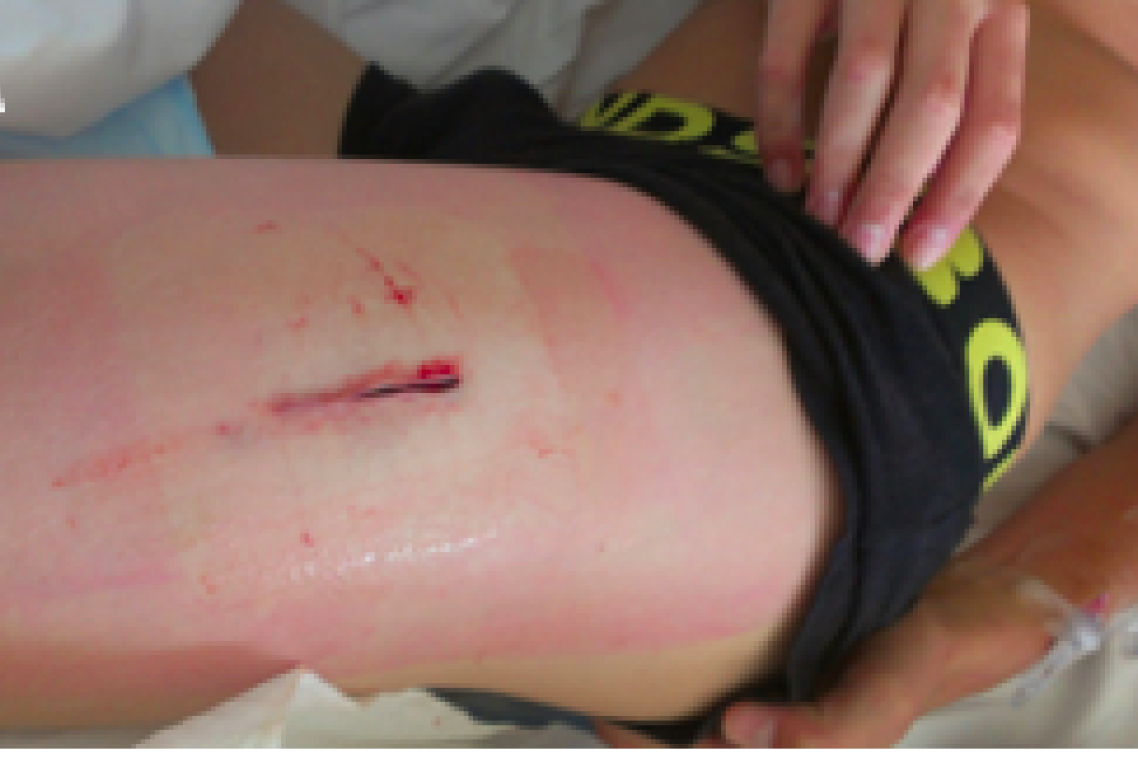
“In the other 50 per cent, an open biopsy of the thigh muscle under a general anaesthetic is required.
“Additionally, we can’t test children under 10 years of age due to their low muscle mass and potential problems in undergoing a general anaesthetic when susceptibility is not known.”
Dr Launikonis’s study looked at samples of muscle fibres taken by needle biopsies using only a local anaesthetic.
“We examined individual muscle fibres the size of a single human hair to see how muscle proteins called ryanodine receptors controlled the release of calcium, the element which causes muscle contractions and produces heat,” he said.
“In susceptible people, we found that those receptors were prone to release calcium when the muscle was exposed to anaesthetic.”
Dr Launikonis said the findings paved the way for a significantly less-invasive diagnostic test.
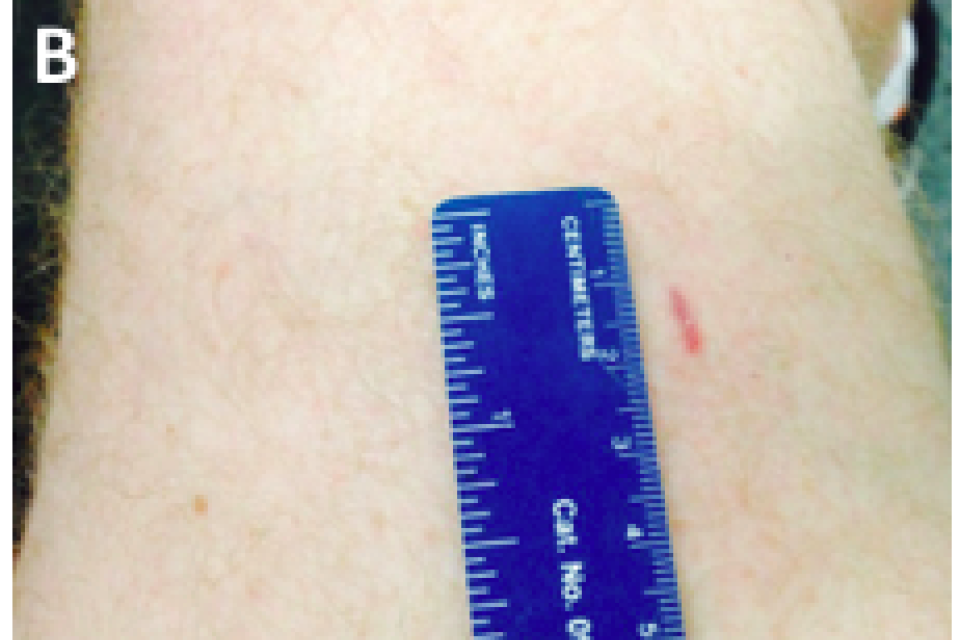
“Needle biopsies extract a much smaller amount of muscle tissue, less than 0.05g, so people are able to move freely afterwards,” he said.
“Such biopsies can be performed on children, so there is potential to provide diagnosis at a young age.
“We’re now looking to move into a development stage with hospitals to establish a new diagnostic test.
“This research will also help us understand how ryanodine receptor health affects muscle strength.”
The study is published in Proceedings of the National Academy of Sciences of the USA.
Photo B: Result of less invasive needle biopsy.
Media: Associate Professor Bradley Launikonis, b.launikonis@uq.edu.au, +61 (0)434 895 324; Faculty of Medicine Media, med.media@uq.edu.au, +61 7 3365 5118.
Topics
Related articles

Can removing your fallopian tubes really reduce your risk of ovarian cancer?
