
Quantum weirdness in ‘chicken or egg’ paradox
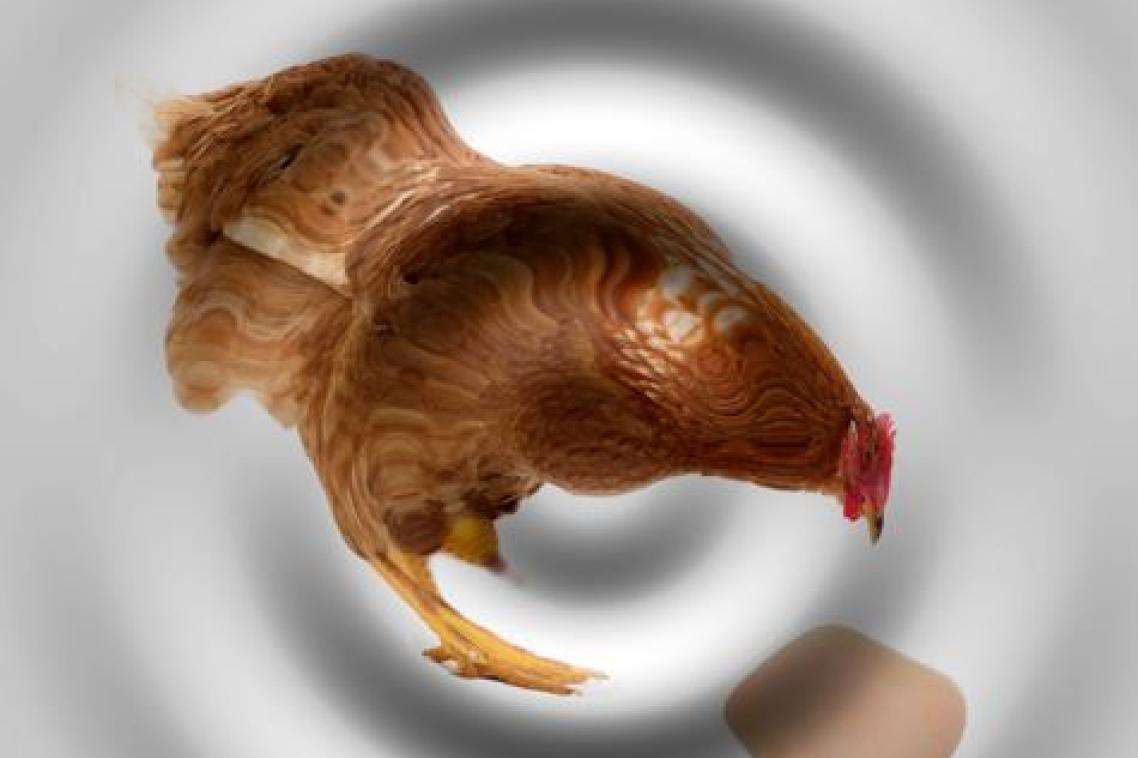
The “chicken or egg” paradox was first proposed by philosophers in Ancient Greece to describe the problem of determining cause-and-effect.
Now, a team of physicists from The University of Queensland and the NÉEL Institute has shown that, as far as quantum physics is concerned, the chicken and the egg can both come first.
Dr Jacqui Romero from the ARC Centre of Excellence for Engineered Quantum Systems said that in quantum physics, cause-and-effect is not always as straightforward as one event causing another.
“The weirdness of quantum mechanics means that events can happen without a set order,” she said.
“Take the example of your daily trip to work, where you travel partly by bus and partly by train.
“Normally, you would take the bus then the train, or the other way round.
“In our experiment, both of these events can happen first,” Dr Romero said.
“This is called `indefinite causal order’ and it isn’t something that we can observe in our everyday life.”
To observe this effect in the lab, the researchers used a setup called a photonic quantum switch.
UQ’s Dr Fabio Costa said that with this device the order of events — transformations on the shape of light — depends on polarisation.
“By measuring the polarisation of the photons at the output of the quantum switch, we were able to show the order of transformations on the shape of light was not set.”
“This is just a first proof of principle, but on a larger scale indefinite causal order can have real practical applications, like making computers more efficient or improving communication.”
The research was published in Physical Reviews Letters by the American Physical Society.
Media: Dr Jacqui Romero, m.romero@uq.edu.au, +61 7 3346 7031; Tara Roberson, t.roberson@uq.edu.au, +61 404 516 635.
Topics
Related articles

From birdsong to galaxies: unleashing the potential of citizen science
