
Adding the third dimension to marine conservation
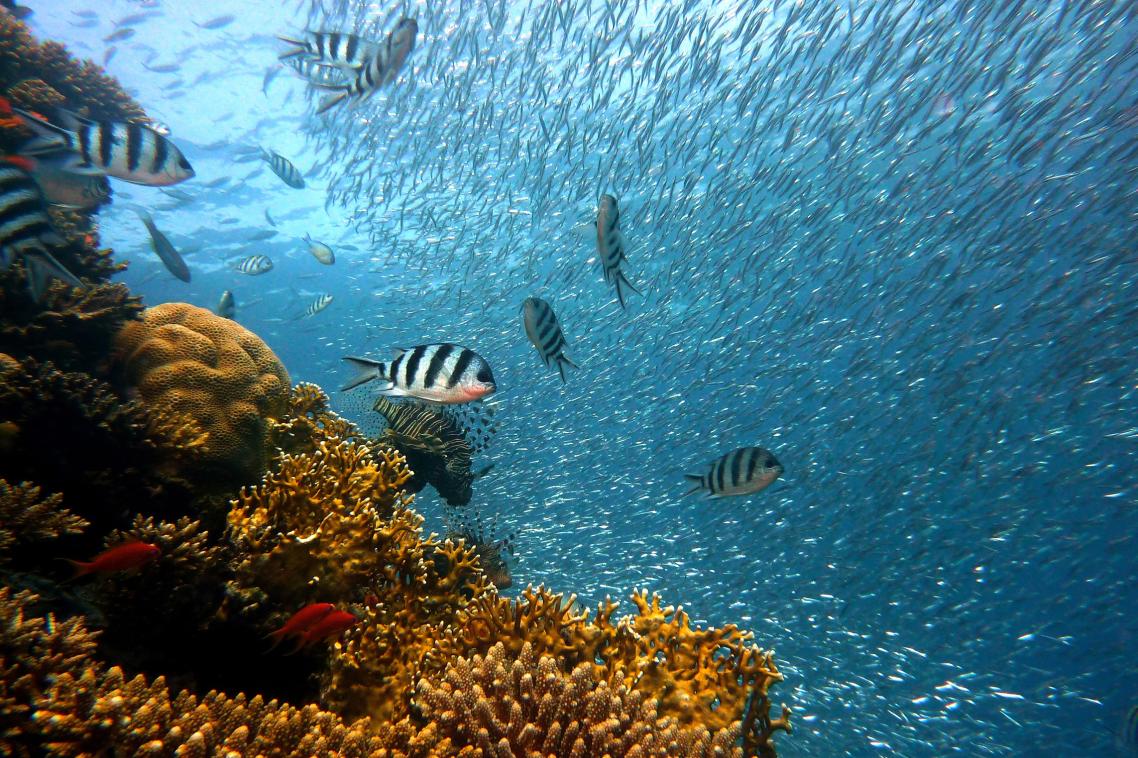
A new approach to tackle conservation decisions in 3D marine environments could lead to better conservation outcomes.
3D spatial conservation prioritisation was developed by University of Queensland PhD student Ruben Venegas-Li of UQ’s Biodiversity Research Group, led by Associate Professor Salit Kark.
Dr Kark said the technique would help overcome one of the key problems with current marine conservation mapping and planning.
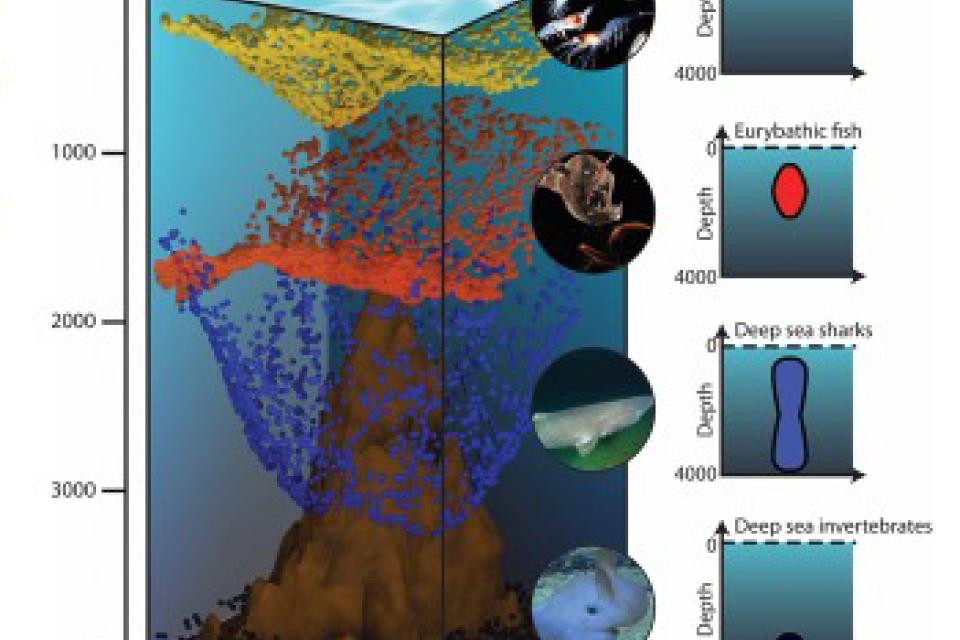
“Marine ecosystems are 3D in nature, with depth playing a key role in their structuring, species distributions and ecosystem functioning,” she said.
“Until now, the vast majority of efforts to prioritise what conservation actions in the marine environment has been performed in two dimensions, usually working on a grid over a 2D map.
“This doesn’t really give us much of the information we need, as protecting biodiversity at one depth might actually be compatible with other uses of the ocean at a different depth.
The idea for 3D conservation planning arose in a workshop in Italy in 2015, one of a series initiated and co-led by Dr Kark, which brought together marine conservation experts from across the globe.
“Zoning in urban areas, for example, is becoming three dimensional, and a similar approach can be adapted in marine planning.”
Mr Venegas-Li believes the method could prove beneficial, for instances in which officials need to balance competing uses of marine environments.
“The results suggest a 3D approach might prove more efficient in terms of total cost and space protected than a traditional 2D approach, allowing other uses at depths that are not a conservation priority,” he said.
“As human intervention in the marine realm increases in both its intensity and extent, tools like 3D planning will prove critical for effective marine conservation planning and action.”
The approach was developed in collaboration with Associate Professor Noam Levin from The Hebrew University of Jerusalem and UQ, Professor Hugh Possingham from UQ and The Nature Conservancy, and Professor Roberto Danovaro from Marche Polytechnic University and Stazione Zoologica Anton Dohrn.
The findings have been published in Methods in Ecology and Evolution (DOI: 10.1111/2041-210X.12896) and in Conservation Letters (DOI: 10.1111/conl.12408).
Image above left: The world’s oceans are inherently 3D, with important linkages and connections between depth zones, and daily and life cycle movement of organisms between zones. (Credit: Conservation Letters)
Media: Ruben Venegas-Li, r.venegas@uq.edu.au, +61 432 069 720; Salit Kark, s.kark@uq.edu.au; Dominic Jarvis, dominic.jarvis@uq.edu.au, +61 413 334 924.
Topics
Related articles

UQ to support development of mobile launcher for high-speed flight R&D
